

Most people don’t wake up wanting to use a blockchain. They wake up wanting to play a game, join an event, collect something meaningful, or move value without friction. The technology behind those actions is invisible to them, and honestly, that’s how it should be. The more a system forces users to understand how it works, the further it drifts from real adoption.
Vanar Chain feels built around that exact realization.
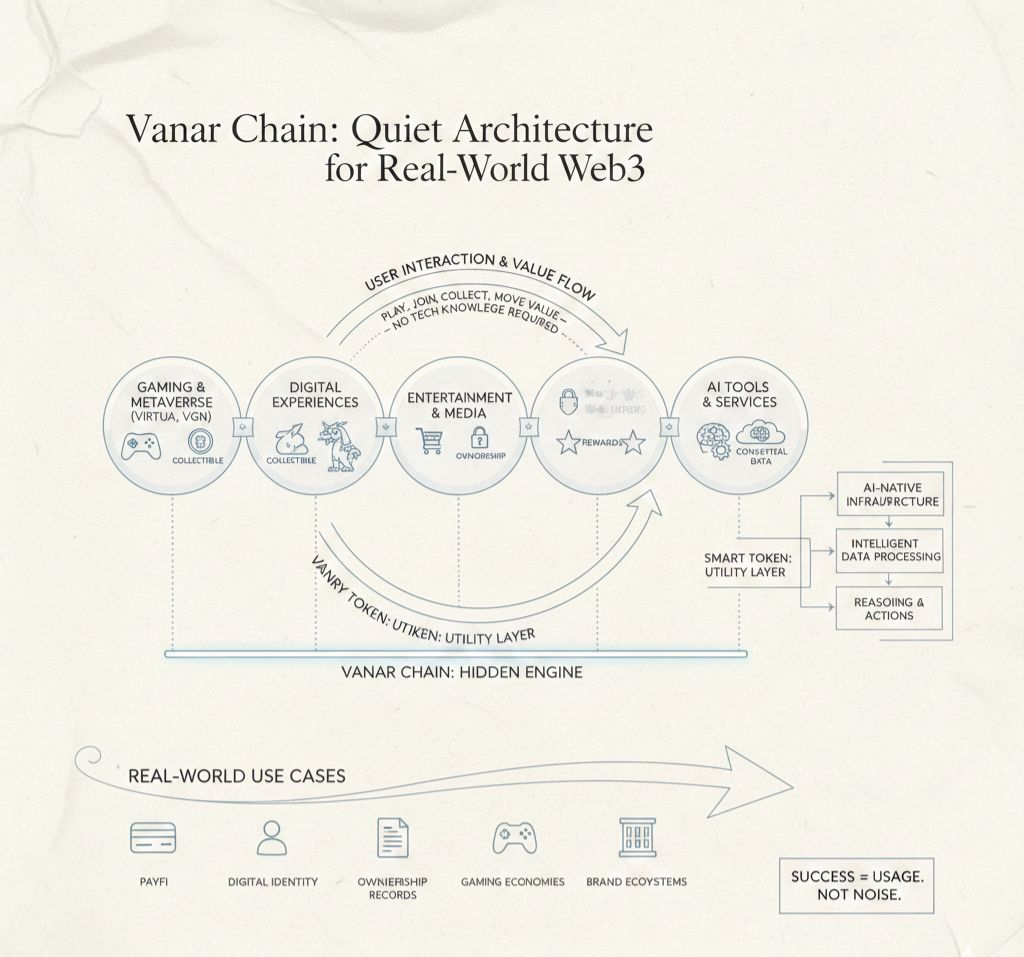
Instead of designing for crypto-native users and hoping the mainstream eventually follows, Vanar’s direction suggests the opposite path: start where everyday users already are—gaming, digital experiences, brands, entertainment, AI tools—and quietly place blockchain underneath those environments as a silent engine.
This is why references to products like Virtua Metaverse and the VGN games network are important. They are not developer tools. They are consumer spaces. They are places where people naturally spend time, value, and attention. In those environments, ownership, trading, rewards, and interaction happen as part of the experience itself. The user doesn’t need to understand wallets, gas, or infrastructure. They just participate.
That shift in perspective is what gives Vanar a different tone compared to many Layer 1 networks. It is less about “how powerful is our chain?” and more about “how naturally can this chain fit into real digital behavior?”
Another layer that makes Vanar interesting is its push toward AI-native infrastructure. Many projects talk about AI in broad terms, but Vanar’s idea leans toward something more practical. Applications in the future won’t just need storage. They will need memory, context, and the ability to act on information in a smarter way. Data will not only be stored but understood. Systems will need to respond based on history, behavior, and meaning.
Vanar’s design narrative suggests a blockchain environment where this kind of intelligent behavior is easier to build. Where apps can store and retrieve information in ways that support reasoning and context, not just transactions. This aligns closely with real-world use cases like PayFi, digital identity, ownership records, gaming economies, and brand ecosystems where data relationships matter more than simple transfers.
In this structure, the VANRY token becomes more than a symbol attached to a network. It becomes the utility layer beneath activity. If people are playing games, minting items, transferring value, subscribing to services, or interacting with AI-powered applications inside this ecosystem, VANRY is meant to be the unit that powers those actions.
This is an important difference. The value of a token in such a system is not based on attention alone. It is based on how often the ecosystem is used. The more people interact with applications built on Vanar, the more natural demand exists for the token because it sits underneath the activity.
Recent developments around Vanar’s AI direction, ecosystem programs, and governance evolution are not interesting because they are announcements. They are interesting because they attempt to push the ecosystem toward builder activity and real usage. Initiatives like developer programs and AI-focused efforts show that the team is not only describing a vision but trying to create the conditions where developers and creators can actually build within it.
But the most honest part of the analysis is this: none of it matters without usage.
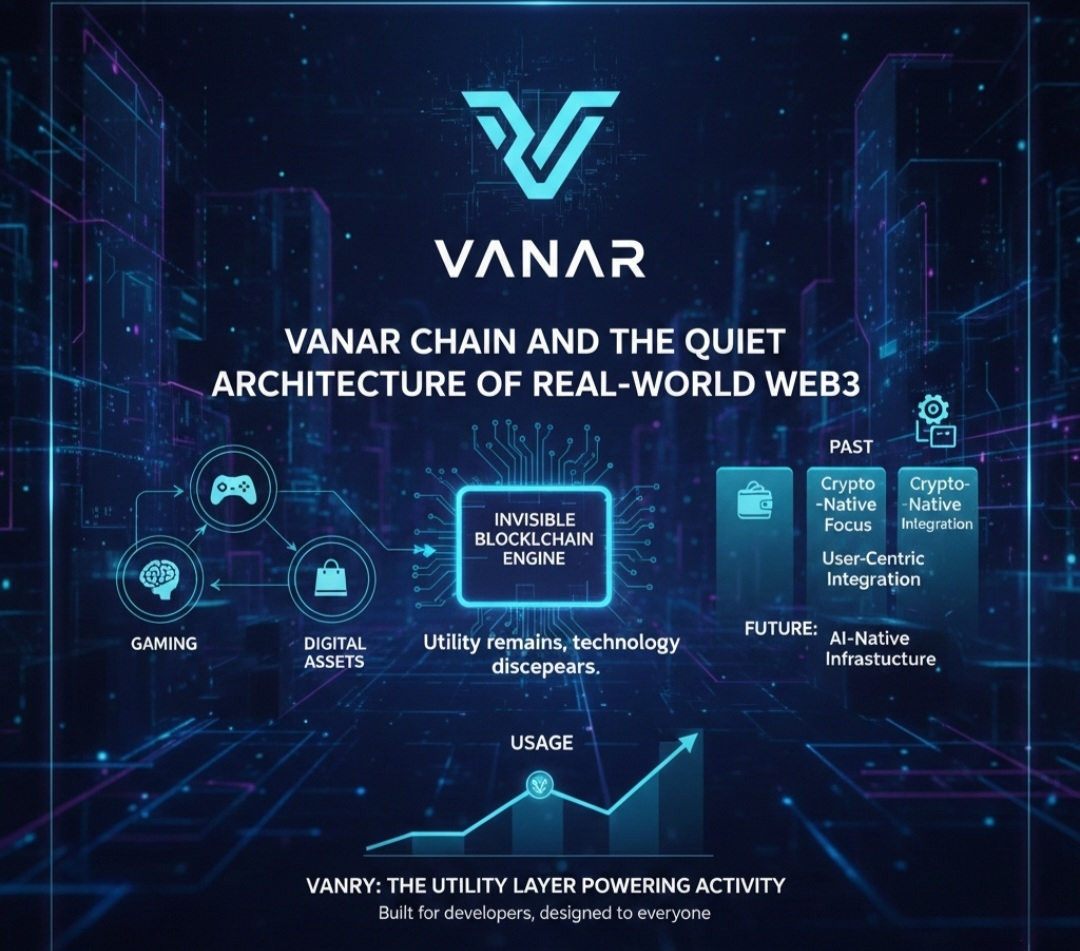
A well-designed highway has no value if nobody drives on it. Vanar’s success depends entirely on whether games, platforms, brands, and AI applications built on it become part of people’s daily digital habits. If users spend time inside these environments without realizing blockchain is running underneath, then the architecture is doing its job.
Vanar does not appear to be chasing noise. It appears to be preparing infrastructure for a world where blockchain is present but invisible, where people interact with digital ownership and value as naturally as they use apps today.
The real story of Vanar is not about being louder than other chains. It is about building a system that quietly fits into how people already behave online, and letting usage, not hype, define its importance.
Vanar’s true strength lies in designing blockchain as a hidden engine for everyday digital experiences, where the technology disappears and the utility remains.