

Great games live or die by performance. Latency, responsiveness, and seamless UX determine whether players stay immersed or drop off. Bringing blockchain into this environment is challenging because traditional chains were not designed for real-time entertainment workloads.
Vanar Chain approaches this from a gaming-first perspective. Instead of forcing games to adapt to blockchain limits, Vanar designs infrastructure that adapts to gaming needs — especially within the Virtua Metaverse.
Built for responsiveness, not speculation ⚡
Many blockchains optimize for financial transactions. Vanar optimizes for interactions: item ownership, avatar assets, marketplace activity, and in-world events that must feel instant to players.
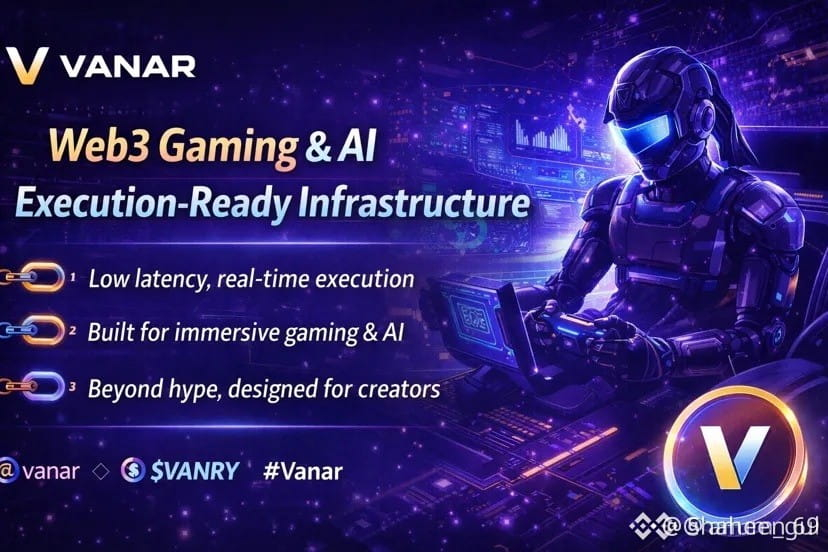
This means the network prioritizes:
Low latency confirmations
Smooth asset interactions
High throughput for player activity
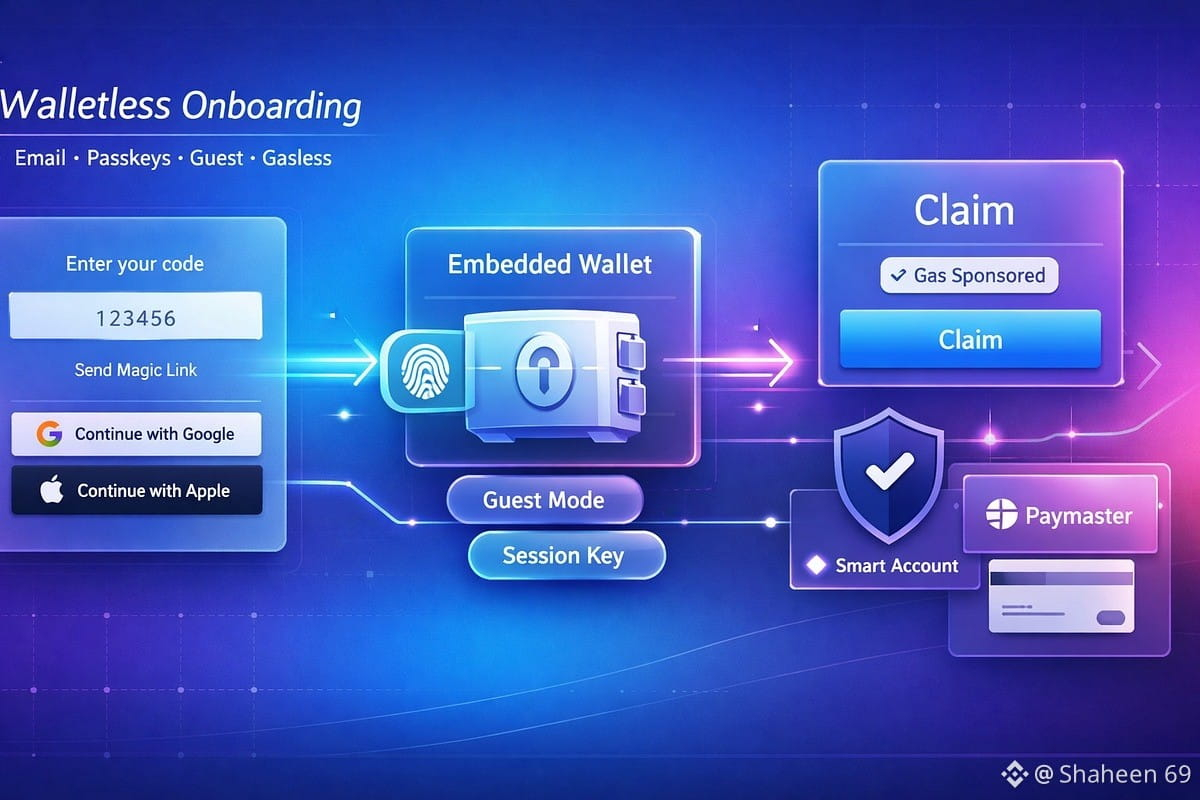
Invisible Web3 onboarding 🎯
Performance also includes UX. Players shouldn’t feel they are “using blockchain.” Wallet friction, gas fees, and delays break immersion. Vanar’s infrastructure allows assets and ownership to exist quietly in the background while gameplay remains front and center.
Persistent digital ownership 🧩
Because assets live on-chain, players retain true ownership of collectibles, skins, and items across experiences. This persistence enhances engagement without sacrificing speed.
Infrastructure for creators and studios 🏗️
Game studios and creators benefit from tooling that allows them to integrate blockchain features without rebuilding their engines. Vanar provides rails that support gaming logic rather than competing with it.
The result: Web3 that feels like Web2 gaming 🕹️
By aligning blockchain performance with gaming expectations, Vanar removes the usual friction between the two worlds. Players get immersive experiences; developers get decentralized benefits.