

The first time I seriously explored Plasma XPL, it did not feel like another complicated crypto project trying to impress people with technical buzzwords. What stood out to me was how quietly it focuses on solving a very real problem. Most blockchains talk about scalability or decentralization, but Plasma seems to concentrate on something simpler and more practical: making stablecoin transactions feel fast, predictable, and easy to trust.
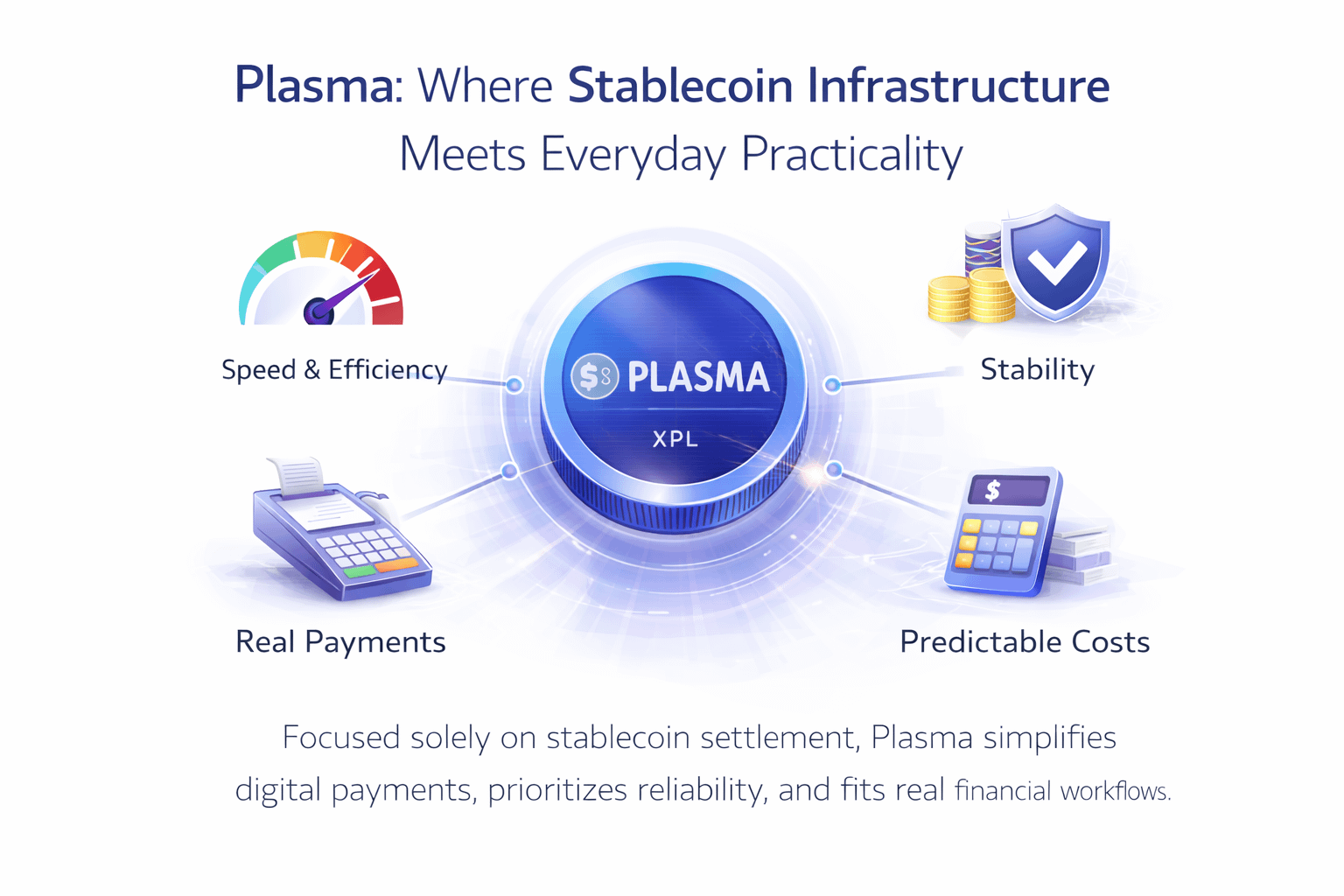
After reviewing its structure and recent updates, it became clear that Plasma is not trying to compete in every sector of Web3. Instead, it narrows its focus to stablecoin settlement and financial efficiency. This approach feels different because many networks attempt to do everything at once. Plasma’s design suggests that real adoption may come from specialization rather than expansion.
One of the strongest aspects of Plasma XPL is its Layer 1 architecture. Rather than relying on multiple layers that can introduce complexity, Plasma keeps settlement close to the base chain. From my perspective, this reduces friction for users who simply want reliable transfers without worrying about which network or bridge they are using. Stablecoin payments become less about technology and more about experience.
Recent discussions around Plasma also highlight improvements in transaction speed and fee structure. These updates show that the project is leaning into usability. Instead of creating noise around short term market movements, Plasma appears to focus on consistency. That consistency matters, especially for institutions and payment focused platforms that depend on predictable performance rather than hype.
Another thing I noticed while exploring Plasma is how it aligns with real financial workflows. Many blockchains feel designed for traders first and real world use cases second. Plasma reverses that mindset. It treats stablecoins as tools for everyday movement of value, not just speculative assets. This shift could make it more relevant for payment systems, remittance platforms, and even digital commerce environments where reliability matters more than innovation headlines.
From a personal viewpoint, Plasma XPL feels like infrastructure that works best when it stays in the background. Users do not need to think about consensus models or network architecture. They simply interact with a system that feels smooth. That quiet design philosophy may be its biggest strength. When technology becomes invisible, adoption becomes easier.
Looking ahead, Plasma’s future seems tied to how the industry evolves around stablecoins. As more platforms explore regulated digital payments and faster settlement systems, specialized chains like Plasma may gain importance. The network does not try to be everything for everyone. Instead, it focuses on a clear mission, which makes its direction easier to understand.
In a space often filled with complexity, Plasma XPL represents a more focused path. It shows that blockchain growth does not always come from adding more features. Sometimes it comes from refining one idea until it feels natural to use. That balance between simplicity and performance is what makes Plasma worth paying attention to right now.