
Alright. Let's talk about the ghost in the machine.
So this rumor's floating around again: Satoshi Nakamoto was Jeffrey Epstein.
Let that sink in for a second.
Not some cryptography professor. Not a reclusive genius coder. But a convicted sex offender.
And you know what’s more terrifying than the rumor? How quickly people believed it. How fast "decentralized, trustless, unstoppable" turned into "sell everything—because of a tweet."
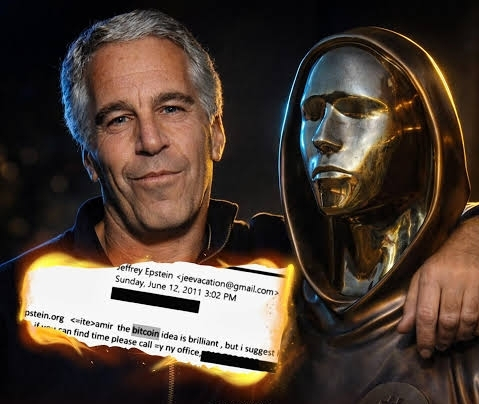
A system built to survive government bans, market crashes, and mainstream ridicule… suddenly trembled because of gossip.
Let’s be real: The timeline doesn't just not match—it laughs in the theory's face.
Bitcoin was created in 2008. The white paper, the coding, the early mining—all that intense, obsessive work happened in 2009-2010. Where was Epstein in 2009? Under house arrest in Florida. In 2010? Still monitored. You really think a guy under 24/7 surveillance was quietly building the most revolutionary monetary system in history between court dates? Come on.
Then there's the emails. Years after Bitcoin was worth billions, Epstein was emailing people like Peter Thiel asking things like: “Can you explain crypto to me?” and “How is it regulated?”
Does that sound like Satoshi? The creator of Bitcoin needing a beginner’s lesson on his own invention? No. That’s a rich guy trying to get into the next big thing—late.
People point to his MIT donations. Sure, he gave money to the Media Lab. That doesn't mean he funded Bitcoin. That’s like saying because you donated to a university's biology department, you discovered DNA.
Here’s what actually matters:
Even if—and it’s a giant if—Bitcoin was created by the worst person you can imagine, it changes nothing. Bitcoin isn't a company. It has no CEO. No board. No headquarters.
It’s a protocol. Code. A set of rules running on thousands of computers worldwide. It doesn’t care who wrote it. It only cares that the math checks out.
If a rumor about a dead financier made you sell your Bitcoin, you weren’t holding a decentralized asset.
You were holding a story. A narrative. And narratives are fragile.
Bitcoin was built so you don’t have to trust anyone. Not me, not the news, not a mysterious founder. You only have to trust the network. The proof is in the chain.
So the next time a wild story hits… maybe zoom out. Check the source. Check the timeline. And ask yourself: am I reacting to noise, or am I trusting the system?
What’s your take—do origin stories even matter in a trustless world, or is this all just distraction?
Sound off below. Let's keep it real. 👇