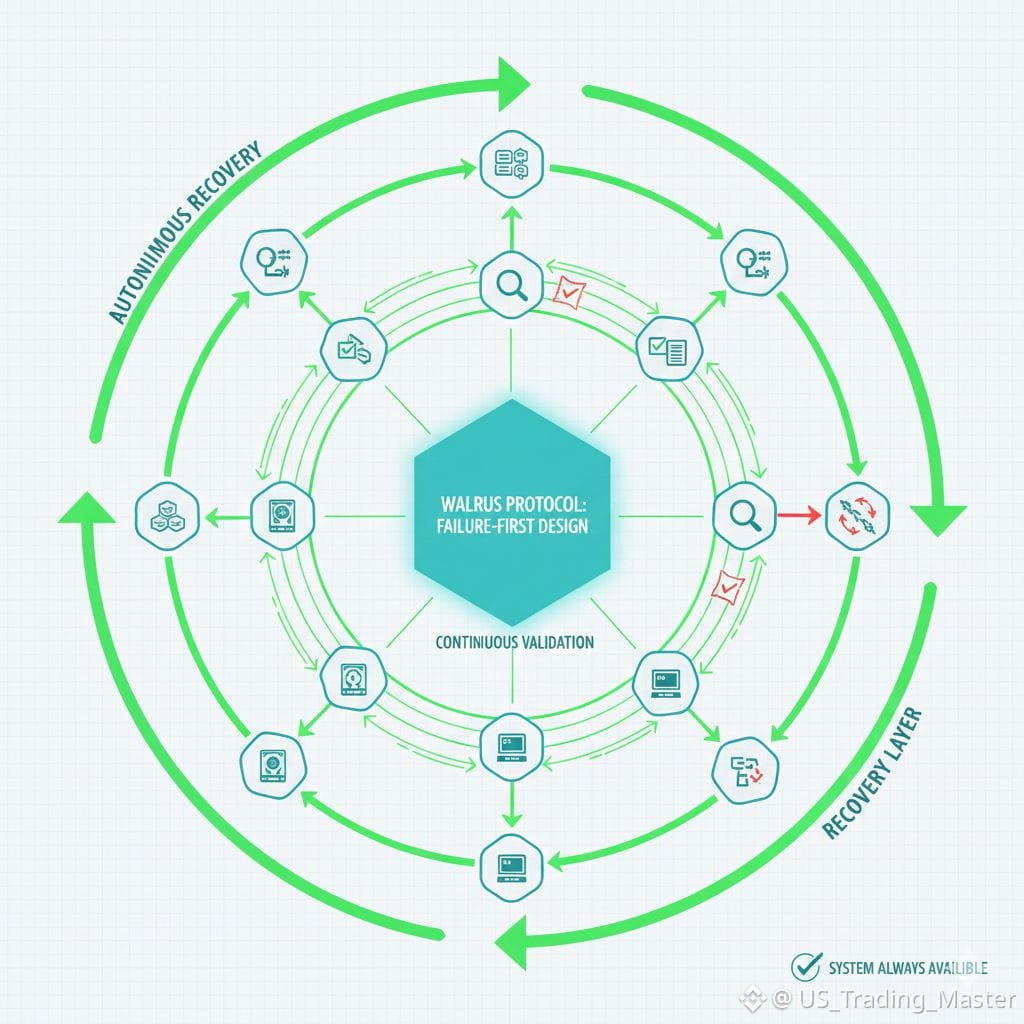
Many Web3 projects focus heavily on decentralization and security, but overlook a critical question: what happens when things go wrong?
Network outages, node failures, and unexpected disruptions are not rare events. They are part of any distributed system. Without proper data recovery mechanisms, even decentralized applications can suffer permanent data loss.
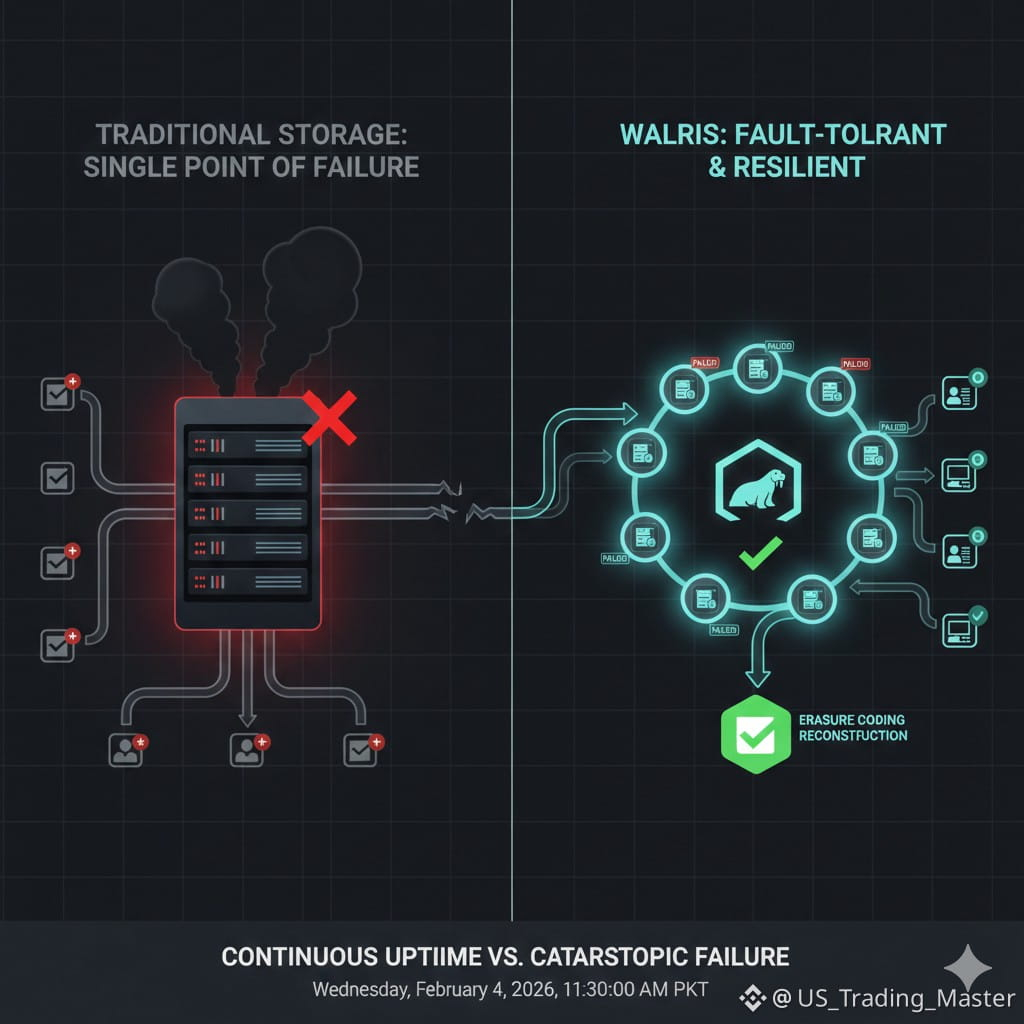
Fault tolerance ensures that a system continues to operate even when components fail. In Web3, this means designing infrastructure where data is not dependent on any single node or location.
Walrus addresses this challenge by distributing data in a way that allows it to be reconstructed even if some nodes become unavailable. This makes the network resilient under real-world conditions.
For developers, fault-tolerant storage reduces risk and simplifies long-term maintenance. For users, it means confidence that their data and applications will not disappear during failures.
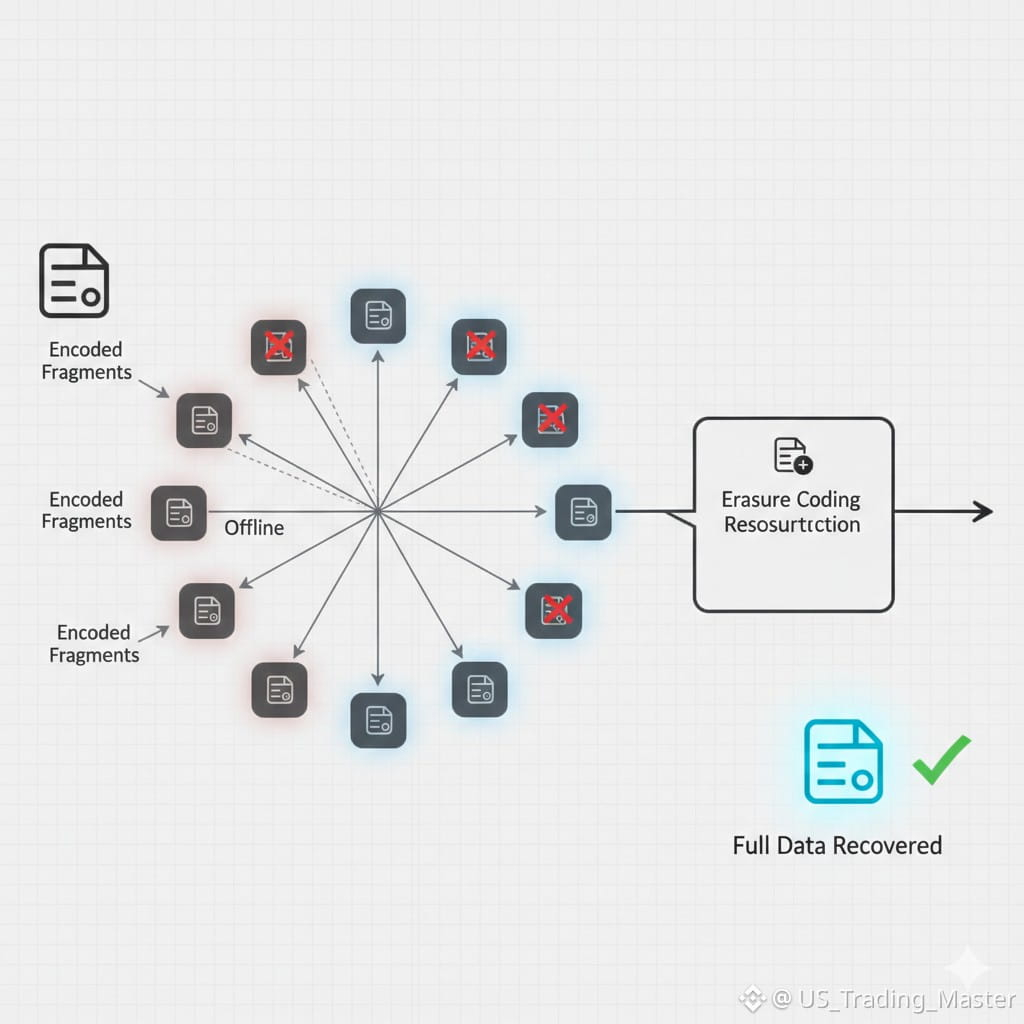
As Web3 adoption increases, infrastructure must be built for imperfect environments. Systems that only work under ideal conditions will not survive at scale.
Walrus provides a recovery-focused approach to decentralized storage, ensuring that Web3 applications remain reliable even when failures occur.
Build applications that survive failure. Learn how Walrus enables fault-tolerant Web3 infrastructure.