
Plasma is not trying to be “another general-purpose chain.” Instead, it’s being designed around one clear mission: making stablecoin transfers feel as smooth as using a modern payment app, while still keeping the open and programmable nature of crypto. This stablecoin-first approach matters because stablecoins are already the backbone of trading, remittances, cross-border payments, and on-chain liquidity. Yet even today, stablecoin transfers can be slowed down by congestion, expensive gas fees, and inconsistent user experience.
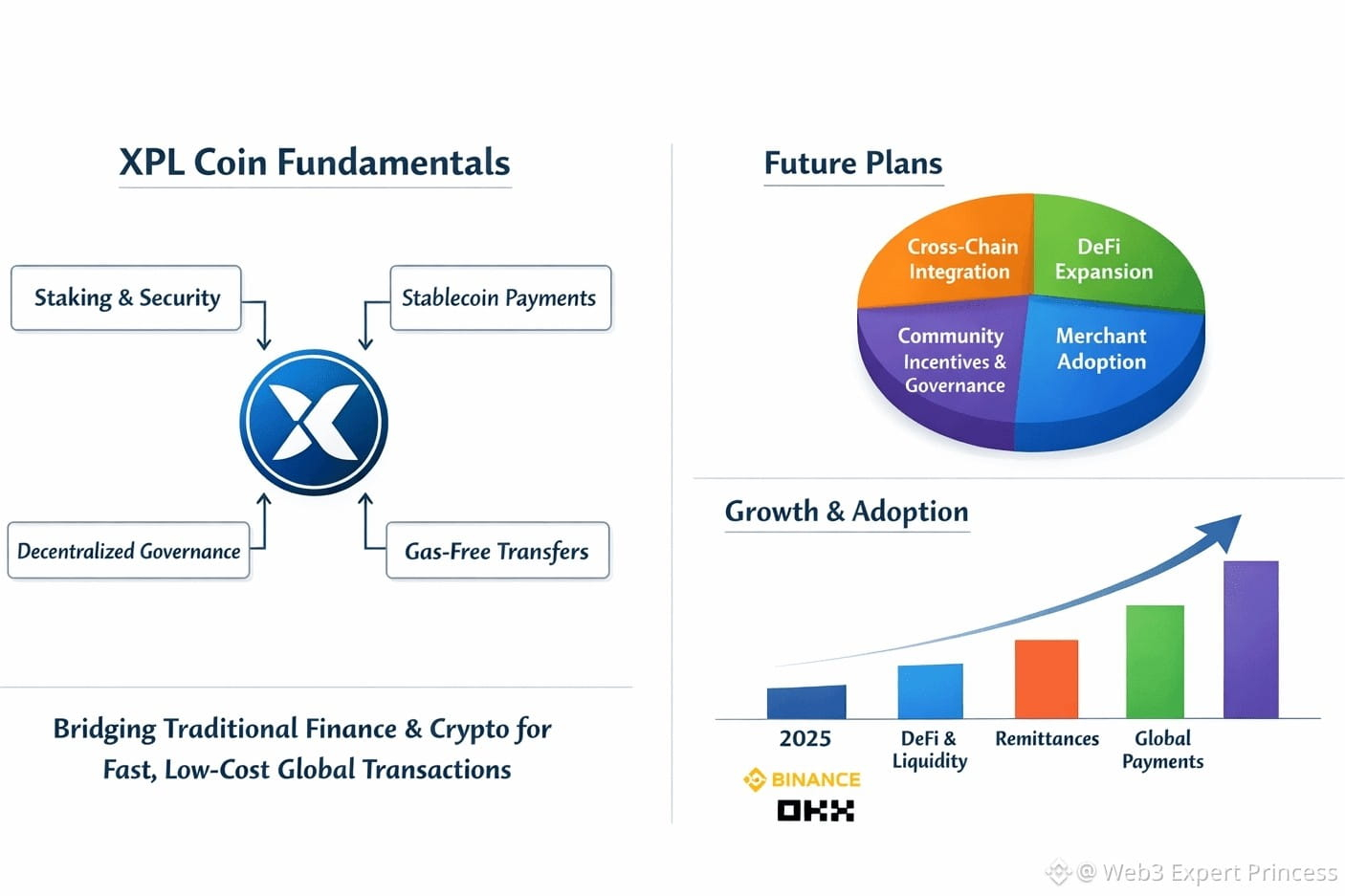 What makes Plasma stand out is that it aims to combine high performance with full compatibility. The chain is built with EVM support, meaning developers can deploy Ethereum-style smart contracts without needing to learn a completely new environment. That’s a huge advantage because it reduces friction for builders and helps Plasma tap into the largest developer ecosystem in crypto. Instead of forcing projects to rewrite everything from scratch, Plasma allows existing tools, wallets, and smart contract frameworks to work in a familiar way.
Speed is another core pillar. Plasma is designed for sub-second finality, which means transactions can be confirmed almost instantly. This is not just a “nice feature,” it’s a requirement for real payment adoption. If a user is paying a merchant, topping up a wallet, or moving funds between apps, they don’t want to wait. Fast finality creates confidence, and confidence creates usage. Plasma’s consensus design focuses on delivering that real-time feel, while still keeping the network secure and stable.
But Plasma’s most interesting innovation is how it treats stablecoins as first-class citizens. On many chains, stablecoins are simply tokens that run on top of the network. Plasma flips that mindset by building stablecoin-centric features directly into the user experience. One example is the idea of gasless stablecoin transfers, where users can send stablecoins without needing to hold the native token for gas. This is a major barrier in crypto today: new users often get stuck because they have USDT or USDC, but no ETH or other gas token to move it. Plasma wants to remove that pain completely.
Another key concept is stablecoin-first gas, meaning transaction fees can be paid directly using stablecoins instead of a volatile native token. This is important because stablecoins are predictable. Users understand them. Merchants prefer them. Businesses can account for them. In contrast, paying gas in a token that fluctuates wildly adds uncertainty and complexity. By prioritizing stablecoin-based fees, Plasma is building something closer to a true payment network rather than just another speculative chain.
Plasma also introduces an ambitious security narrative by incorporating Bitcoin-anchored security as part of its design vision. The idea here is to increase neutrality and censorship resistance by connecting to the most established and decentralized blockchain in existence. While many networks rely purely on their own validator set, anchoring to Bitcoin can act as an additional layer of credibility and long-term assurance. In a world where stablecoin settlement could become critical financial.