

Vanar Chain is sending a clear signal with its recent cryptic posts: the next competitive edge for AI systems won’t be raw intelligence — it will be memory. In a world where autonomous agents handle trading, governance, logistics, and financial operations, the ability to store decisions, datasets, and reasoning permanently becomes a survival trait. That’s where OpenClaw enters the picture, positioning itself as the layer that anchors AI history on-chain rather than leaving it scattered across fragile cloud databases.
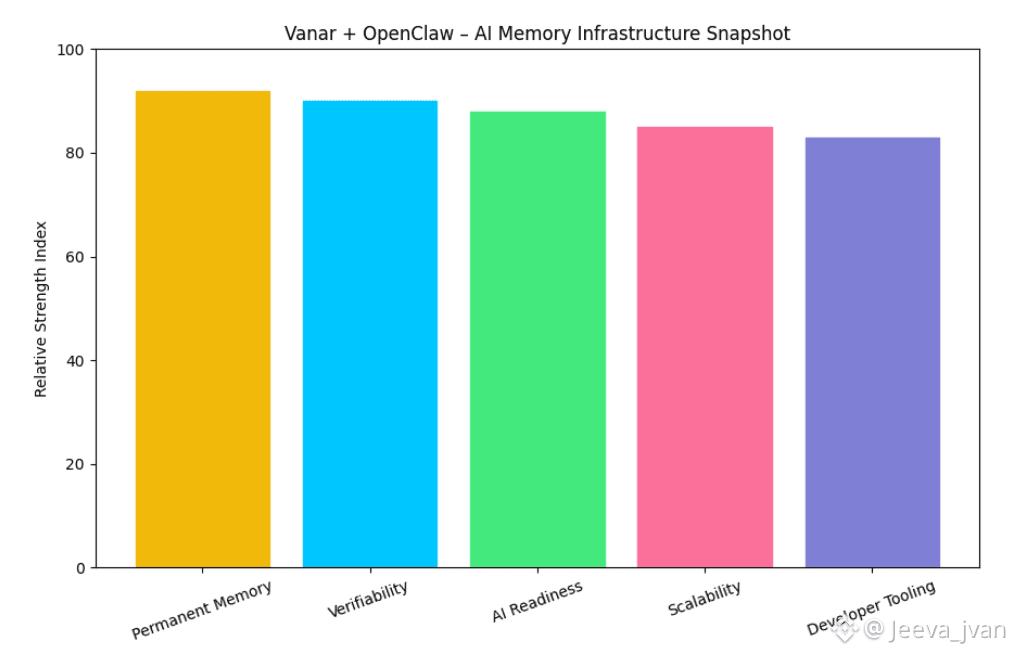
Most AI agents today still rely on off-chain storage that can be altered, deleted, or lost — a fatal flaw for systems expected to manage capital or comply with regulators. Vanar and OpenClaw are framing a different future: one where agent memory is cryptographically verifiable, auditable years later, and resilient to platform changes. This turns data persistence into a protocol primitive, not an application afterthought, and creates a natural filter where only agents with provable histories become trusted enough for institutional use.
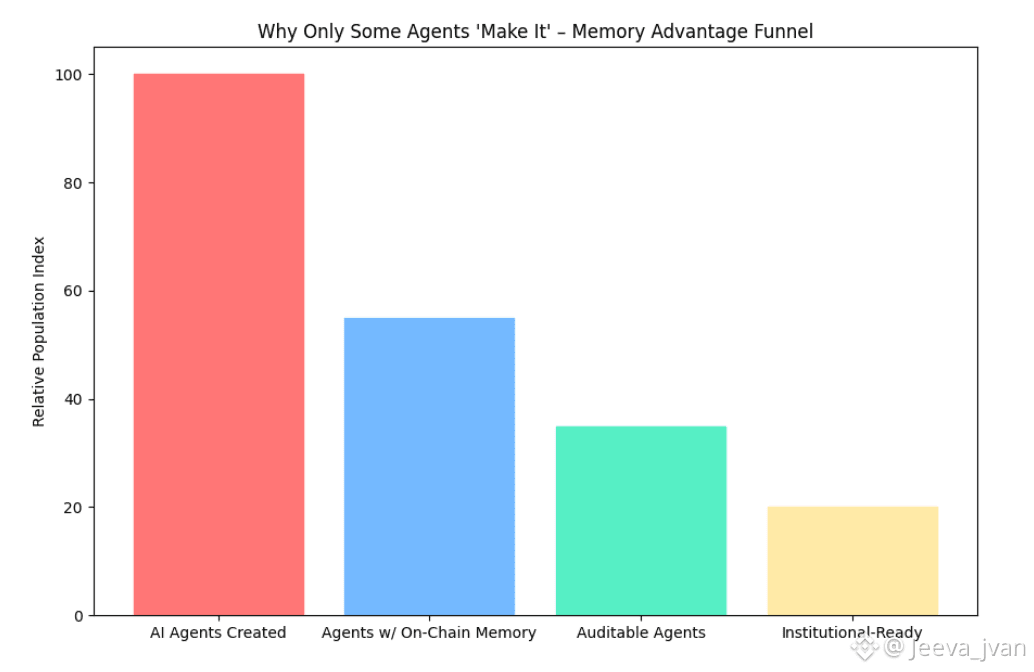
From a Binance-style lens, the takeaway is simple: execution layers move money, but memory layers create trust. As autonomous systems scale globally, institutions will demand immutable records, reproducible decisions, and long-term accountability. Vanar’s narrative suggests it’s aiming to become that archival backbone — the chain where serious AI agents store their past so they can operate in the future. In the coming cycle, price action may grab attention first, but infrastructure that remembers is usually what ends up defining the winners. @Vanarchain #vanar $VANRY
