
In the early days of blockchain technology, we dreamed of an open and independent financial system. While much of that vision has become reality, one fundamental question has never disappeared: why doesn’t digital money feel as simple as the cash we use in everyday life? For most ordinary users, terms like gas fees, bridges, and chains still feel like towering obstacles. Instead of denying this complexity, the Plasma network has chosen to approach the problem from a human perspective rather than a purely technical one. Plasma is not competing to be just another fast network; it is searching for answers to a deeper question—how digital money can behave as naturally and effortlessly as real-world money.
One of the biggest limitations of today’s blockchain ecosystem is fragmentation. Each chain exists like an isolated island where assets remain trapped. Moving value from one island to another requires bridges and complex mechanisms that are often expensive and risky. Plasma fundamentally challenges this model. Its philosophy is simple yet powerful: people do not want to move money; they want to use it. Based on this truth, Plasma has built an infrastructure where the boundaries between chains become blurred, allowing users to achieve their financial goals directly—without facing technical complexity.
At the beginning of 2026, Plasma’s integration into the NEAR Intents ecosystem opened an entirely new chapter. This is not just another connection; it is an intent-based liquidity layer. Users no longer need to think about which chain they are on or how funds are being transferred. They simply express their intent, and the system automatically executes it through the most efficient route. As a result, XPL and USDT are now part of a massive shared liquidity pool connected to hundreds of assets and numerous blockchains. This represents a major psychological shift in how money is experienced and used.
One of Plasma’s most distinctive strengths is that it does not draw a hard line between traditional banking and decentralized finance. Instead, it speaks a common language understood by banks, payment processors, and DeFi protocols alike. This approach ensures that crypto is no longer a separate or isolated world, but a natural extension of the global financial system. Plasma’s role becomes especially clear in card and merchant payments. When a user taps a card at a store, all the underlying blockchain complexity disappears completely. This is the true success of digital money—where technology fades into the background and user experience takes center stage.
Plasma has also taken a forward-looking stance on regulation. While many projects attempt to avoid regulatory frameworks, Plasma has chosen to build trust through compliance with the MiCA framework and partnerships with major institutions. The belief is clear: to create real change in the global financial system, strong foundations must be built within regulatory boundaries. This trust-driven approach is also reflected in the role of the XPL token. Rather than leaving it exposed to pure market volatility, XPL is positioned as a core pillar of network security and long-term sustainability.
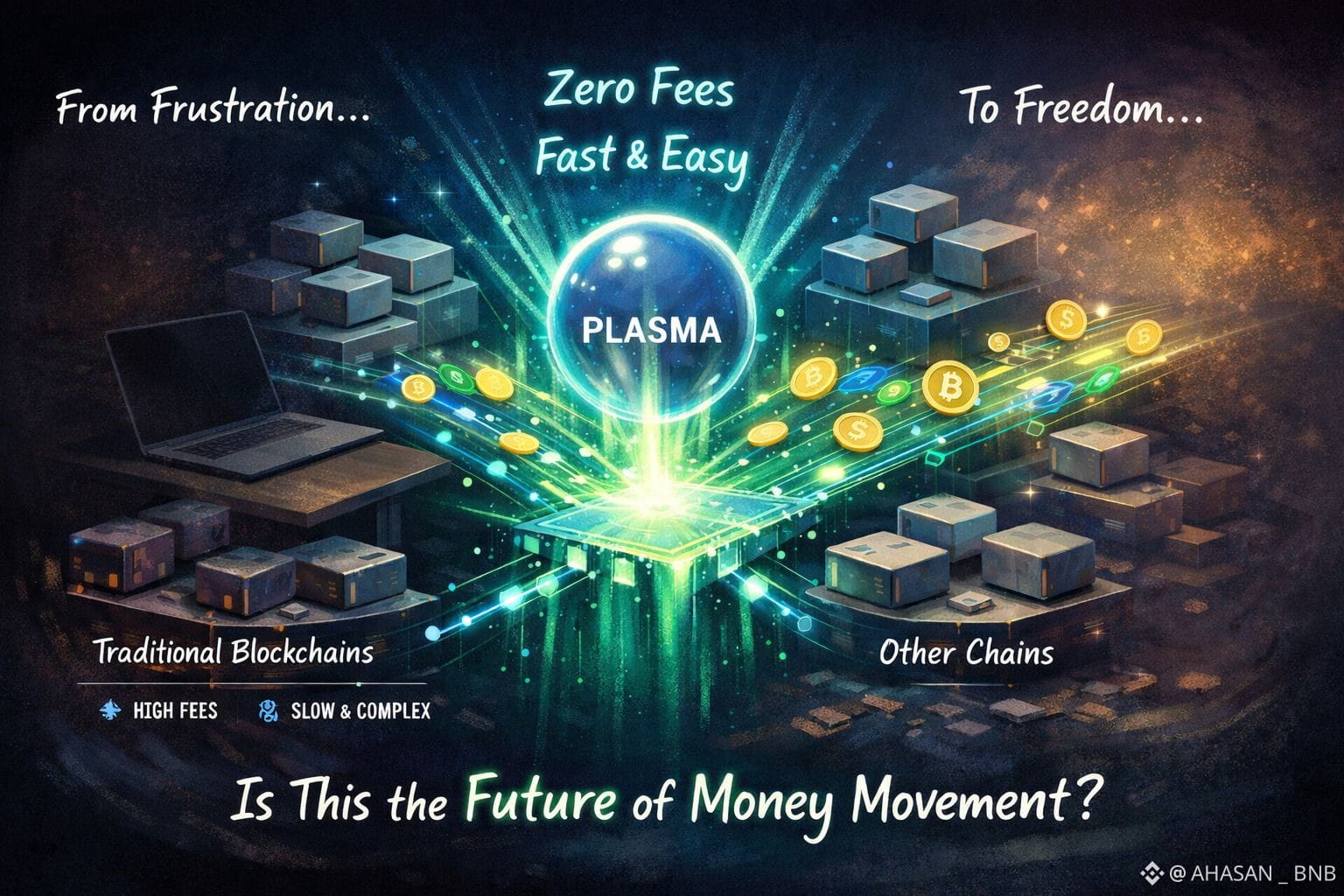
Plasma is not merely developing another blockchain. It is signaling the beginning of a new era—one where blockchain is not just a piece of technology, but a modern, trustworthy financial infrastructure designed for real people and real-world use.