

The first time I started looking deeper into Walrus, I realized it is not trying to compete through loud narratives or constant attention. Instead, it focuses on something more practical: making decentralized data and private transactions feel effortless. While many projects highlight speed or hype cycles, Walrus seems built around stability and long-term usability, especially for applications that need reliable data availability on-chain.
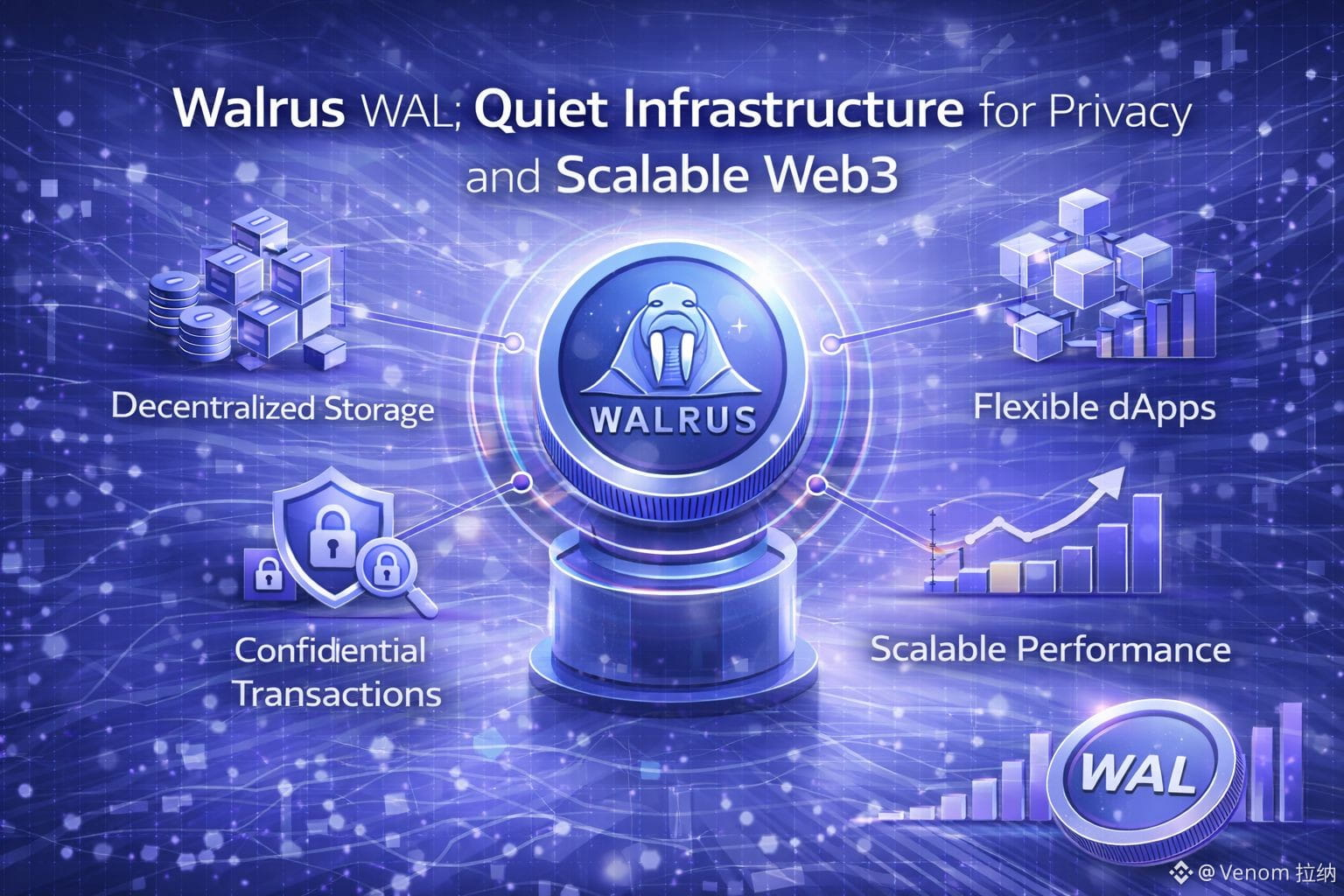
What stands out about Walrus Protocol is its approach to privacy and scalability together. Traditionally, systems that emphasize privacy often slow down performance, while fast networks compromise on confidentiality. Walrus aims to reduce that trade-off by distributing data storage efficiently while keeping sensitive interactions protected. This makes the network relevant for decentralized finance, digital assets, and applications that require consistent performance without exposing user activity unnecessarily.
A recent shift around Walrus discussions highlights how the protocol is moving toward more structured ecosystem growth. Instead of focusing only on technical experimentation, the network is gradually aligning itself with real usage patterns. Builders are exploring how decentralized storage and secure data distribution can support next-generation dApps that need both flexibility and reliability. From my perspective, this feels less like a trend and more like infrastructure quietly evolving.
The role of WAL becomes clearer when viewed through this lens. WAL is not just a transactional asset; it supports network participation, incentivizes storage providers, and helps maintain performance as the ecosystem expands. Its relevance grows alongside real usage rather than market noise. As more applications rely on decentralized data availability, WAL becomes a mechanism that aligns incentives between users, validators, and developers.
Another interesting aspect is how Walrus avoids overwhelming users with complexity. Many blockchain platforms expect users to understand every technical layer, but Walrus works more like invisible infrastructure. The protocol handles data distribution and privacy behind the scenes, allowing applications to feel smooth and familiar. This approach is important for mainstream adoption because most users care about experience, not architecture.
Looking at the broader landscape, Walrus represents a shift toward practical Web3 systems. Instead of building purely experimental frameworks, it emphasizes balance: privacy without friction, scalability without unnecessary exposure, and decentralization that supports real applications. These qualities make Walrus less about short-term attention and more about long-term reliability.
In my opinion, the strongest signal from Walrus is its quiet consistency. It does not rely on constant announcements to stay relevant. Instead, it builds infrastructure that becomes more valuable as usage grows. As Web3 moves toward applications that need secure data layers and dependable performance, Walrus and WAL feel positioned as foundational components rather than temporary narratives.