

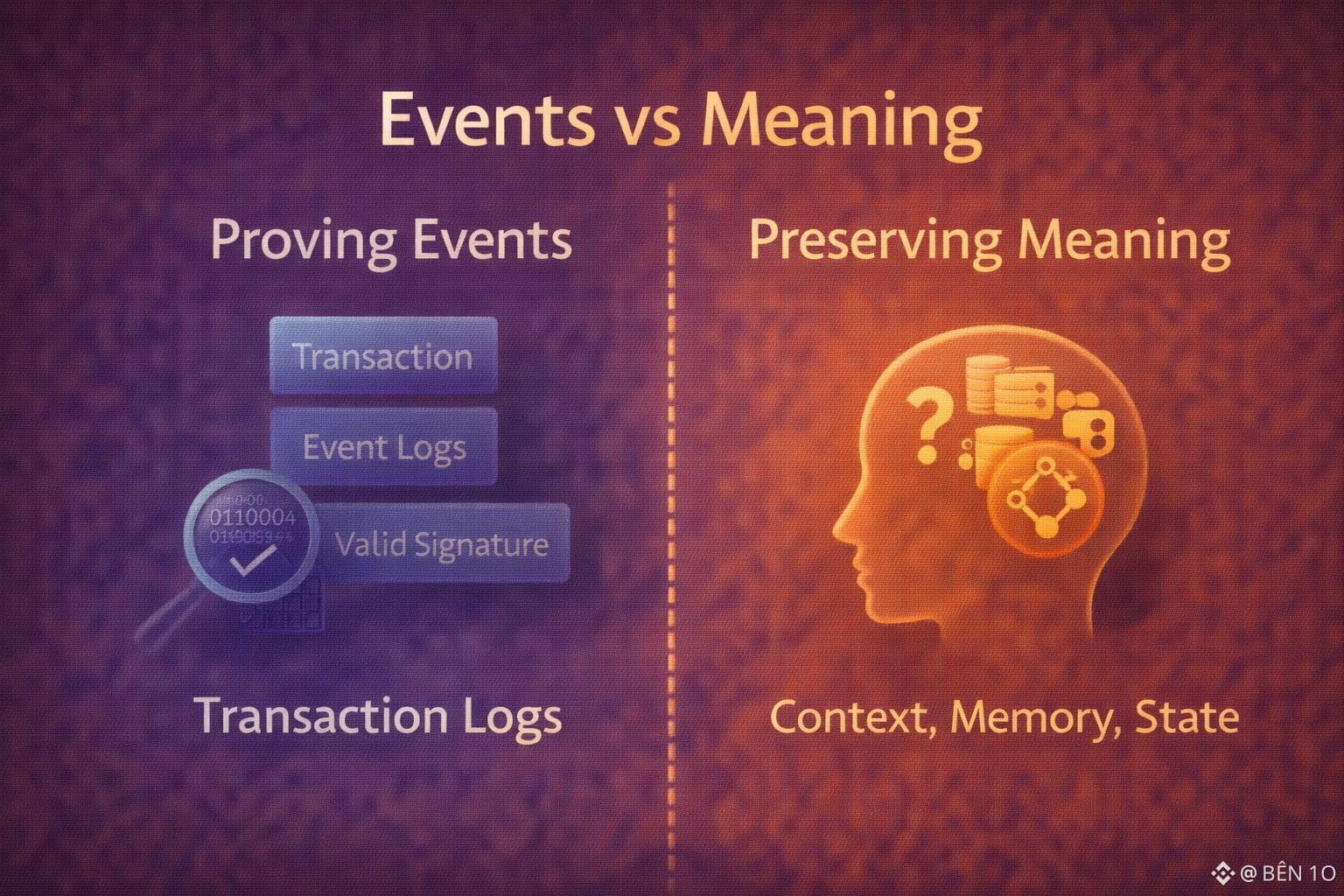
 For more than a decade, blockchains have optimized for one thing exceptionally well: proving that an event happened. A transaction occurred. A balance changed. A signature was valid. This focus made sense in the early years, when the primary problem was trustless verification. But as blockchains attempt to move beyond finance into consumer software, entertainment, and digital identity, a deeper limitation has surfaced. Blockchains are excellent at recording actions, yet remarkably poor at preserving meaning.
They remember that something happened, but not why, not how it relates to everything else, and not what it represents over time. This gap between event-logging and contextual memory is where most consumer blockchains quietly break down. And it is precisely where Vanar begins to feel structurally different from its peers.
Most Layer-1 chains still resemble spreadsheets with cryptography attached. Rows of transactions, columns of balances, immutable but emotionally empty. That abstraction works for finance, where the unit of meaning is numerical and discrete. It fails for products where value is cumulative and contextual: games, brand ecosystems, digital collectibles, licenses, memberships, and identities. In those environments, users don’t experience their actions as isolated events. They experience them as progression, continuity, and state.
Vanar appears to start from this observation rather than arriving at it later as a patch.
Rather than positioning itself as a faster or cheaper ledger, Vanar feels designed as an attempt to give Web3 something it largely lacks: memory that software can reason about. Not memory in the sense of storage capacity, but memory in the sense of coherent context. Who is this user? What have they done before? What do they own, what permissions follow them, and how should the system interpret their next action?
 This is why Vanar makes more sense when evaluated like backend infrastructure rather than as a financial network. Its choices begin to resemble those made by systems that expect to support long-lived applications, not just transactions.
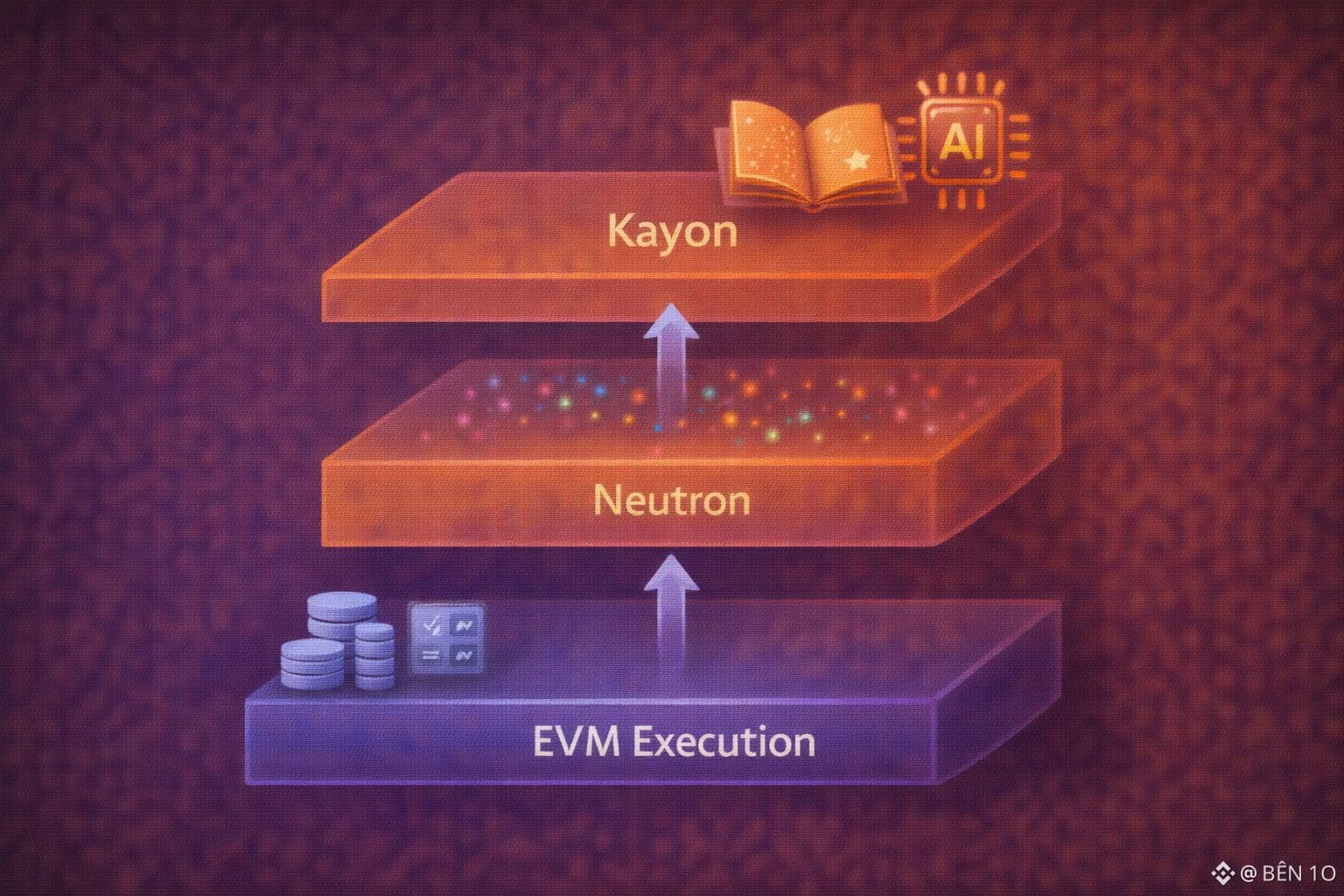
The base layer is intentionally familiar. EVM compatibility is not framed as innovation but as alignment. It allows developers to reuse tooling, audits, workflows, and mental models that already exist. That decision alone reduces one of the largest hidden costs in Web3: cognitive migration. But the execution layer is not where Vanar is placing its differentiation. The real bet is being made above it.
Neutron, as described by the project, is an attempt to move beyond raw data blobs and indexer-dependent interpretation. By compressing information into small, verifiable “Seeds” that can be owned, permissioned, and queried, Vanar is effectively saying that data should carry meaning by design, not by reconstruction. This is a critical shift. Most blockchains outsource meaning to off-chain systems, creating brittle stacks where context lives everywhere except where trust is strongest.
Above that, Kayon is positioned as a reasoning layer bridging structured on-chain data with natural language queries and AI-assisted interpretation. Whether every claim scales perfectly is secondary to the architectural intent. The intent is to reduce the gap between “data exists” and “software understands what the data represents.” That gap is where most consumer applications collapse under complexity.
Usage patterns reinforce this direction. Public explorers show roughly 190+ million transactions, millions of blocks, and tens of millions of wallet addresses. These numbers do not automatically imply meaningful adoption, but their shape matters. High volumes of small, frequent actions are exactly what consumer systems generate. Games, marketplaces, and interactive environments do not produce occasional large transfers; they produce constant micro-interactions that only make sense when stitched together as a narrative.
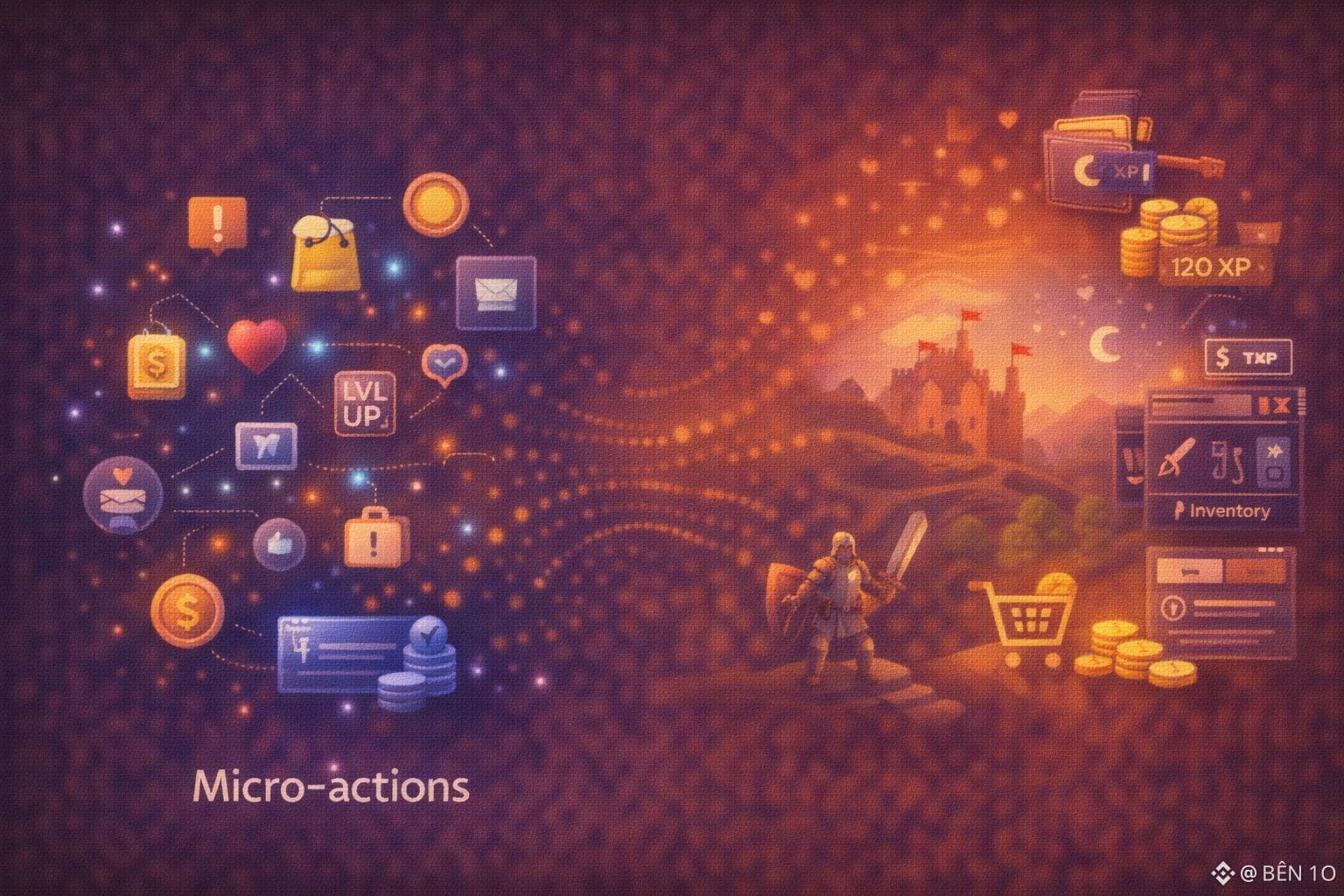 A chain optimized only for settlement struggles here. A chain designed for context has a chance.
The role of VANRY fits this understated philosophy. It exists primarily as infrastructure: gas for execution and economic security through staking. It is not framed as the emotional center of the system. Its existence as an ERC-20 on Ethereum further signals a pragmatic stance toward liquidity and interoperability. VANRY is meant to support the system, not demand attention from it.
In consumer platforms, that is usually a sign of maturity.
Vanar’s approach to decentralization also reflects its target audience. Validator selection leans toward known, reputable operators rather than anonymous participation at all costs. This choice will unsettle purists, but it aligns with the expectations of brands, studios, and enterprises that need accountability, uptime, and clear operational responsibility. Cultural and entertainment systems value reliability over ideological symmetry.
That trade-off is not hidden. It is embraced.
Where this philosophy becomes most tangible is in environments like Virtua and the VGN gaming network. Gaming is one of the most unforgiving stress tests for infrastructure. Players click rapidly, expect instant feedback, forget credentials, and abandon platforms the moment friction appears. There is no tolerance for abstract explanations or delayed settlement. If a blockchain can survive in that environment, it is because it has internalized user behavior as a design constraint.
Vanar appears to treat gaming not as a narrative opportunity, but as a forcing function. If context, continuity, and forgiveness are not built into the system, the system simply will not survive.
Seen this way, Vanar’s ambition is not to compete on benchmarks. It is to redefine what blockchains are for. Most chains remember that something happened. Vanar is trying to remember what it meant—how events connect, how identity persists, how ownership evolves, and how software can reason across time rather than react to isolated moments.
This is a quieter ambition than chasing transaction throughput or market share. It does not lend itself to viral charts. But if successful, it changes the role blockchains play in consumer software entirely.
The long-term implication is straightforward. The next generation of users will not adopt blockchains because they care about decentralization, cryptography, or consensus. They will adopt products that feel continuous, intuitive, and reliable. The infrastructure that wins will be the one that disappears into experience while preserving meaning underneath.
If Vanar succeeds, developers will not think of it as a ledger. They will think of it as memory.
And users will not think of it at all.
That, in consumer technology, is usually the highest form of success.