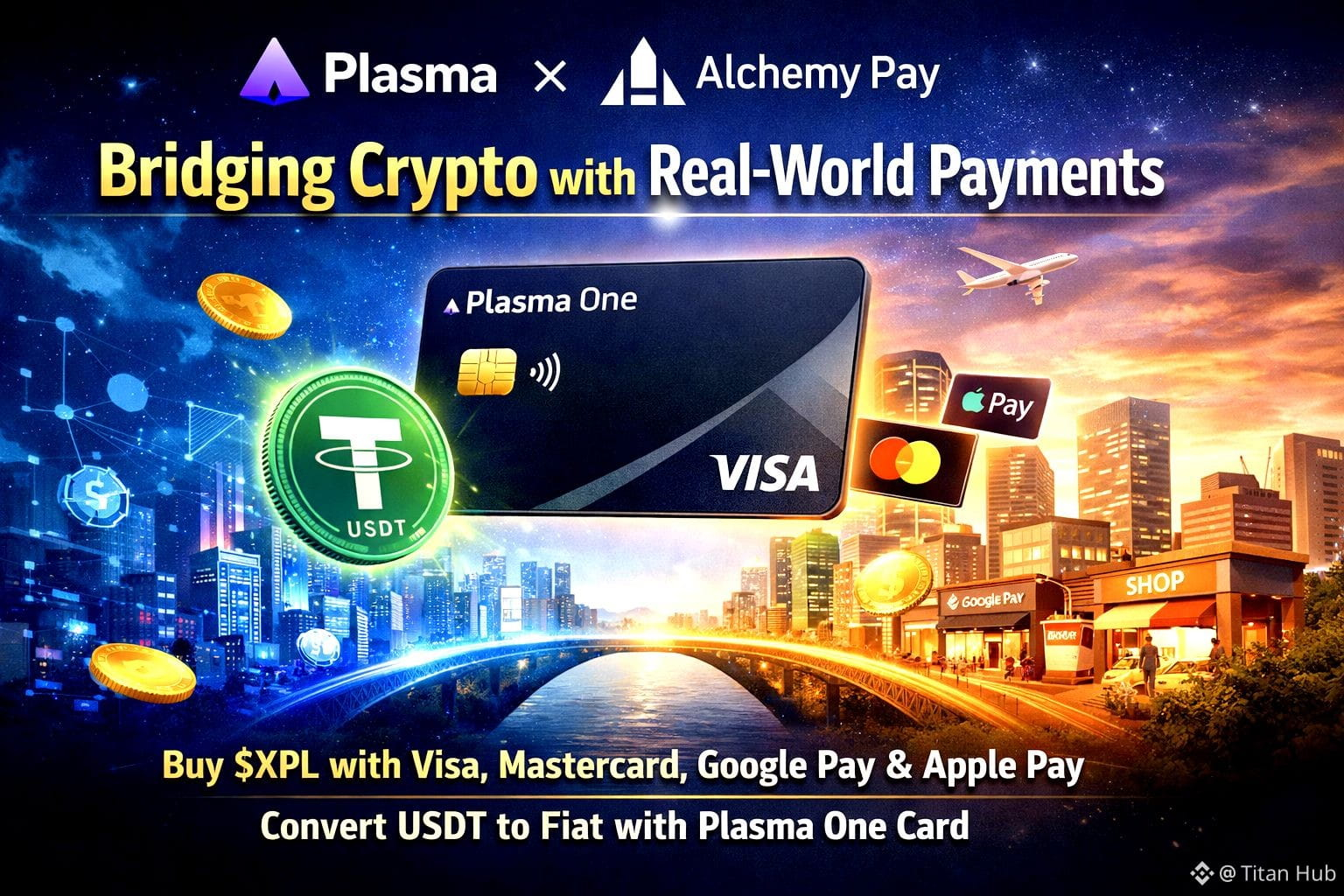
One of my long-standing frustrations in crypto has been the gap between holding tokens and actually using them. We talk a lot about adoption, yet for many users, converting on-chain value into everyday spending still feels clunky, slow, or overly dependent on centralized off-ramps. That’s why Plasma’s partnership with Alchemy Pay stood out to me not as hype, but as a practical step toward everyday usability.
The Problem, Simplified
Crypto liquidity is abundant on-chain, but real-world access remains fragmented. Users often need multiple apps, exchanges, and intermediaries just to make a simple payment. This friction limits crypto’s role as a functional financial tool rather than a speculative asset.
Think of it like having money locked inside a high-tech vault: valuable, secure, but inconvenient if you can’t open it when you need to buy a coffee.
What the Partnership Actually Does
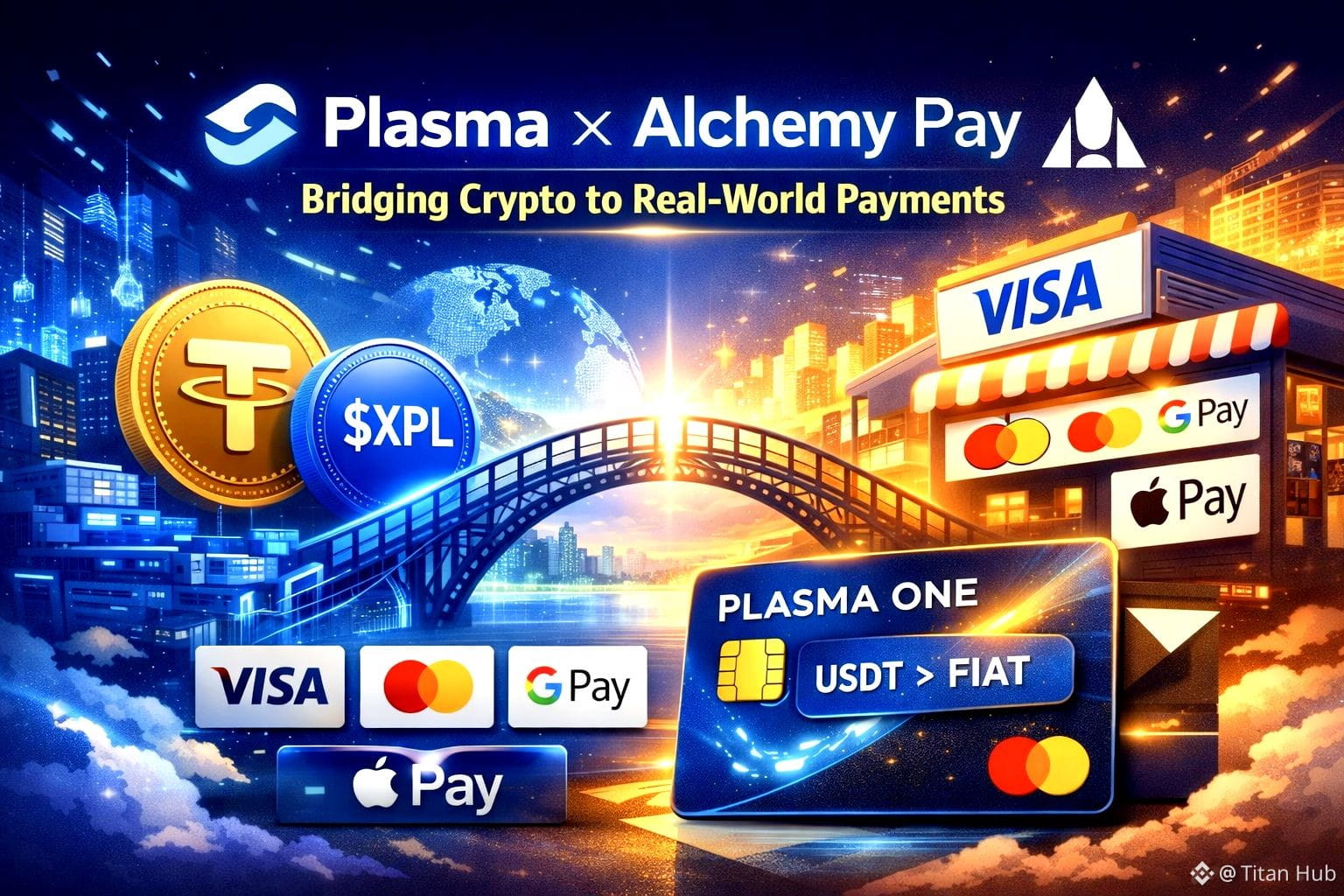
Plasma’s integration with Alchemy Pay enables users to purchase XPL directly using Visa, Mastercard, Google Pay, and Apple Pay. This removes a major onboarding barrier by letting users enter the Plasma ecosystem with familiar payment methods instead of navigating complex exchange flows.
On top of that, Plasma introduces “Plasma One” partner cards, which allow users to convert USDT into fiat for real-world spending. These cards are accepted at over 150 million Visa-enabled merchant locations worldwide, effectively extending on-chain stablecoin utility into daily commerce.
Users can buy XPL with standard payment rails
Stablecoins like USDT can be spent as fiat through Plasma’s card infrastructure
Crypto balances become usable without manual off-ramping each time
Why This Matters at the Infrastructure Level
This isn’t just a convenience feature, it’s an infrastructure bridge. Alchemy Pay specializes in compliant fiat-crypto payment rails, while Plasma focuses on building a usable ecosystem layer on top. Together, they reduce friction at two critical points: entry (on-ramp) and exit (spending).
For developers and ecosystems, this kind of integration increases user retention. For users, it lowers the psychological and technical barrier between crypto and daily finance.
The Role of XPL
Within this setup, XPL functions as an ecosystem token, supporting network activity and integration utility rather than being framed purely as a speculative instrument. Access, payments, and ecosystem participation are where its relevance becomes visible, especially as Plasma expands real-world use cases.
Short-Term Utility vs. Long-Term Vision
In the short term, this partnership improves user experience simpler access, faster usability, and broader payment coverage. In the long term, it positions Plasma as part of a growing payment-focused crypto infrastructure, where blockchains don’t compete only on throughput, but on how seamlessly they integrate with existing financial systems.
Risks and Open Questions
Of course, challenges remain. Regulatory environments for crypto-linked cards vary by region, and reliance on third-party payment providers introduces external dependencies. Competition in the crypto payments space is also intense, with multiple projects chasing the same “crypto-to-fiat” use case.
Still, partnerships like this suggest a clear direction: fewer abstractions, more usability.