
DUSK trades around the low-teens cents lately, with daily volume that can look busy for a small cap and a market value that still puts it firmly in the “early-stage, prove it” category. That alone is why some traders keep it on a watchlist: it’s small enough that real traction could reprice it, but also small enough that disappointment hits hard.
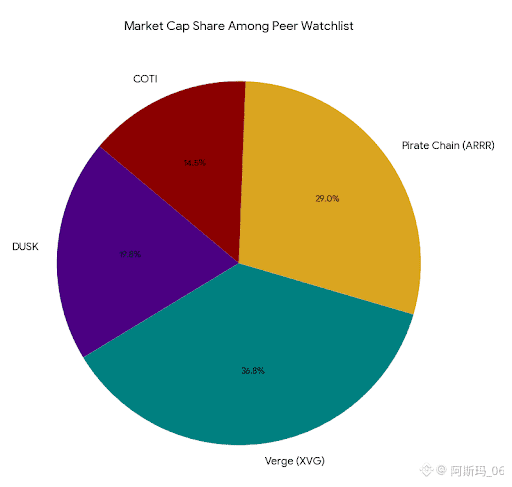
What makes Dusk come up in conversation isn’t hype about the next meme narrative — it’s a fairly specific bet on regulated, privacy-aware finance moving on-chain. The team has been around since 2018, which in crypto years means they’ve survived multiple cycles. Their pitch is simple in theory but hard in practice: let financial institutions use blockchain without exposing all their data to the world.
A helpful way to think about Dusk is to compare it to a bank ledger with frosted glass. Transactions still happen, balances still update, but not everyone can peek inside. Through zero-knowledge cryptography, the network aims to prove that things are valid without revealing all the details. For institutions that need confidentiality but also need to satisfy auditors and regulators, that design makes intuitive sense.
This is where the broader AI and data-integrity theme sometimes gets attached. As AI systems rely more on sensitive or proprietary data, there’s a growing conversation about verifiable data, privacy, and controlled sharing. Dusk isn’t an “AI chain,” but its privacy and proof mechanisms fit into that bigger story about trusted data. Whether that narrative actually drives usage is another question.
On the partnership side, Dusk has pointed to collaborations in Europe tied to tokenized securities and regulated digital assets. In theory, that’s a strong niche: tokenized stocks, bonds, funds, and stable-value settlement assets could all need infrastructure that balances privacy with compliance. In reality, partnerships in crypto are easy to announce and slow to monetize. A pilot is not the same as recurring volume. Traders should separate press releases from on-chain evidence.
The bull case is straightforward. If even a handful of regulated platforms actually issue and trade assets on Dusk, and if a compliant stable asset on the network sees real settlement use, the chain could capture a small but valuable corner of the RWA market. Because the current valuation is modest, it wouldn’t take massive global adoption to justify multiples from here. In small caps, going from “almost no usage” to “some real usage” can be enough for a rerating.
The bear case is just as clear. Regulated finance moves slowly, institutions are conservative, and many competing chains are chasing the same RWA opportunity. Dusk could end up with solid tech but limited demand. In that scenario, the token risks drifting as attention and liquidity rotate elsewhere. Low-cap L1s often live and die by sustained activity, not potential.
So the real signals to watch aren’t philosophical, they’re measurable. Are there more real assets issued on-chain over time? Is there consistent transaction activity tied to actual financial use rather than wallet churn? Do third-party players build on it without being paid to do so? Those are the kinds of signs that a network is escaping the “story phase.”
From a trader’s perspective, DUSK looks like a narrative-plus-execution play. Volatility is part of the package. Position sizing matters more than conviction tweets. It’s the kind of asset where you assume wide outcomes: it could quietly compound if a niche clicks, or it could slowly fade if adoption lags.
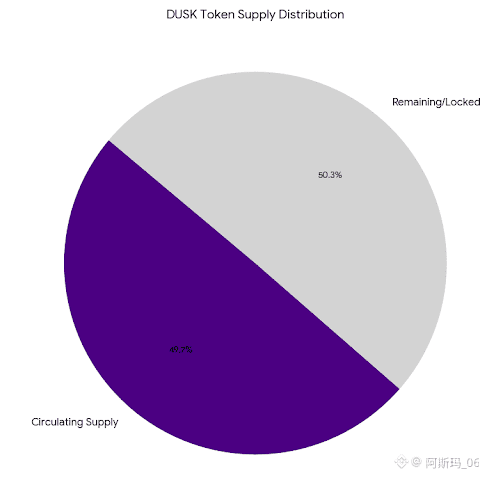
The grounded takeaway is this: treat Dusk less like a guaranteed winner and more like an early bet on a specific thesis — privacy-compliant on-chain finance. If that thesis shows up in real usage, the token has a reason to exist beyond speculation. If it doesn’t, the market will eventually notice. The job for a careful investor is simply to keep asking, “Is this being used in the real world yet?” and let that answer guide exposure.
