

When people talk about $DUSK , the conversation almost always lands on privacy plus compliance in finance. That framing isn’t wrong—but it’s incomplete. What keeps drawing me back isn’t a trading primitive or a DeFi mechanic. It’s identity. Because once you seriously think about regulated finance, RWAs, private settlement, and permissioned access, one thing becomes obvious: the real constraint isn’t throughput. It’s verifiable proof.
Not “trust me” proof. Not “I uploaded my documents once” proof. But proof that can be checked repeatedly, at the moment it matters, without turning every application into a permanent data leak.
That’s where Citadel subtly reframes the entire discussion.
Citadel and the Shift From Data Sharing to Proof Sharing
Citadel is Dusk’s self-sovereign identity system built around zero-knowledge proofs. The core idea is simple but powerful: users control what they disclose, when they disclose it, and to whom—without handing over their full identity every time they interact with a service.
Instead of identity being a static file stored across dozens of platforms, it becomes a dynamic credential you can prove. Your data stays private. What matters is whether the required condition is satisfied, not whether a company gets to keep a copy of your documents forever.
This is a fundamentally different mindset from the traditional “upload your ID and hope for the best” model that dominates both Web2 and much of Web3.
The License-Based Model: Practical Selective Disclosure
What makes Citadel especially compelling is how it structures identity around licenses and verification rather than raw personal data.
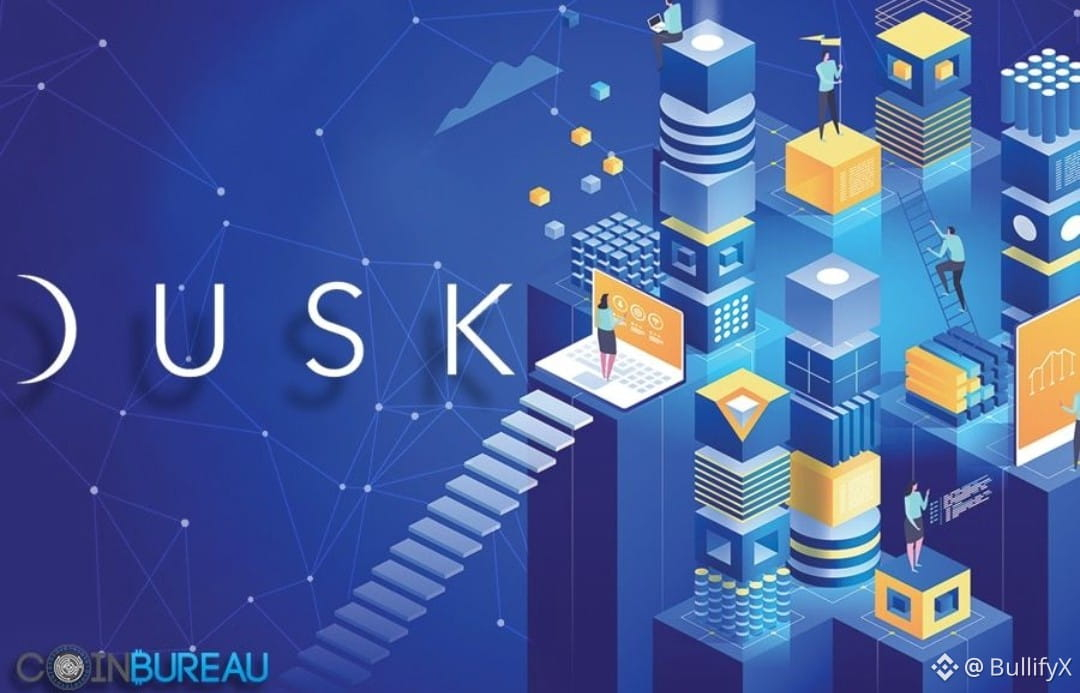
There are three roles: the user, a license provider, and a service provider. A user requests a license on-chain, the license provider issues it, and later the user proves—via a zero-knowledge proof—that they hold a valid license when accessing a service. The service provider verifies eligibility without ever seeing the underlying identity data.
In practice, this means:
You can prove compliance (KYC/AML, accreditation, jurisdiction, etc.).
Your personal data doesn’t become a permanent honeypot.
You don’t have to resubmit the same documents to every new platform as if nothing has changed in a decade.
This is selective disclosure implemented in a way that actually scales.
Why This Matters Outside Crypto Narratives
This is where many crypto discussions miss the point. Regulated finance cannot function with total transparency, nor can it operate inside opaque systems auditors can’t reason about. Institutions need privacy and verifiability at the same time.
Identity is the bridge between those two demands.
If identity checks can be repeatable, privacy-preserving, and verifiable exactly when an action occurs, then tokenized securities, compliant DeFi infrastructure, and on-chain settlement stop being theoretical. They start becoming operational.
And this identity layer isn’t limited to finance. Any environment that needs permissioning without surveillance enterprise workflows, gated communities, B2B systems, or creator platforms benefits from the same design logic.
Why Europe’s Digital Identity Direction Strengthens the Case
Europe’s push toward the European Digital Identity Wallet under the updated eIDAS framework reinforces this trajectory. The emphasis is on verifiable credentials and controlled disclosure identity as proof, not as over-shared data.
Seen through that lens, Citadel doesn’t look like an optional add-on. It looks aligned with where real-world identity systems are already heading: minimal disclosure by default, user control by design.
Rethinking $DUSK Through the Identity Lens
Viewed this way, the role of the DUSK token also becomes clearer. If the network is actively used for regulated interactions identity proofs, credential verification, private settlement then $DUSK isn’t just another Layer 1 asset. It becomes the coordination layer for a network doing work that most chains only describe in whitepapers.
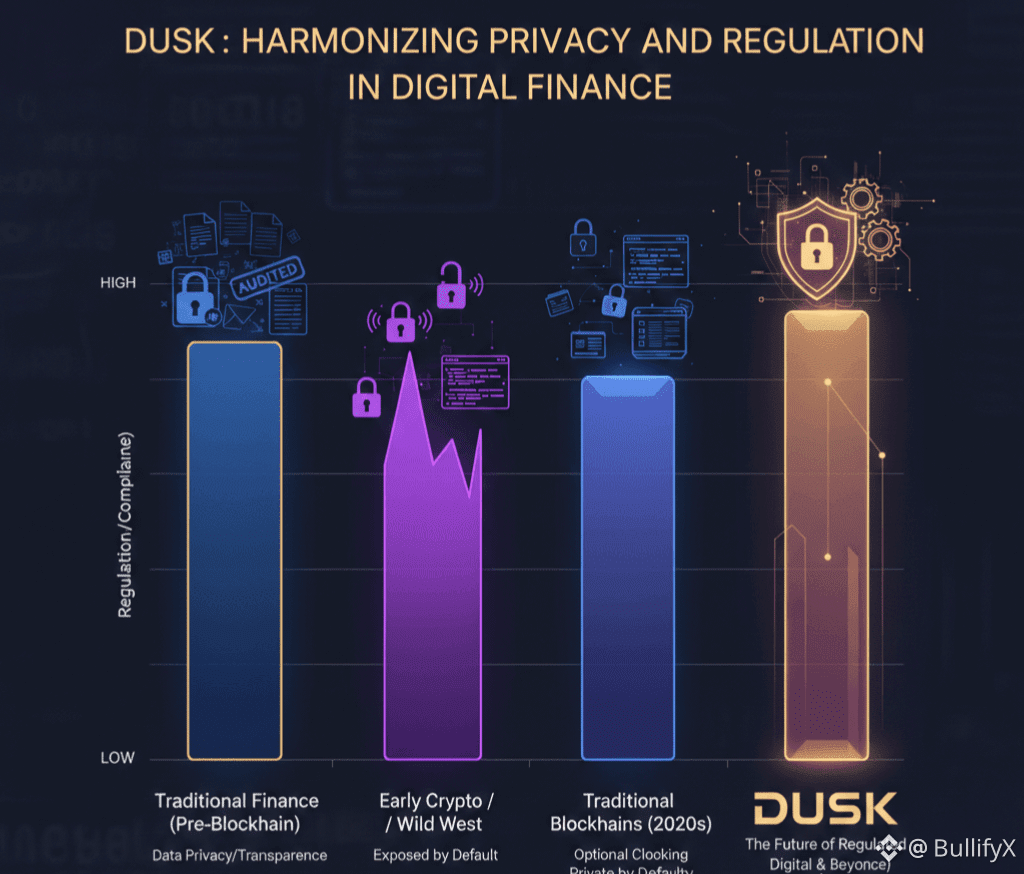
That’s the long term bet. Not whether Dusk trends next week, but whether it becomes the place institutions can confidently say:
“We can prove what’s required without exposing everything else.”
If Citadel evolves into a real adoption layer where applications authenticate users without stockpiling sensitive data, Dusk stops looking like a niche privacy chain and starts looking like infrastructure regulated markets can actually operate on.