
The moment that stayed with me wasn’t dramatic. Nothing broke. Nothing failed. That’s why it mattered.
I was inside a Vanar-powered environment, moving through a live interaction that felt… normal. Actions resolved instantly. The session carried on without hesitation. There was no prompt telling me to confirm anything, no reminder that I was “on-chain,” no pause asking me to understand what just happened.
At first, I didn’t even register it.
Only later, when I tried to retrace the moment, did I realize there was no obvious checkpoint where the system had asked for my attention. No ceremony. No friction. The experience had already moved on.
That’s the point where my assumptions broke.
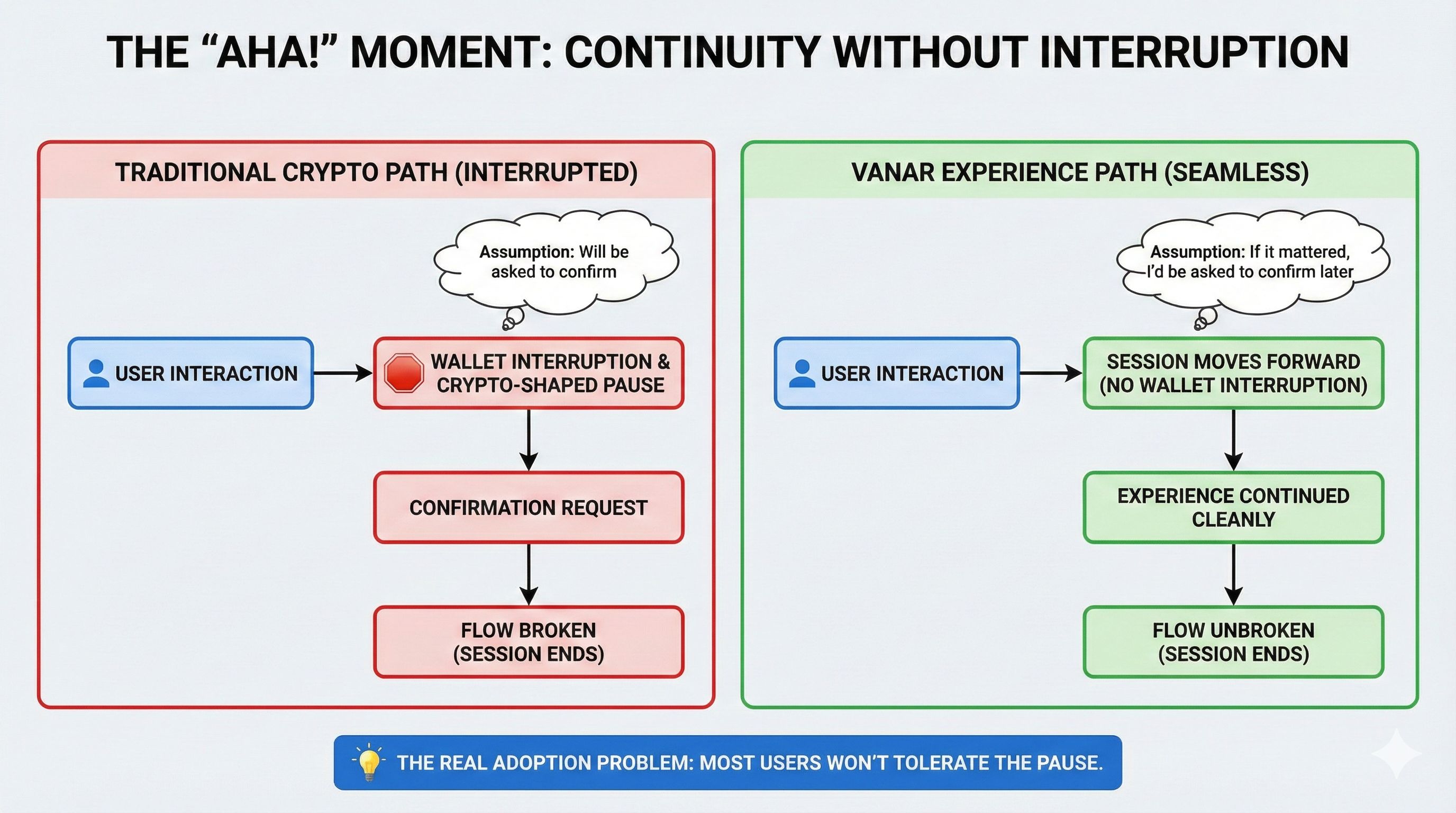
Most blockchains I’ve interacted with expect users to adapt. They teach you how to wait, how to approve, how to think in steps and confirmations. That might work for technical users, but it collapses fast in gaming, entertainment, and brand-driven experiences where attention is the real currency.
What stood out to me about Vanar Chain is that it doesn’t treat education as the path to adoption. It treats absence of friction as the responsibility of the system.
You can feel this most clearly in environments like Virtua Metaverse, where sessions don’t neatly end and restart. Presence persists. Motion is the default. The system refuses to interrupt just to reassure you that something worked.
The same behavior shows up in live ecosystems like VGN Games Network, where stopping the experience to explain infrastructure would break the entire point of being there.
What changed my perspective was realizing that Vanar isn’t trying to onboard users into Web3. It’s designed so users don’t have to know they’ve arrived at all. The infrastructure stays quiet. The experience stays intact.
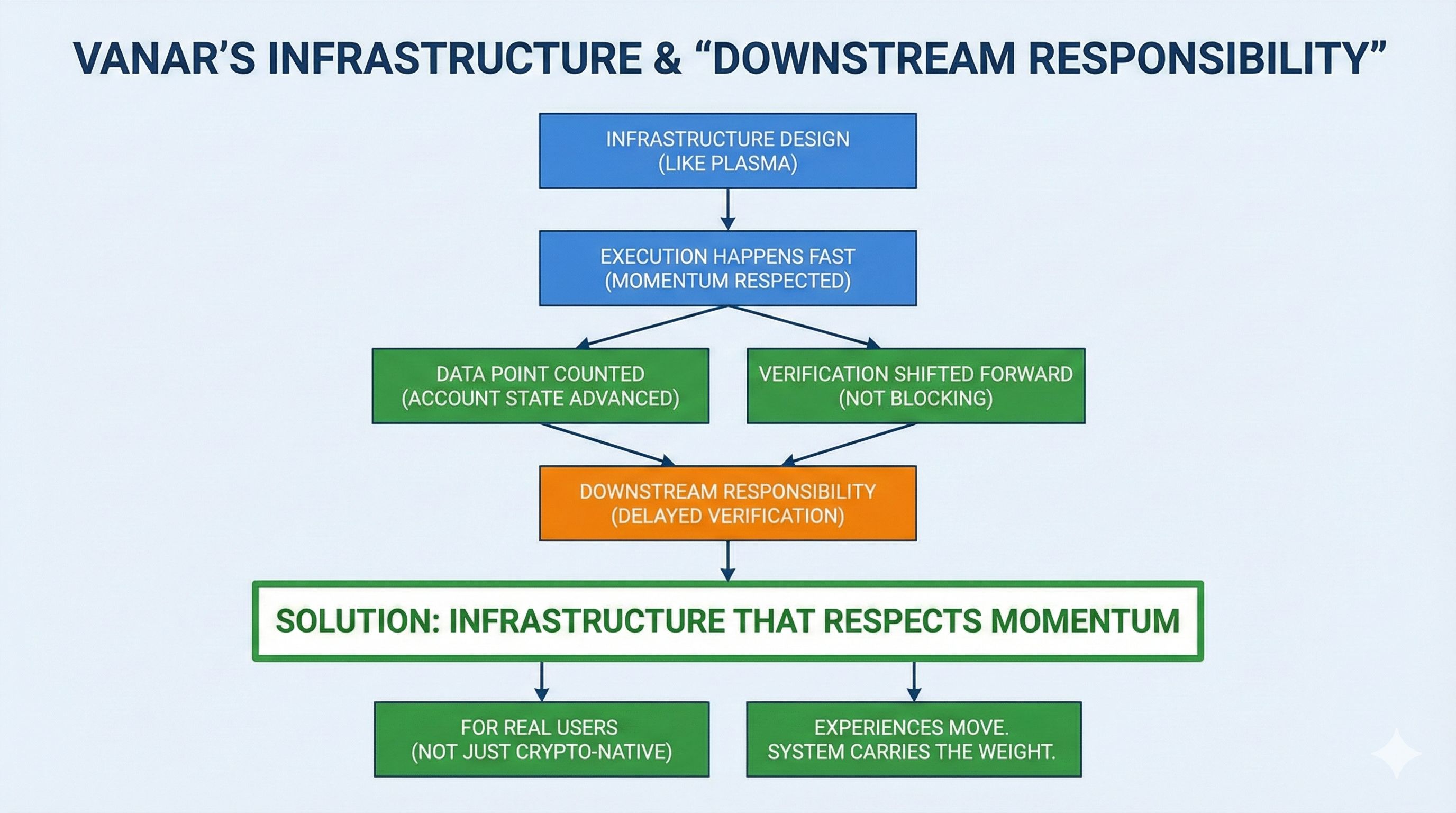
Powered by Vanar ($VANRY ), Vanar feels less like a blockchain asking for adoption and more like one built to survive real-world usage, where the next wave of users won’t wait to be taught how systems work.
They’ll just expect things to work.
And if they don’t, they’ll leave.