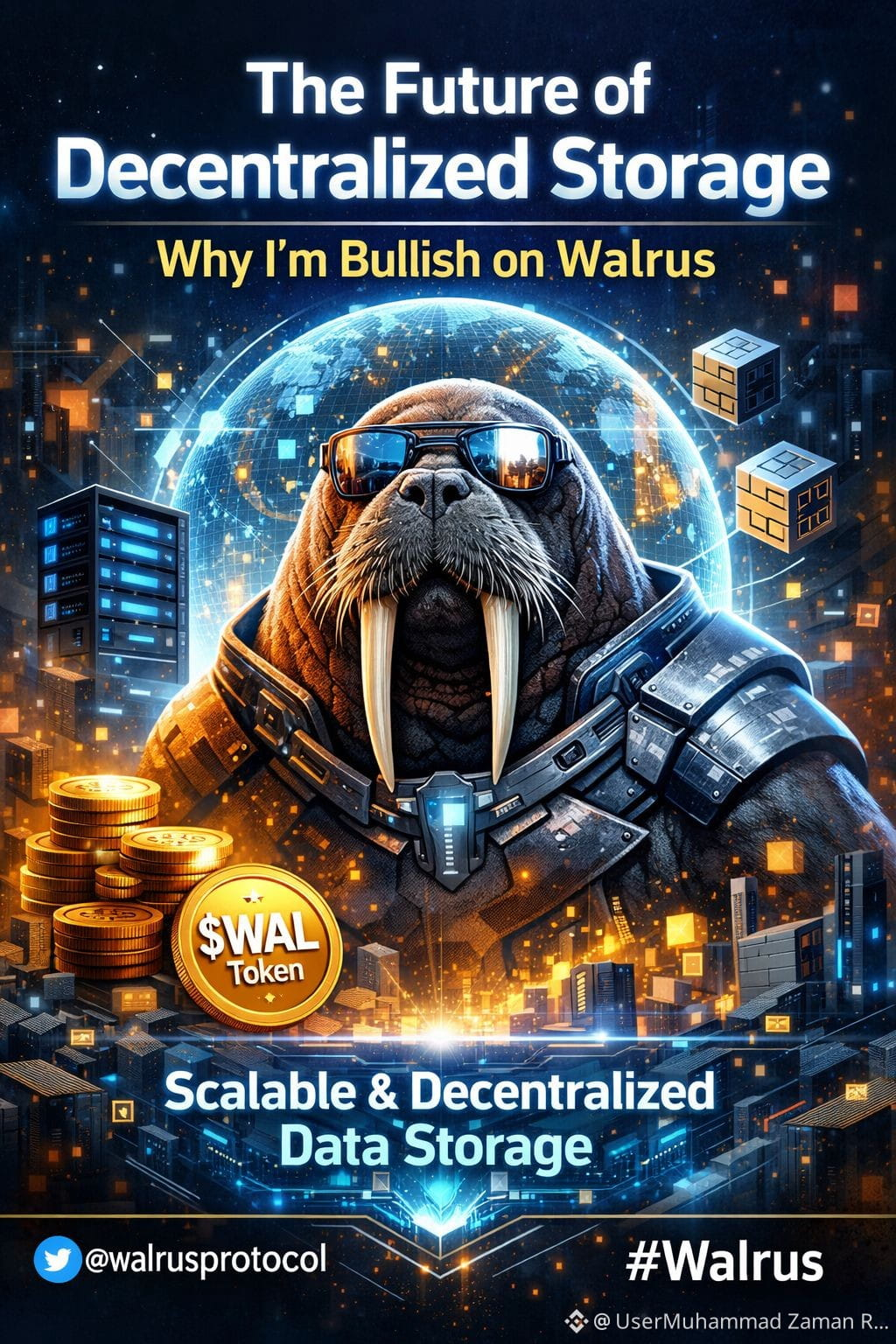
The Future of Data: Why Walrus Protocol is the Missing Link in Web3
The explosion of Web3 and AI has brought us to a critical crossroads. We have decentralized finance and decentralized identity, but where does the actual "stuff"—the massive datasets, the high-res NFTs, and the AI models—actually live? For too long, we’ve relied on centralized "cloud" bandaids. Enter @walrusprotocol.
What Makes Walrus Different?
Unlike traditional storage that simply "mirrors" data (which is expensive and slow), @walrusprotocol uses a revolutionary encoding algorithm called Red Stuff. This allows the network to break data into "slivers."
The genius part? Even if two-thirds of the storage nodes go offline, your data remains fully recoverable. It’s not just storage; it’s programmable data availability built on the high-speed Sui blockchain.
The Power of $WAL
The native token, $WAL, is the heartbeat of this ecosystem. It’s not just a speculative asset; it’s a utility powerhouse:
Staking: Node operators stake $WAL to ensure they stay honest and provide high-quality storage.
Governance: Holders decide the future of the protocol.
Payments: It’s the primary currency for leasing storage space in a decentralized economy.
Why I’m Bullish on the Ecosystem
With the rise of AI agents and decentralized social media, the demand for cost-effective, verifiable storage is about to go parabolic. Walrus isn't just competing with other crypto projects; it's positioning itself as a legitimate, decentralized alternative to big-tech cloud providers.
By making storage a "first-class citizen" in the blockchain world, Walrus is enabling a truly owner-centric internet. If you aren't watching @walrusprotocol yet, you're missing the foundation of the next digital era.
#Walrus $WAL #BinanceSquare #Web3 #DecentralizedStorage