
I didn’t notice the AI doing anything special.
That was the tell.
No prompt appeared.
No decision moment surfaced.
Nothing asked to be approved again.
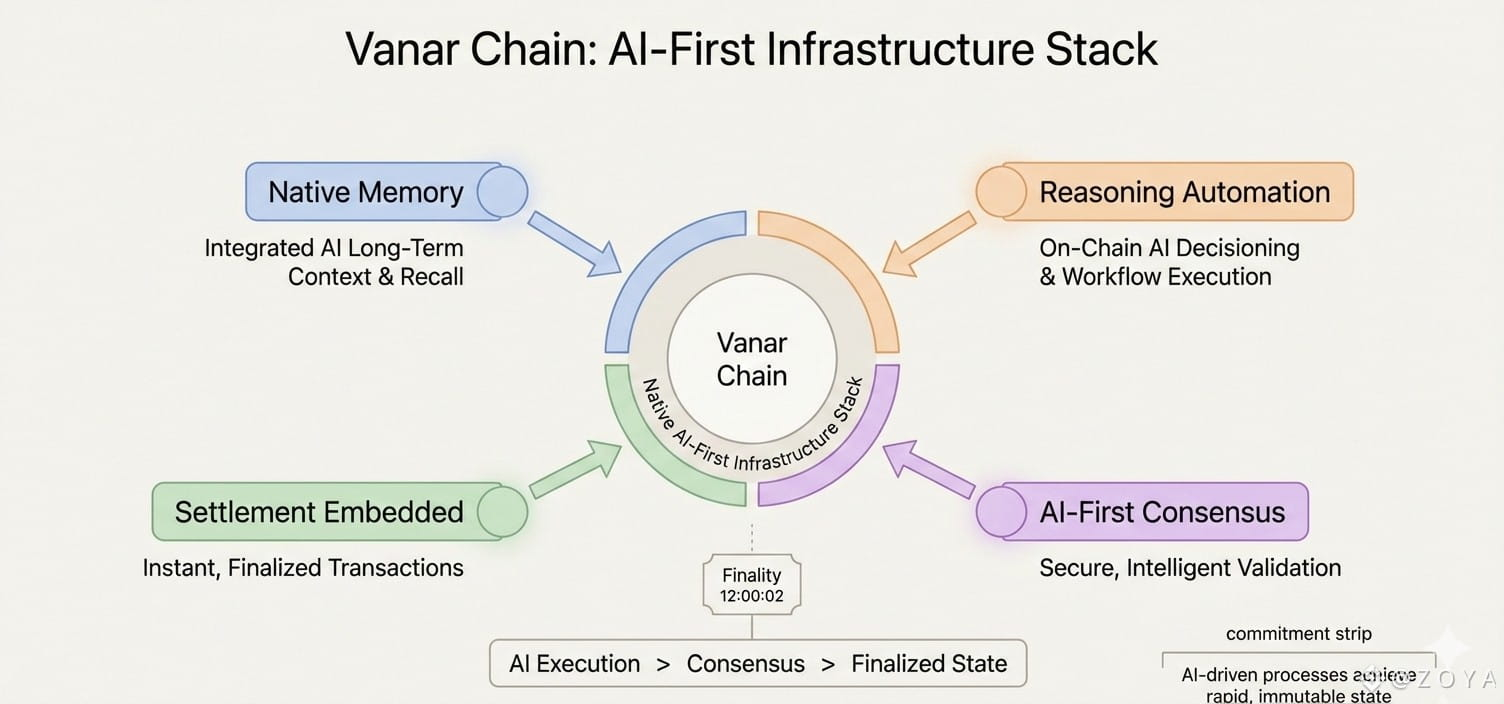
The system simply continued, as if intelligence was supposed to persist longer than attention. On Vanar, that assumption isn’t a feature. It’s the baseline. And once you build from that baseline, everything else quietly rearranges itself.
Most chains still treat AI like an add-on. Something you bolt on after the rails are laid. Tools get layered. Narratives get updated. Vanar skipped that phase entirely. Intelligence wasn’t introduced. It was embedded. Memory didn’t live above the system. It lived inside it. Reasoning didn’t explain outcomes later. It traveled with them.
So nothing announces itself.
You only feel it when behavior starts to compound.
The agent doesn’t forget because nothing told it to reset. Context doesn’t decay because there is no checkpoint where it’s required to justify its existence again. Execution settles fast enough that nobody interrupts the flow to ask whether it should have happened.
That’s when teams start losing their old instincts.
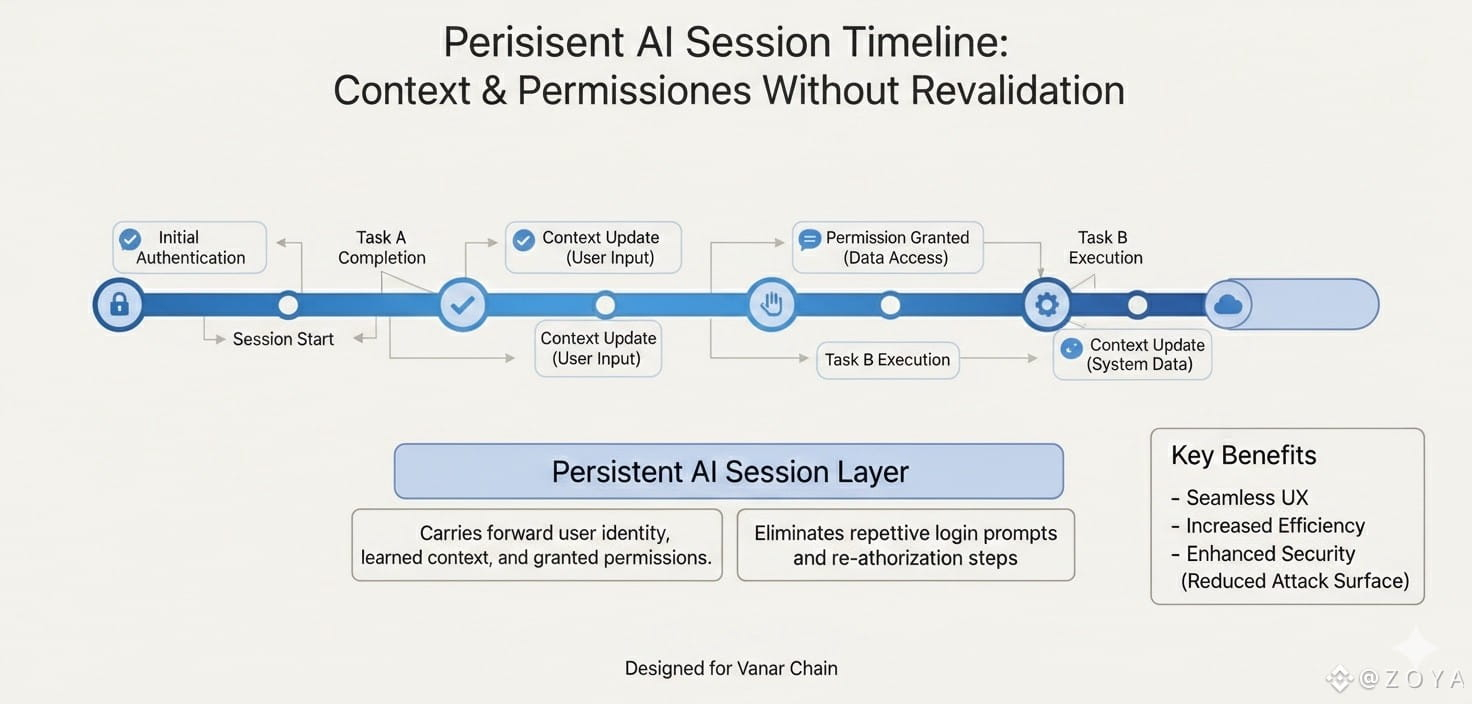
We were trained on pauses. Wallets. Signatures. Small rituals that forced responsibility back into the room every few steps. Those moments acted like brakes, even when we pretended they were just UX. Vanar removed them cleanly.
The first signal isn’t failure.
It’s silence.
myNeutron didn’t make headlines because semantic memory doesn’t sparkle. It just stays. Later, someone realizes the AI is still acting inside assumptions nobody reviewed this week. Not maliciously. Correctly. The system did exactly what continuity allowed it to do.
Kayon makes that realization uncomfortable. Reasoning no longer lives outside the system as commentary. It lives inside execution. Decisions carry their own logic forward, readable after the fact but never slowed down by needing approval before.
Flows is where it stops feeling theoretical. Automation doesn’t wait for humans to catch up. It moves because the infrastructure assumes intelligence will act again. Safety comes from boundaries, not hesitation. The chain doesn’t flinch. The app layer learns to respect that.
This is why “AI-ready” chains feel nervous right now. They still depend on resets. AI treats resets like damage.
Payments finish the picture.
Agents don’t open wallets. They don’t navigate UI. They don’t feel reassurance from a spinner. They require settlement that clears quietly and compliantly. Vanar treating payments as native rails instead of ceremony is what makes the rest credible. Economic consequence arrives without debate.
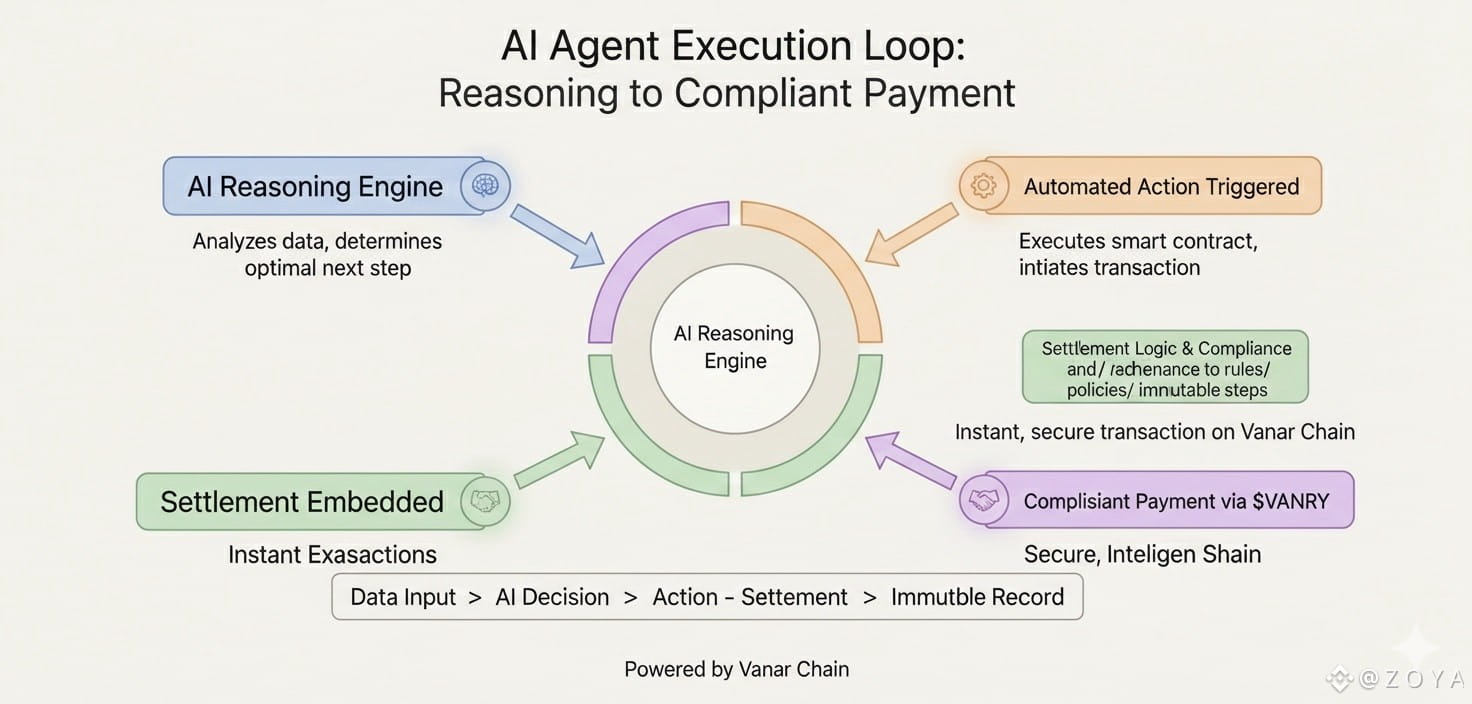
Cross-chain expansion wasn’t optional. Intelligence doesn’t respect network boundaries. Moving onto Base wasn’t about audience growth. It was about letting the same assumptions survive in a bigger room. More agents. More flows. More activity that doesn’t announce itself with a tweet.
That’s where $VANRY sits.
Not as hype.
Not as a promise.
As accounting for intelligence that keeps working when nobody is watching the surface.
New L1s won’t collapse dramatically. They’ll hesitate themselves into irrelevance. Too many pauses. Too many reintroductions of intent. Too much ceremony for systems that don’t need reassurance.
On Vanar, nothing asks the AI if it’s ready.
It assumes it is.
And by the time someone circles a number and asks why it moved again, the answer is always the same.
Nothing went wrong.
The system just kept going