

The distinction between platforms that people experiment with and those that they remain on is quiet. Most technologies focus on attention and may or may not gain loyalty at least. This difference in Web3 has been particularly acute. Numerous chains have opened with a sound and seismic claims, a big number, and a booming burst of business after which the communities are skimmed out as the novelty turns into the norm. Something has been happening under the surface though. A fewer number of constructors has started to be more serious about stability rather than spectacle, continuity rather than hype. Vanar Chain has gradually taken its place in that more silent tale and made itself a place to which builders come to stay.
Excitement is hardly ever the reason why builders remain. It is very simple to create excitement and lose it very easily. The only reason why people remain dedicated is trust the underlying that the foundation will not suddenly change, that their efforts will not be rendered unnecessary by the latest fad, and that the infrastructure that they rely on is at least as forward-thinking as they are. Vanar Chain was molded on this interpretation. It did not start with inquiries on how to appeal to all people simultaneously. It started with the question of how to encouragement those who were prepared to construct, brick by brick, bricks by bricks, with time.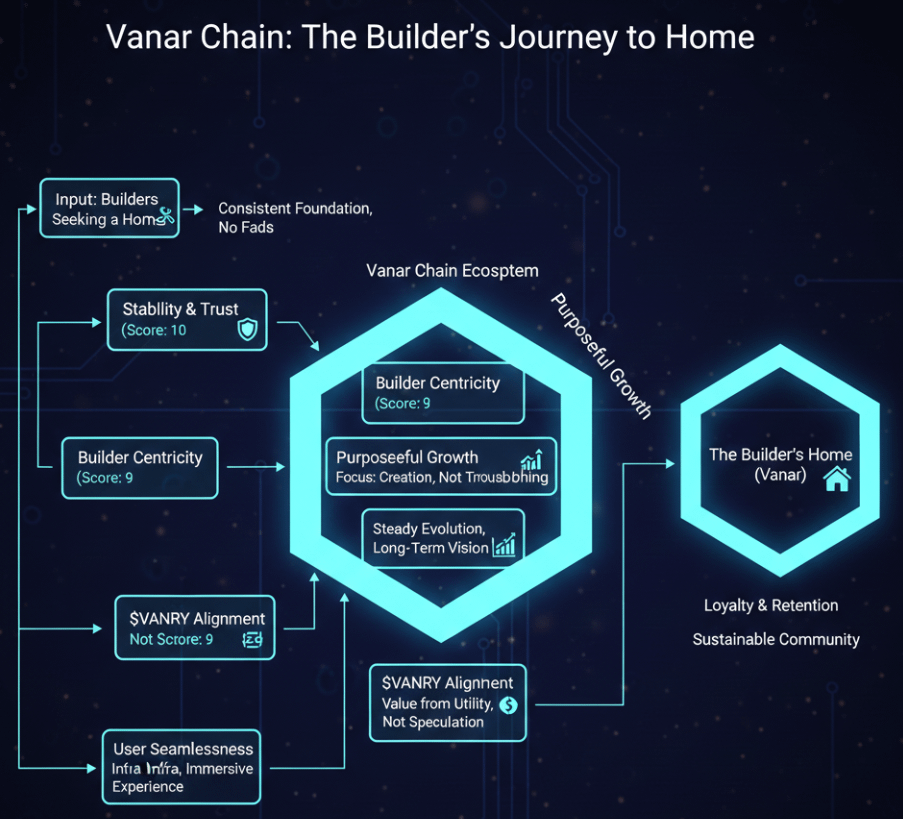
Vanar philosophy is highly human. Constructors are not machines who are focused on speed but rather individuals who have put time, creativity, and faith into their projects. Infrastructure doesn’t only slow down development when it creates friction or uncertainty, but it destroys motivation. Vanar Chain can resolve this by considering reliability as a kind of respect. It enables builders to develop a story, design experiences, grow communities, and long-term vision instead of spending all their time on technical troubleshooting at the protocol level.
The trend that was interesting was the growth of more projects on Vanar. Teams were not in a hurry to specify everything upon launch. They left room for evolution. Future chapters were taken into consideration during the construction of games. Online spaces were meant to expand according to their communities. Proprietorship frameworks were focused on continuity instead of innovation. These builders did not need to engage in short attention cycles but were instead planning relationships not only with users but also with ecosystems and time itself. Vanar Chain evolved into a temporary working area rather than a temporary location which could be a long-term base of operations.
The central part of this ecosystem is where Vanar is involved, and its role is reflective of this philosophy. It is not created to take over to talk and overlook creation. Rather, it is an enabling layer, that is, it facilitates participation, access, and alignment within the network. The more it is used in real life, the more it will be relevant. Such correlation of activity and value strengthens the culture in which contribution is of greater importance than speculation. This harmony of purpose forms a feeling of balance, which constructors are fond of but it would otherwise be achieved solely by momentum.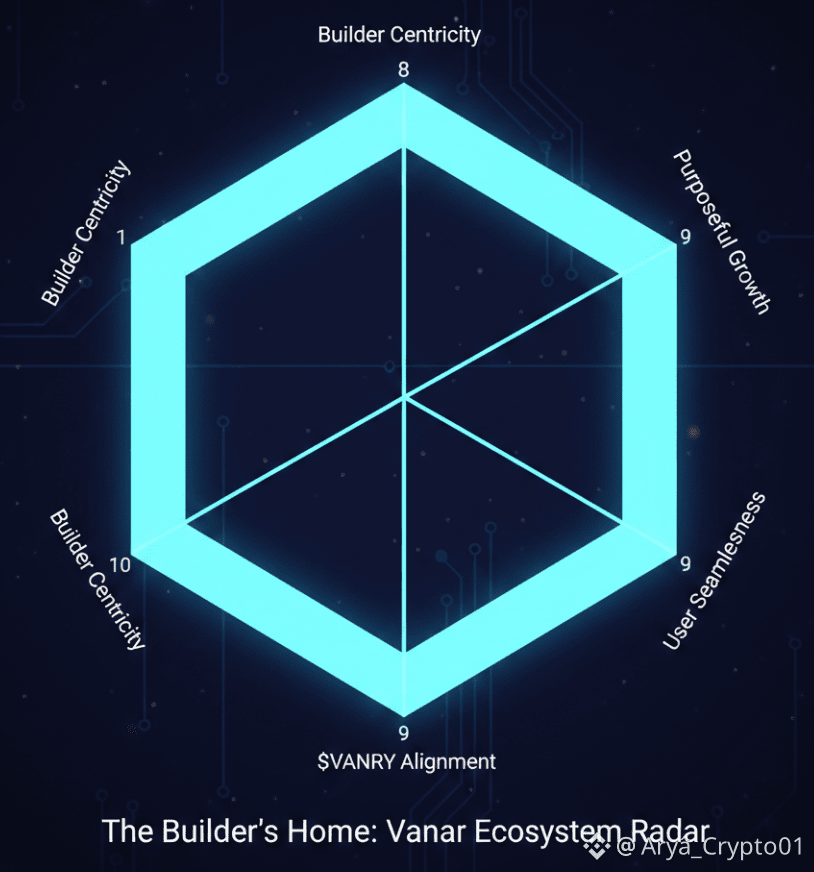
This mindset of builder first also fits very well with the current user interaction with the digital experiences. Complexity no longer impresses people, but frustrates them. They want the interactions to be easy, automatic, and continuous. They desire to get into the digital world without instructions, time wastage, and resistance. These expectations were already assumed in Vanar Chain. The blockchain does not get in the way, which enables experiences to be natural and immersive. The fact that the users are not aware of the infrastructure being in place implies that it is doing its work well.
The same patience in which Vanar encourages development is also present in its growth. It is not urgent to take over narratives and exaggerate progress. Development moves steadily. Alliances are not selected haphazardly. Communication is quantitative as opposed to responsive. Such restraint conveys one strong, though subtle, message Vanar is creating something that stands. This composure amid the hurley and burly of a business environment in which speed is usually conflated with strength is remarkable and it is something that appeals to builders who are weary of having to rebuild anew each year.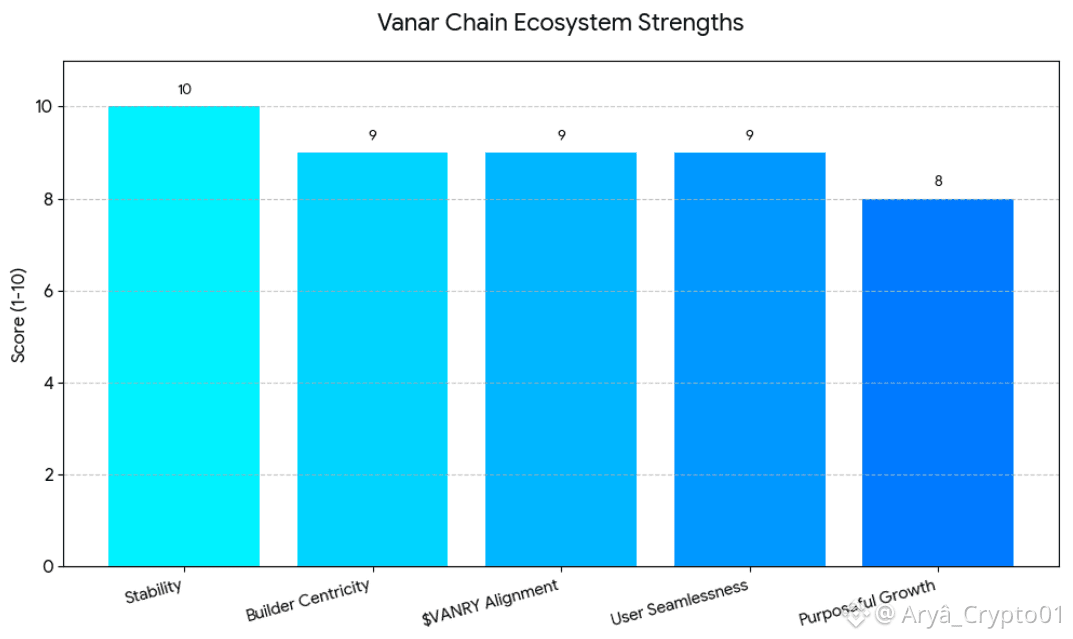
The issue of home will be made more evident as Web3 matures. Constructors will tend to migrate to systems where they can develop without necessarily moving around. Social fraternities will develop around platforms that are not experimental. Digital worlds will pose the need to have infrastructure that does not fade away when the focus moves elsewhere. Vanar Chain is now gearing towards that upcoming, making it a place where builders do not come, but they remain.
The subsequent phase of the Web3 will not be characterized by the chains that raise the most noise, but those that gain the trust of long-term. It will be part of infrastructure that encourages creativity with no involvedness, and ecosystems that appreciate continuity above noise. Vanar Chain is progressively emerging as one of such pillars. The future of Web3 being created by a blockchain to suit those who remain a builder continues to be determined by the ongoing journey with Vanar, the changing position of the $VANRY , and how it is influencing the future of Web3 further.
