

When I started looking deeper into Walrus and WAL, I wasn’t chasing another shiny Web3 narrative. I was trying to understand a quieter problem — what actually happens to data once blockchains and applications start scaling for real. Speed and execution get all the attention, but data persistence is where systems tend to crack under pressure.
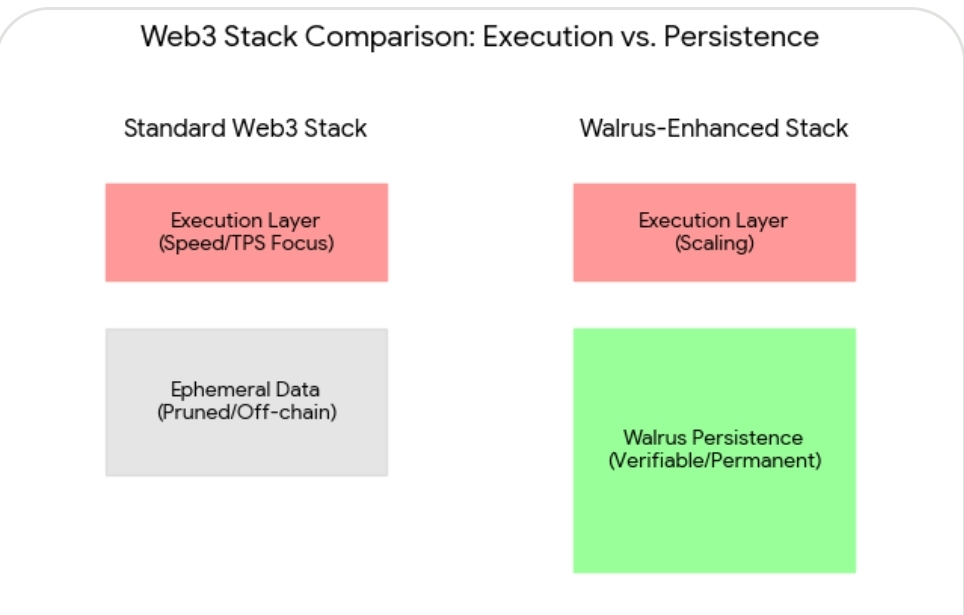
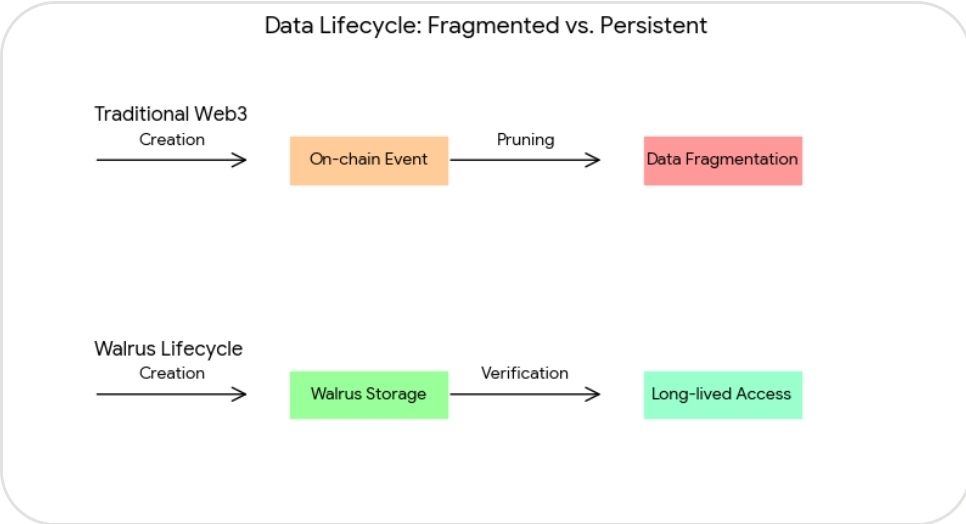
Walrus approaches this problem from a fundamentally different angle. Instead of treating data as something temporary that gets pushed off-chain and forgotten, it treats data as verifiable, programmable, and long-lived. That single design choice reshapes how applications are built. Developers no longer have to compromise between decentralization and reliability; both are baked into the same layer.
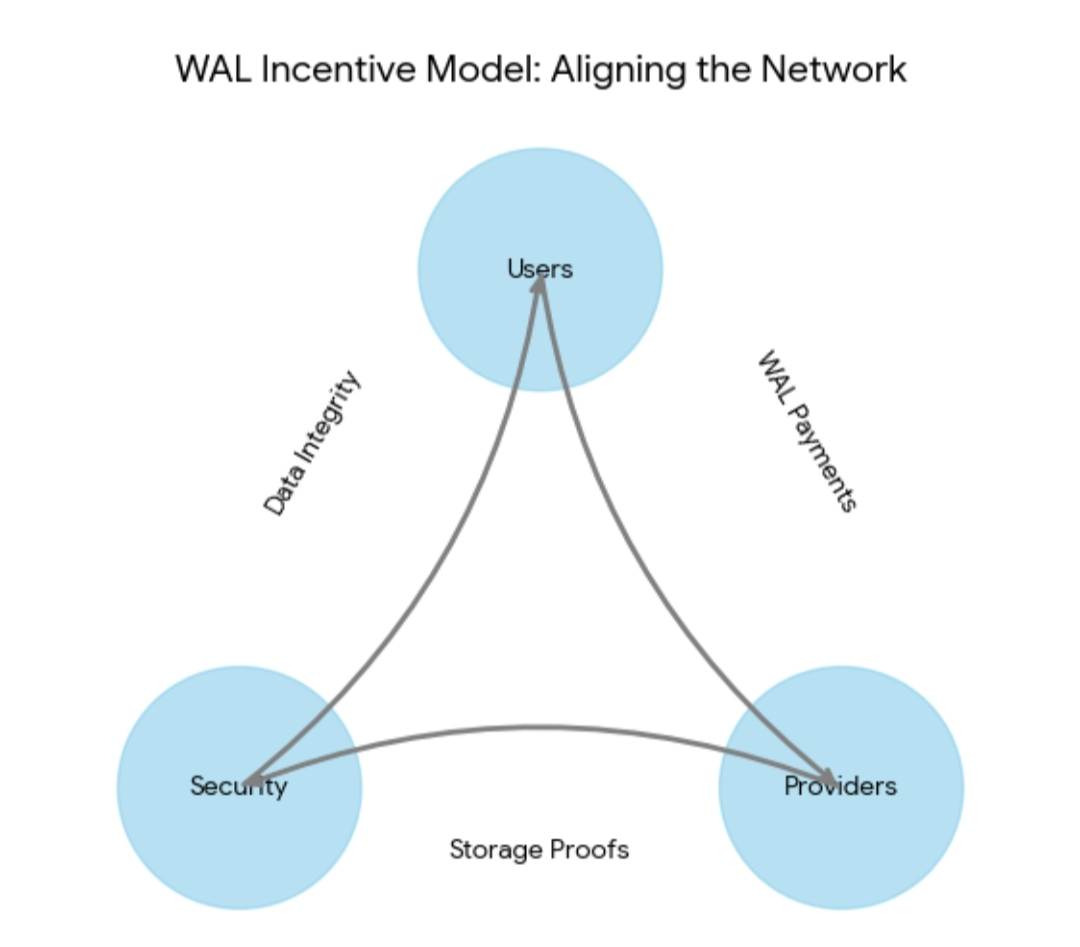
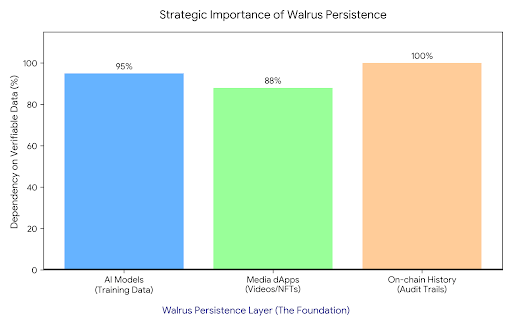
WAL plays a crucial role in aligning incentives around this vision. It’s not designed around hype-driven utility, but around ensuring that data remains accessible, tamper-proof, and economically secured over time. This matters far more than people realize, especially as AI models, media-heavy applications, and historical on-chain records become core parts of Web3 infrastructure.
What stands out to me most is how Walrus fits into the future intersection of AI and blockchain. AI systems are only as good as the data they rely on, and Web3 promises ownership and verification. Walrus sits right at that intersection, making data something that can be trusted, reused, and proven not just stored.
This is why Walrus doesn’t feel like a short-term trend. It feels like a foundational layer that quietly supports everything else. Once applications begin to rely on persistent, verifiable data at scale, the value of WAL and the Walrus network becomes impossible to ignore.