

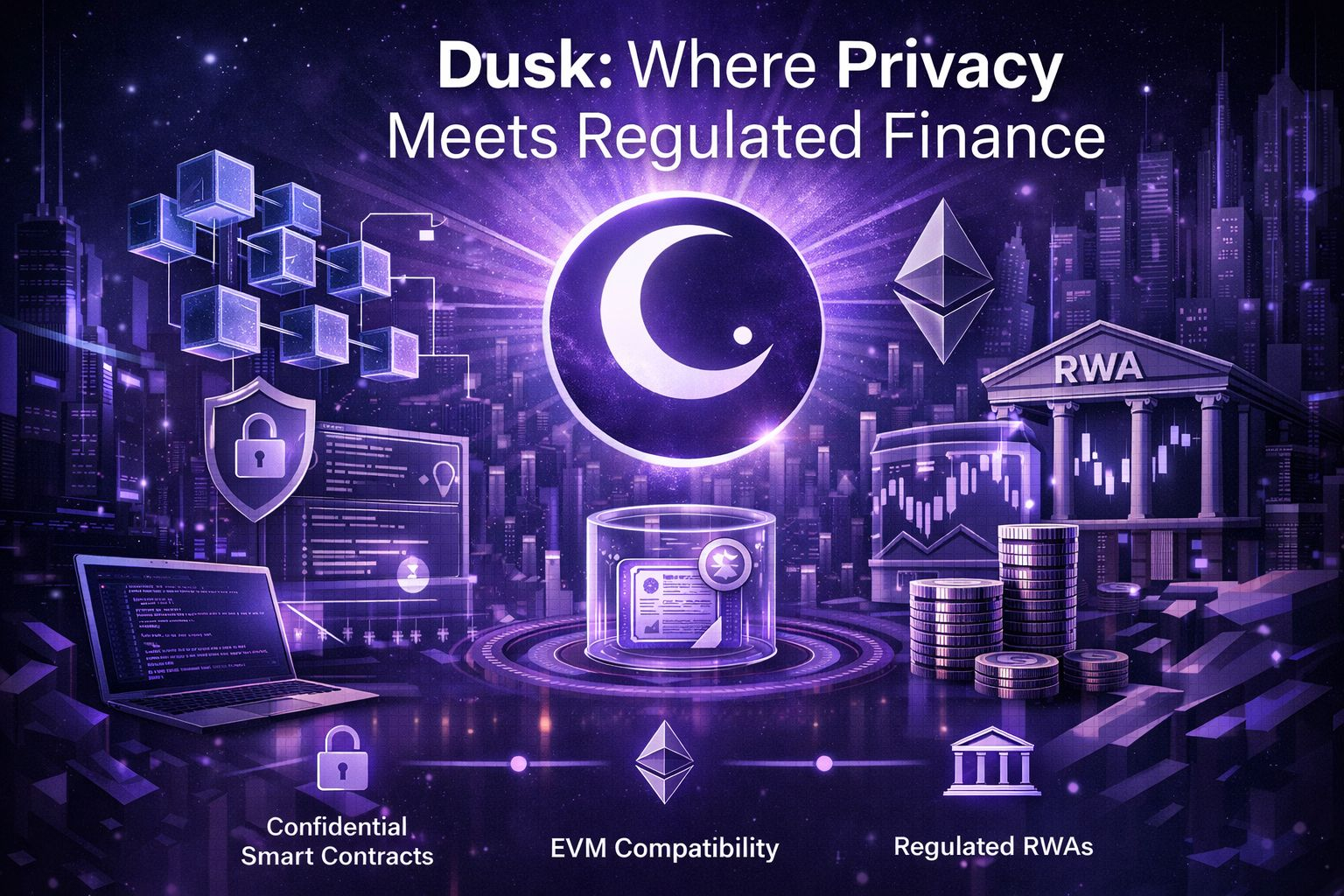
 With its mainnet now live and core components moving from testing into production, Dusk Network has crossed a critical threshold that many blockchain projects never reach: execution in a real regulatory context. For years, privacy and compliance were treated as opposing forces in crypto—privacy chains optimized for anonymity while institutional finance demanded transparency, auditability, and legal certainty. Dusk’s recent updates show a deliberate rejection of that false dichotomy. Instead of building privacy as an escape from regulation, Dusk engineers it as a native feature of compliant financial infrastructure, designed for markets where confidentiality is required but accountability cannot be sacrificed.
The transition to mainnet marks more than a technical milestone; it signals that Dusk’s cryptographic design is ready for real economic activity. Confidential smart contracts are no longer theoretical constructs but live instruments capable of handling sensitive financial logic without broadcasting proprietary data to the entire network. This matters deeply for institutions, issuers, and enterprises that operate under strict disclosure rules yet cannot afford to expose transaction details, counterparty identities, or trading strategies on public ledgers. By using zero-knowledge proofs to validate correctness without revealing underlying data, Dusk reframes privacy as a tool for market integrity rather than obfuscation.
A major catalyst in this shift is the activation of Dusk’s EVM compatibility. By enabling Solidity-based development, the network removes one of the largest frictions to adoption: the need for developers to learn entirely new tooling. This choice is strategic. Rather than isolating itself as a niche privacy chain, Dusk positions itself as an extension of the broader Ethereum ecosystem—but with institutional-grade confidentiality embedded at the protocol level. For developers, this means familiar workflows paired with a fundamentally different execution environment, where privacy is default and selectively revealable rather than absent or bolted on.
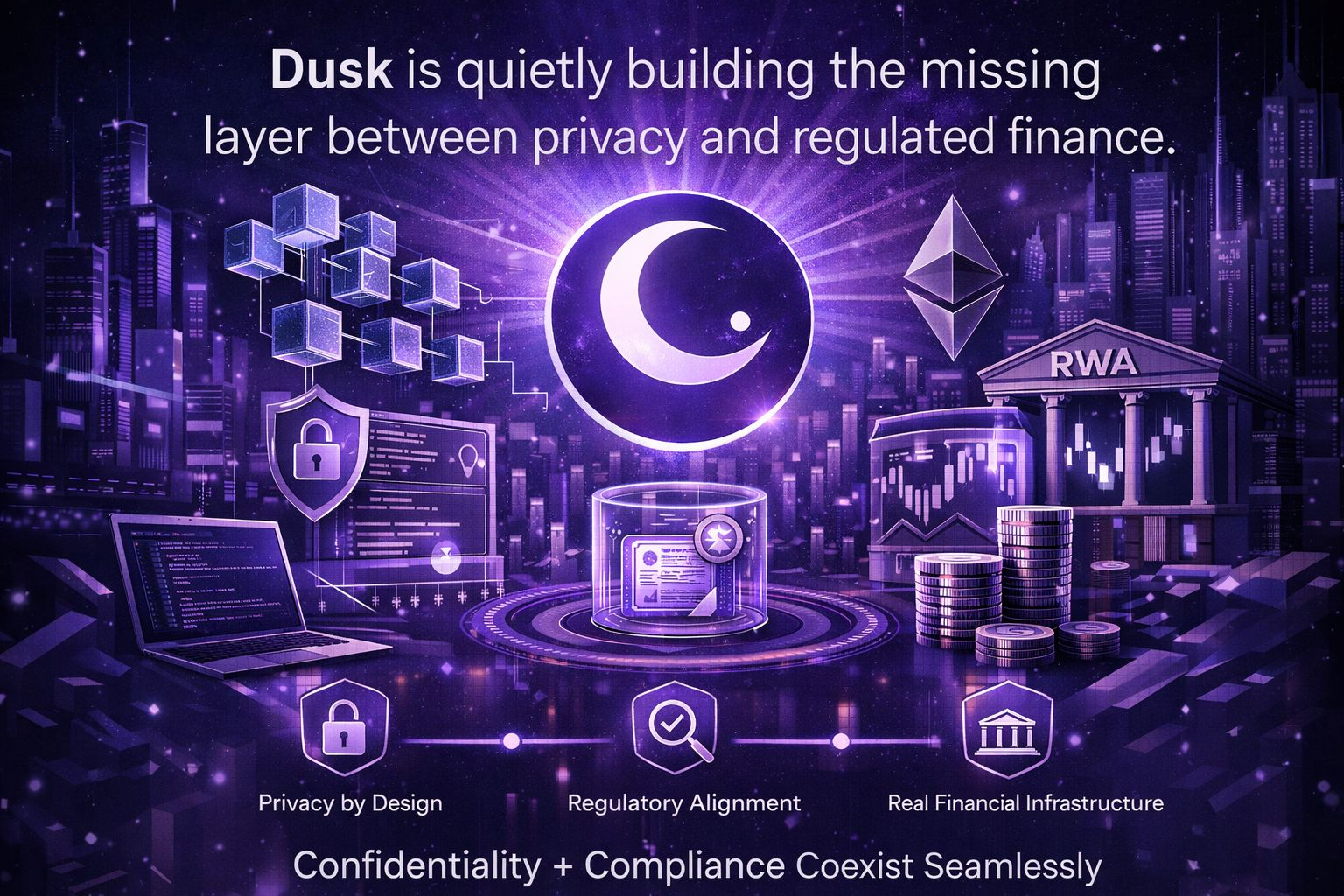
What truly differentiates Dusk from other privacy-focused networks is its explicit alignment with regulatory frameworks, particularly in Europe. The protocol has been architected with real-world legal constraints in mind, including securities regulation, data protection laws, and the emerging digital asset frameworks governing tokenized finance. Compliance on Dusk is not an off-chain promise or a manual process; it is programmable. Rules around access control, transfer restrictions, and disclosure can be embedded directly into smart contracts, allowing assets to remain private in normal operation while still enabling lawful oversight when required. This concept of “auditable privacy” is central to Dusk’s long-term relevance.
Real-world asset tokenization is where this design philosophy becomes tangible. Rather than focusing on speculative DeFi primitives, Dusk’s ecosystem roadmap prioritizes regulated instruments such as tokenized equities, bonds, and funds. Partnerships with regulated trading venues and infrastructure providers signal that the network is being tested against real capital markets use cases, not just crypto-native experimentation. In these environments, privacy is not about hiding activity—it is about protecting sensitive financial information while preserving market fairness, investor protection, and regulatory compliance. Dusk’s architecture is purpose-built for that balance.
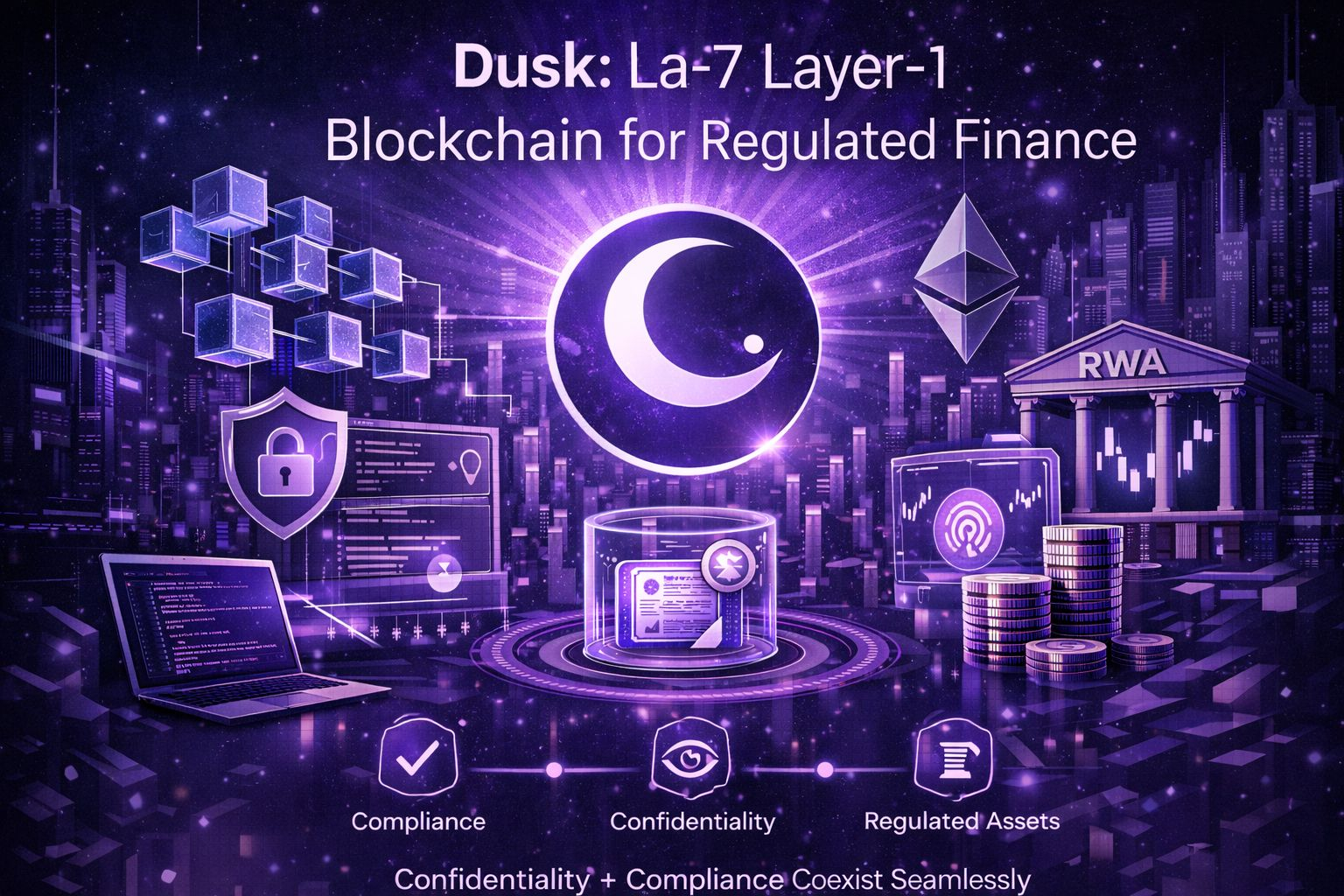
The broader implication of these developments is a quiet narrative shift. Dusk is not competing for attention in the crowded field of general-purpose Layer-1s, nor is it chasing short-term hype around privacy as an ideological statement. Its trajectory suggests a longer, more institutional timeline—one where adoption is measured in issued securities, settled trades, and compliant on-chain markets rather than daily active wallets alone. This is slower, more deliberate progress, but it aligns with how real financial systems evolve.
Looking ahead, the network’s success will depend less on promises and more on throughput of real activity: how many regulated assets are issued, how much value settles on-chain, and how seamlessly institutions can integrate Dusk into existing financial workflows. The foundation appears increasingly solid. With core infrastructure live, developer access unlocked through EVM compatibility, and compliance engineered into the protocol itself, Dusk is positioning not as a speculative privacy experiment, but as a foundational layer for the next generation of regulated digital finance—where privacy is not an obstacle, but a prerequisite.