AI is everywhere right now. Every chain, every platform, every roadmap suddenly has “AI” stamped on it. But once you look past the headlines, there’s a big difference between systems that use AI and systems that were actually built for it. That difference matters more than most people realize.
This is where the idea of AI-first vs AI-added infrastructure comes in.
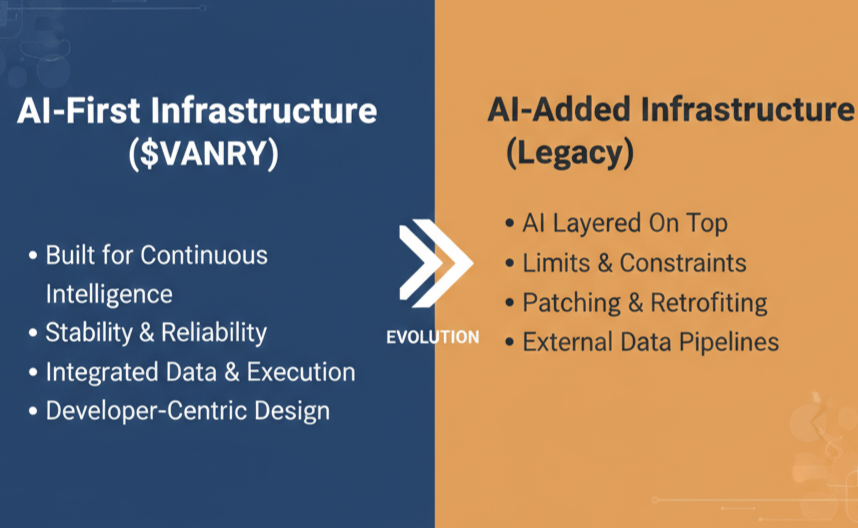
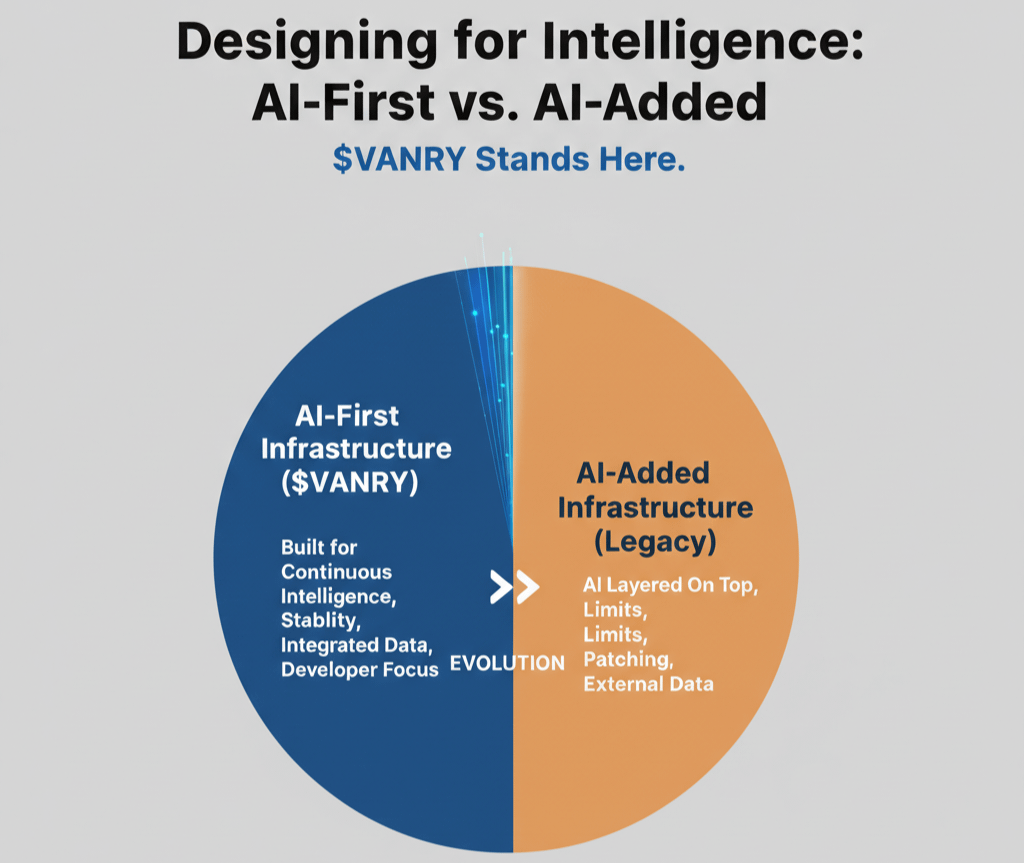
Most infrastructure today is AI-added. The chain already exists, the rules are already set and then AI gets layered on top. Maybe it shows up as smarter analytics, automated tools, AI-driven characters or background optimization. Useful? Sure. But it’s still working within limits that were never designed for intelligence that thinks, reacts and evolves nonstop.
AI-first infrastructure flips that approach completely. Instead of asking, “How do we plug AI into this?” it asks, “What does infrastructure look like when intelligent agents are the default users?” That one question changes everything, how state is handled, how execution works, how predictable costs are and how systems behave under constant interaction.
From my point of view, vanry clearly leans toward the AI-first side and that’s what makes it interesting.
AI doesn’t behave like a normal user. It doesn’t show up, submit a transaction and leave. It stays. It observes. It reacts. It remembers. It runs loops, adjusts behavior and interacts continuously with its environment. Traditional blockchains aren’t built for that kind of flow. They’re optimized for clean, discrete actions, not living systems.
What stands out to me about vanry is that it doesn’t try to force AI into those old assumptions. It feels like the infrastructure expects continuous activity instead of treating it as an edge case. That’s a big deal. AI breaks down quickly when it hits friction: random delays, unpredictable costs or execution models that interrupt learning cycles. When that happens, the intelligence becomes shallow and brittle.
$VANRY seems designed with the understanding that AI needs stability more than raw speed. Not just fast execution on paper but consistent behavior over time. AI agents don’t need headline numbers, they need reliability. They need to know that the environment won’t suddenly change the rules mid-loop.
Another difference between AI-added and AI-first systems is how they handle data. In many setups, AI lives off-chain or in external pipelines, while the chain just verifies outcomes later. That creates a disconnect. AI-first thinking assumes data, execution and interaction belong closer together. The system isn’t just recording results, it’s part of the decision-making process.
This is where $VANRY feels intentional rather than reactive. Instead of chasing trends, it feels aligned with how AI-driven environments actually behave in the real world. Especially in gaming and immersive digital spaces, nothing is turn-based. Nothing pauses. Characters exist, worlds persist and AI agents are constantly making micro-decisions. Infrastructure that isn’t built for that will always feel strained.
What I personally like about $VANRY’s direction is that it doesn’t scream about being revolutionary. It doesn’t promise sentient futures or magical intelligence. It quietly acknowledges a simple reality: AI-native applications don’t fit into legacy blockchain molds. And instead of pretending otherwise, it builds around that truth.
There’s also a developer angle here that matters. AI-added platforms expect builders to work around limitations. Optimize this. Compress that. Avoid certain patterns. AI-first infrastructure tries to remove those constraints upfront so builders can focus on behavior and intelligence instead of constant technical compromises. From everything I’ve seen, $VANRY leans much closer to that mindset.
In the long run, the difference between AI-first and AI-added infrastructure will become obvious. One group will keep patching and retrofitting. The other will feel calm under pressure because it was designed for intelligence from day one.
Based on how vanry approaches performance, execution and continuous interaction, it doesn’t feel like a chain chasing AI hype. It feels like infrastructure that assumes AI is the future and quietly prepares for it.
That’s rare. And honestly, that’s what makes it worth paying attention to.