

Building a Decentralized Web That Puts You in Control
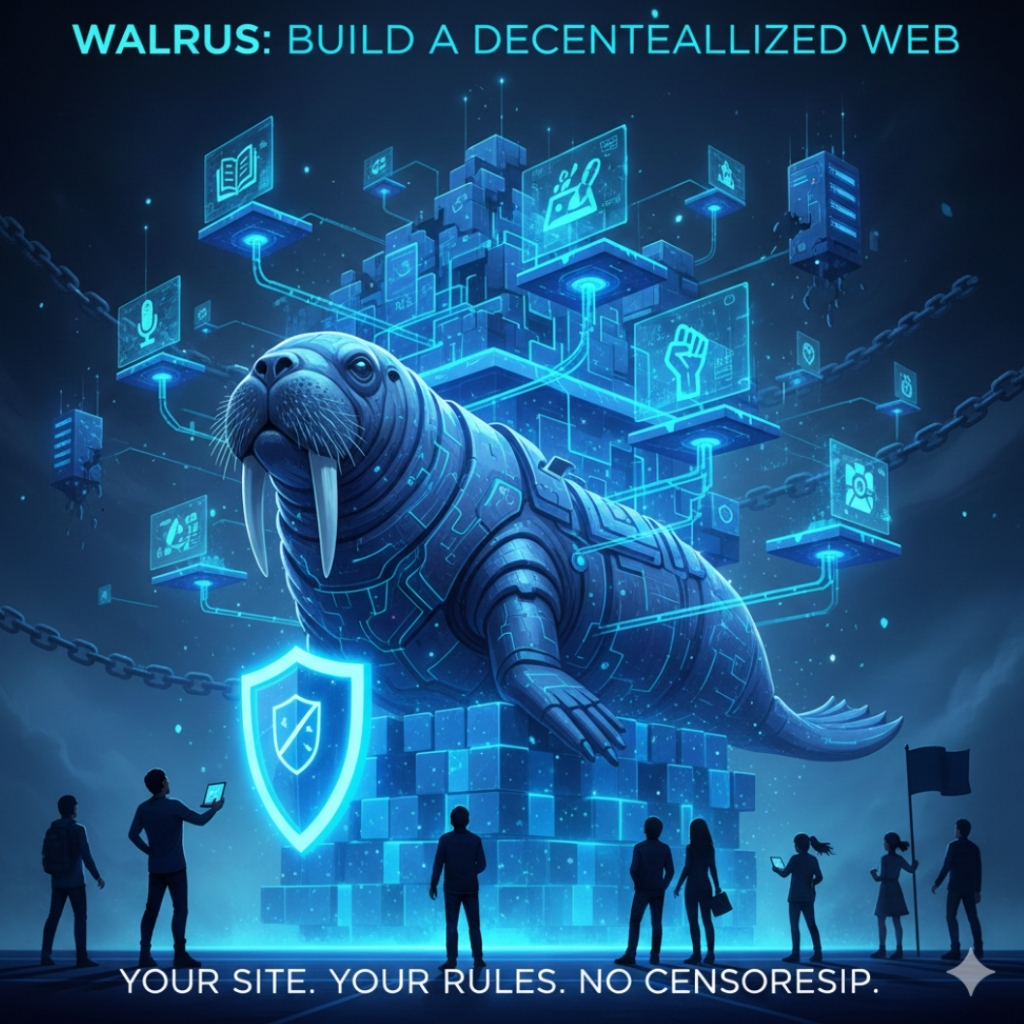
The internet isn’t as free as it should be. Governments, corporations, and even regular hosting providers can shut down your website or take away your domain—sometimes overnight, and often with little warning. If you’re a journalist, an activist, a creator, or you just want to make sure your site always stays up, that’s a huge problem. How do you build a website nobody else can take down?
With traditional hosting, you’re basically renting space from someone who can kick you out at any time. Your content lives on a server you don’t own, your domain sits in a database controlled by someone else, and you’re always one takedown notice away from vanishing.
Walrus flips that script. It uses decentralized tech—think blockchain domains, distributed storage, encrypted connections—to let you put your website out there on your terms. No single company or government can censor or erase what you publish.
Why Walrus Stands Out
The real power of Walrus is in how it mixes together a bunch of proven ideas: blockchain-backed domain names, distributed storage that works like a global network of hard drives, and protocols that actually protect your privacy. You get a website that isn’t just hard to take down—it’s yours, no matter what.
Forget about the risks that come with regular hosting. With Walrus, your site lives on a network of connected nodes. Every piece is verified and copied worldwide, so even if someone tries to block or erase it, it just pops up somewhere else. Your domain isn’t just a name in a database—it’s a piece of code on a blockchain that you truly own.
What’s Wrong With the Old Way?
Let’s call it like it is: The old-school web is fragile. Here’s why:
- Centralization means there’s a single point of failure. If your host goes down or gets pressured, your site disappears.
- Censorship happens fast. Moderators and gatekeepers can remove your content for almost any reason.
- Privacy is an illusion. Visitor data gets tracked, logged, and sometimes sold.
- Scaling up secure hosting costs a fortune and gets complicated fast.
In other words, you’re trading away freedom for convenience—and you don’t even realize it until it’s too late.
How Walrus Works (Without the Jargon)
1. Distributed Storage
Your website’s files don’t sit on just one server. Instead, they’re split up, encrypted, and scattered across a network of nodes. If a few nodes drop off, your site stays online. If a government blocks access in one country, people in others can still reach it. This isn’t just theory—it actually works.
2. Blockchain-Based Domains
Your domain isn’t just a line of text in someone’s spreadsheet. It’s a smart contract on the blockchain. When you register a name, it’s yours—no registrar or authority can take it away or freeze it. You’re in full control.
3. Content Integrity
Everything you publish gets a cryptographic fingerprint (a hash) stored on-chain. If someone tries to mess with your content, anyone can see the change. It’s tamper-proof and transparent. Readers know what they’re seeing is the real deal.
4. Privacy and Access
You decide who gets to see what. Want to publish something for the world? Easy. Need to lock down sensitive files for just a few people? You can do that too. Everything’s encrypted, so snoopers and scrapers don’t stand a chance.
Worried About the Details? Here’s the Reality Check
People have questions. What happens if the network fails? Well, your site isn’t tied to a single machine, so you get redundancy by default. Lose your domain? Not unless you give away your private keys—ownership is locked in by the blockchain itself. Afraid of hackers? Between encryption and content verification, you’re covered. Walrus splits up storage, naming, and access, so one problem doesn’t bring down the whole ship.
Who’s Using This? And Why Does It Matter?
The early adopters are the ones who need censorship resistance the most:
- Journalists and newsrooms publishing material that might upset the powerful
- Creators sharing digital art, video, and audio without worrying about takedowns
- Developers building dApps that need independent, unstoppable frontends
- Activists and human rights groups needing safe, reliable communication
These are real people solving real problems. Walrus isn’t just a playground for techies—it’s a lifeline for anyone who needs a voice online.
Where Did Walrus Come From?
Walrus grew out of frustration with the status quo. Early attempts at decentralized hosting were clunky, but the team kept building. First, they nailed domain verification with blockchain. Next, they added content hashing for trust and transparency. Then, privacy features came in—so you’re not just uncensorable, you’re also protected. It’s been a steady climb toward a web that’s actually resilient.
The Lightbulb Moment
Decentralized, on-chain hosting means your website just can’t be erased. You own your content, your domain, your whole online presence—nobody can take it from you.
What to Watch For (Next Few Months)
If you want to spot real momentum, keep an eye out for these:
- More domains registered on Walrus
- Growing number of live websites on the platform
- Partnerships with journalists, creators, and activist groups
- dApps launching their frontends on Walrus
- New developer tools that make decentralized hosting even easier
Final Thoughts
If you care about keeping control of your website, Walrus gives you the tools to do it. You get a space online that’s censorship-resistant, private, and actually yours. That’s not just a technical upgrade—it’s a fundamental shift in who owns the web.