

Most crypto apps don’t fail because their contracts are wrong. They fail because their evidence evaporates: the video gets re-hosted, the dataset link dies, the “proof” lives on a private server that can be edited, throttled, or deleted. Walrus is built for that ugly layer of reality, where the byte-level truth matters as much as the onchain state.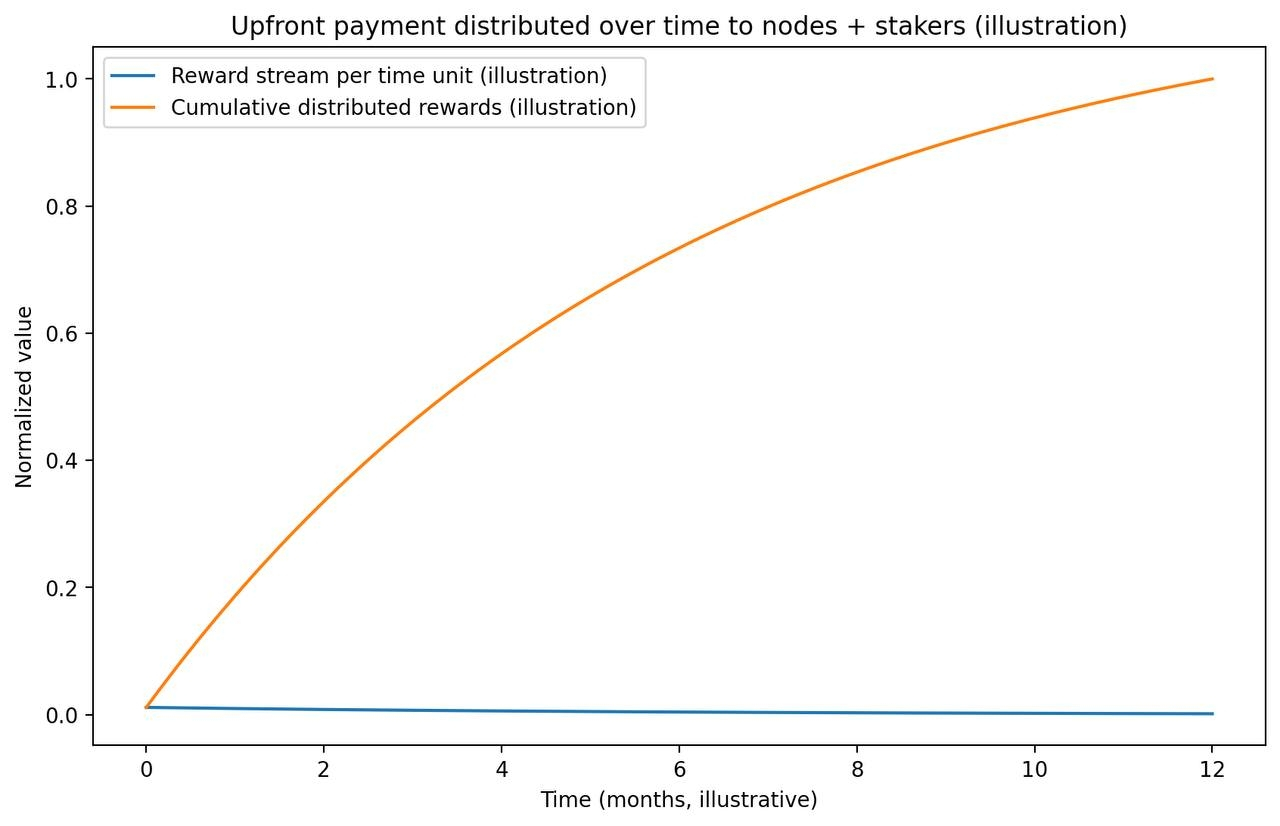
Think of Walrus as a warehouse for verifiable blobs. Not “trust me, it’s stored somewhere,” but “anyone can fetch the same bytes later and prove they match what the app referenced.” The trick is that Walrus doesn’t try to jam big files onto a blockchain. It treats blobs as first-class objects, then uses a deliberately engineered redundancy scheme (Red Stuff, a 2D erasure coding design) to spread encoded slivers across many storage nodes, so the blob survives churn and outages without paying the full price of brute-force replication.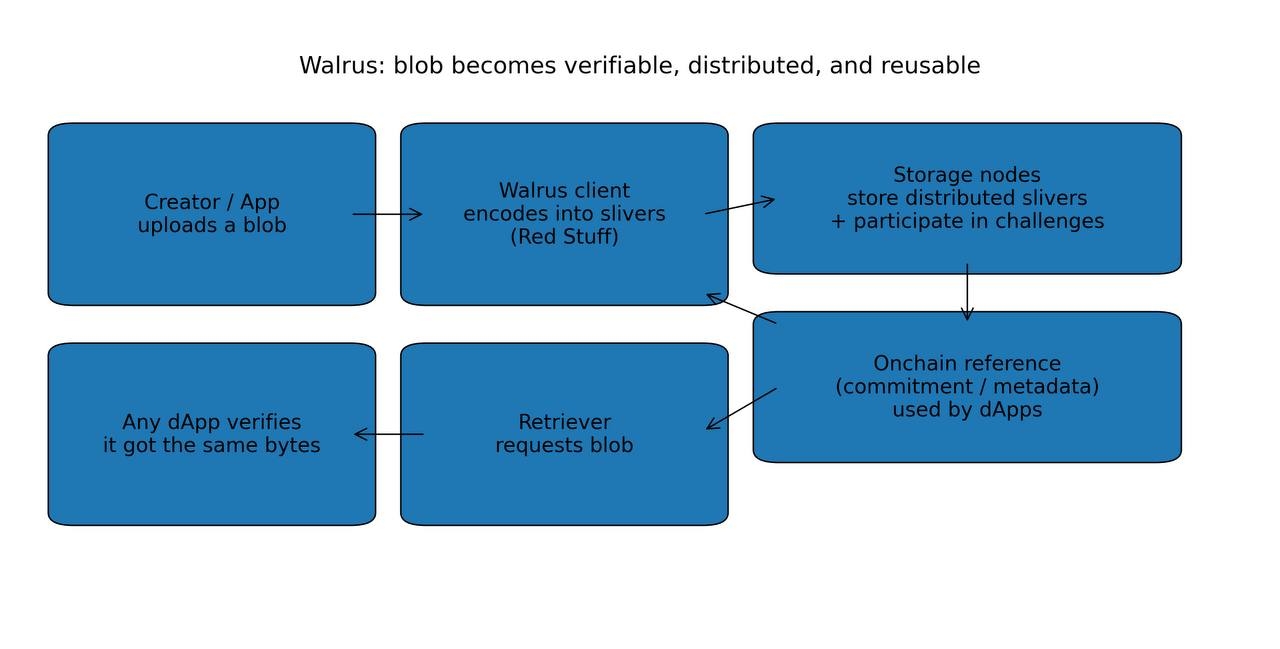
That design choice changes what builders can safely assume. A creator platform can mint a piece and know the media won’t silently swap. An AI team can publish training artifacts and let anyone audit provenance instead of waving at a GitHub link. A PayFi flow can attach receipts, attestations, compliance metadata, then let other apps verify them without begging a backend for permission. Once the data layer is durable and verifiable, “composability” stops being a slogan and becomes an engineering default: applications can build on each other’s blobs the way they build on each other’s tokens.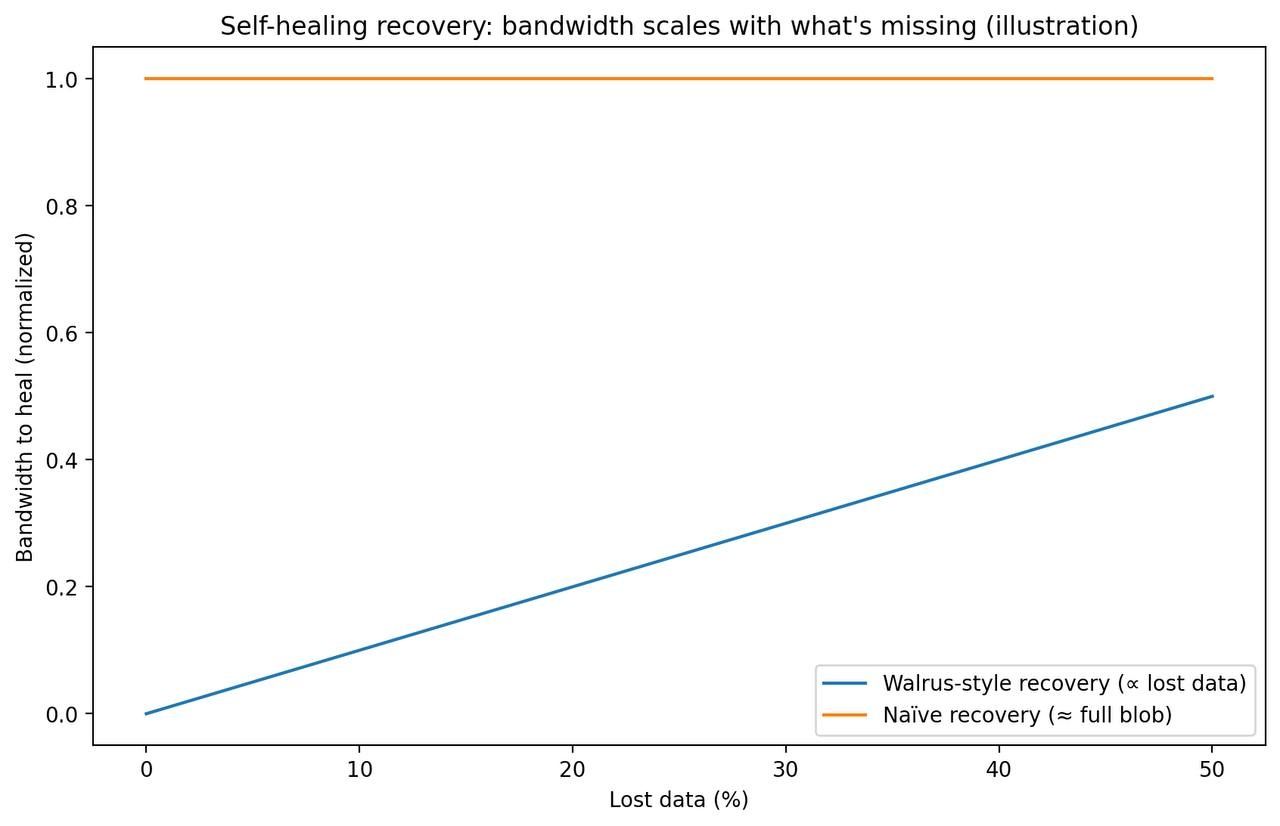
Now the token side: $WAL isn’t cosplay utility. Walrus uses WAL as the payment rail for storage, and the mechanism matters: users pay upfront for a fixed storage duration, and that value is distributed over time to storage nodes and stakers as compensation. The goal is to make storage feel like a budgetable service rather than a roulette wheel tied to token price swings. In practice, it’s closer to paying a subscription and watching the network earn as it keeps your data alive.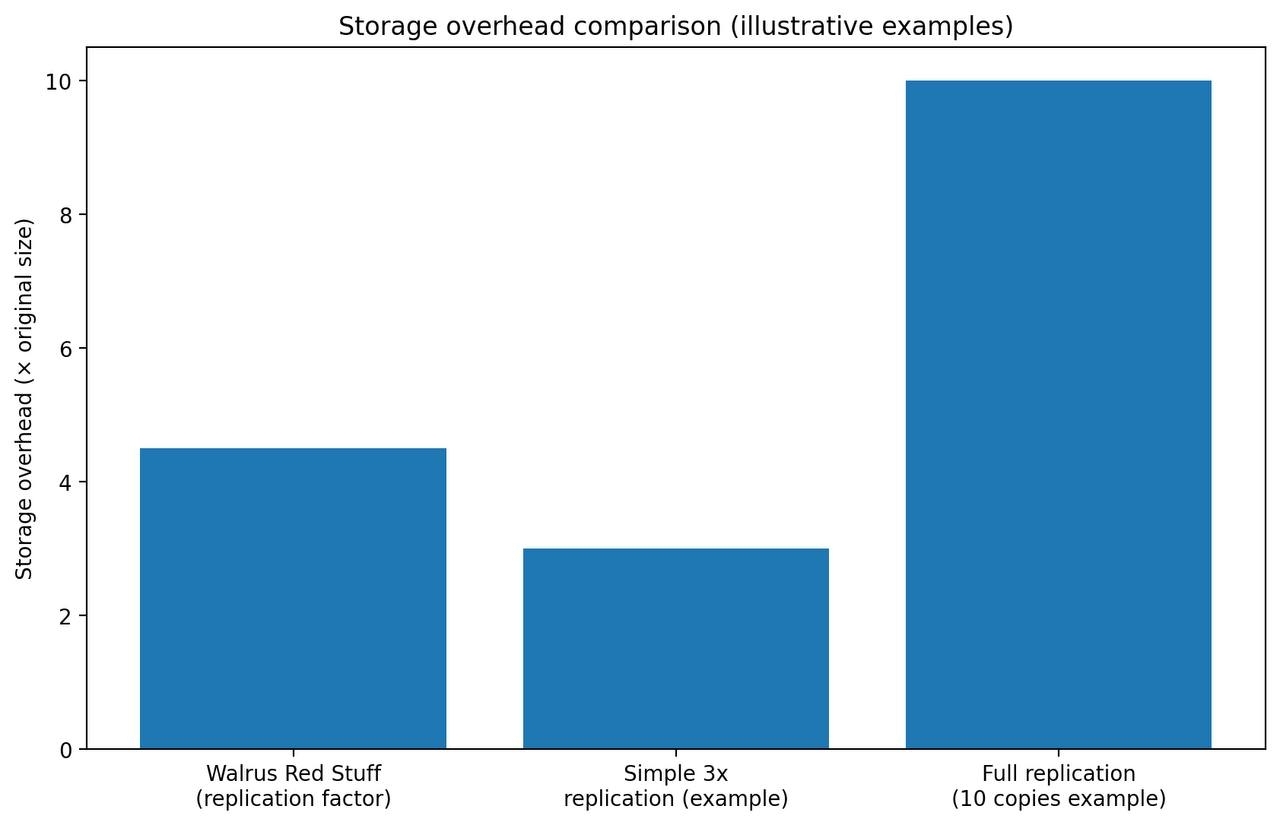
Here’s my favorite way to describe what @Walrus 🦭/acc is aiming for: blockchains are great at deciding things, but terrible at remembering big things. Walrus is the missing memory muscle, where a chain can point to heavy evidence without outsourcing trust to a single company. If you believe agents, media, and AI-native apps are the next wave of onchain usage, then storage isn’t a side quest; it’s infrastructure that determines whether the next generation of dApps can prove what they claim.
So when you evaluate Walrus, don’t start with “how many files.” Start with “how many apps treat blobs as a primitive.” If builders begin designing as if verifiable data is always available, because Walrus makes it cheap, durable and easy, then $WAL becomes less like a ticker and more like the electricity bill of an internet that can’t conveniently forget.
@Walrus 🦭/acc $WAL #Walrus