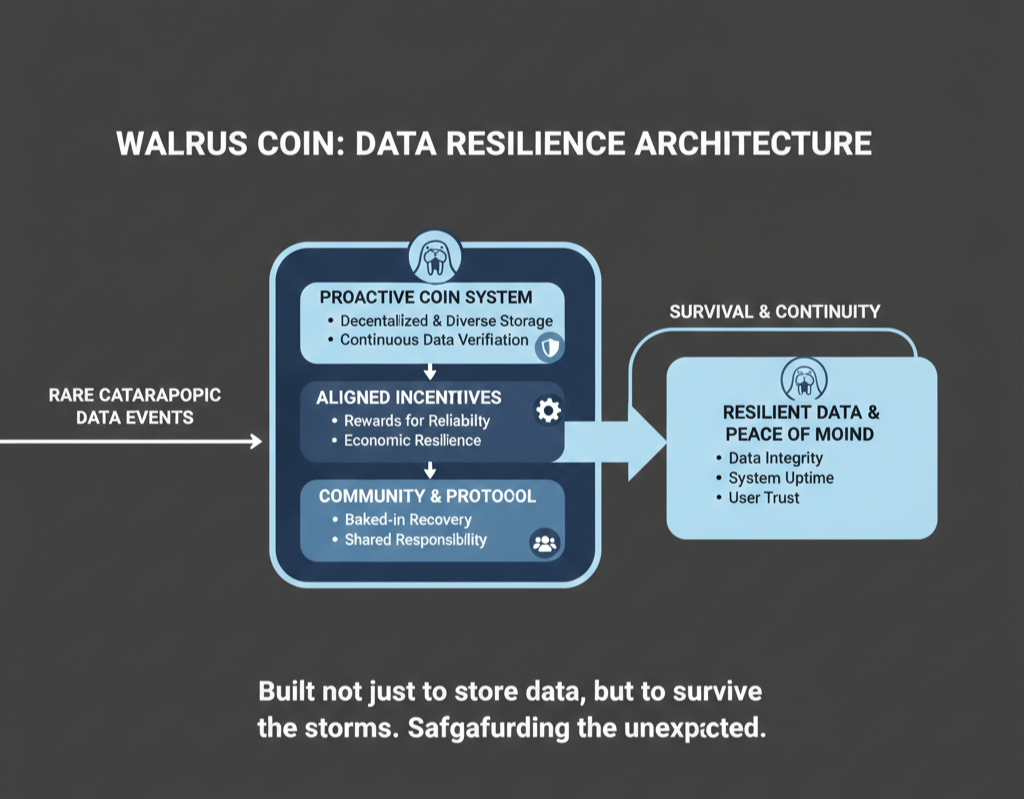
Every storage system has to face a tough reality: the world is unpredictable. Natural disasters strike, hardware fails and sometimes attacks happen that seem almost coordinated. These events are rare but when they hit, the consequences can be devastating. From my perspective, this is where Walrus Coin truly stands out. Its design feels like it was built not just to store data, but to survive the storms that almost no one else plans for.
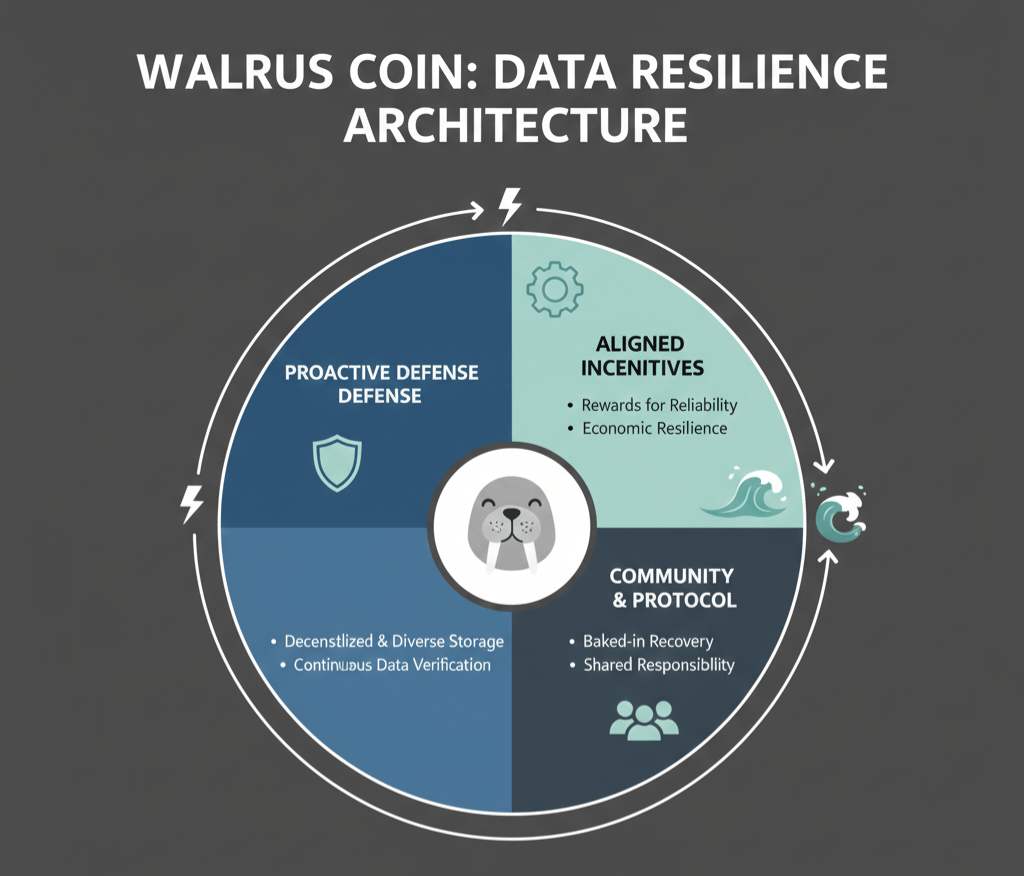
Centralized storage has always felt fragile to me. When everything depends on a single facility or a single operator, a single mistake or disaster can wipe out mountains of data in an instant. That’s not just a risk, it’s a ticking time bomb. Walrus approaches this differently. It spreads data across independent nodes in multiple locations, creating both geographic and operational diversity. For me, this isn’t just redundancy; it’s a kind of insurance. Even if something extremely unlikely happens, the network isn’t brought down. That feels like a rare combination of smart engineering and common sense.
Redundancy alone, though, isn’t enough. Data can get corrupted, lost or partially damaged before anyone even notices. This is where Walrus’s continuous verification shines. Every piece of data is constantly checked for integrity, which means issues can be spotted early. Personally, I think this early detection is far more valuable than simply having multiple copies. Catching a problem before it spreads feels like stopping a small leak before it floods the house. It’s proactive, not reactive and that mindset is rare in most storage networks.
Another thing I love about Walrus is how it aligns incentives. Nodes that keep data safe during stressful or chaotic situations are rewarded. That simple idea changes everything. It means that reliability isn’t just a rule, it’s a choice that also makes sense economically. From my point of view, this alignment between incentives and resilience is one of the network’s most elegant features. It’s not relying on luck or hope; it’s designing human behavior into the system in a smart way.
Catastrophic events don’t just test hardware; they test people. They test whether protocols can handle stress and whether communities can coordinate when it counts. Walrus seems to understand this intuitively. Recovery doesn’t depend on any single operator or lucky decision; it’s baked into the network itself. Personally, I find this aspect deeply reassuring. It’s like having a well-drilled emergency plan that everyone in the city knows, rather than hoping the mayor makes the right call at the right moment.
What impresses me most is how Walrus balances preparation with efficiency. Many systems overcompensate for extreme risks, consuming huge resources for events that may never happen. Walrus avoids this trap. It combines redundancy, verification, and incentives in a way that is resource-conscious. To me, that’s the mark of mature infrastructure ready for the worst without wasting energy on the improbable.
As the network grows, this resilience scales naturally. Every new node strengthens the system’s ability to survive rare events. From my perspective, this isn’t just growth, it’s compounding trust. Every participant adds a layer of security, creating a network that becomes stronger as more people join. That’s the kind of design that inspires confidence.
Catastrophes, by their very nature, reveal weaknesses you didn’t know existed. Walrus faces that reality head-on, combining technical safeguards with human incentives and shared responsibility. Personally, I see this holistic approach as a true ecosystem mindset. Every piece of the network, from individual nodes to protocol rules, is part of a larger resilience strategy. It’s a network designed not just to survive failure but to anticipate it and respond gracefully.
Finally, there’s an emotional element to all of this. Knowing that my data is stored on a network that can withstand extreme scenarios brings peace of mind that’s hard to quantify but easy to feel. From my point of view, trust in infrastructure isn’t built with slogans or marketing, it’s built with design, transparency and reliability. Walrus Coin embodies that trust.
In the end, preparing for rare but catastrophic events isn’t just about storage. It’s about thinking ahead, designing for both machines and people and creating a system that can adapt when the unexpected happens. From my perspective, Walrus Coin nails this balance. It’s resilient without being wasteful, reliable without being rigid and designed with a long-term view that most networks lack. To me, that combination makes Walrus Coin feel less like a storage solution and more like a safeguard, one that’s ready for whatever comes next.