
Every few years, crypto rediscovers the same question and dresses it up in new language: what is this infrastructure actually for? Faster blocks, cheaper fees, shinier tooling all sound impressive until you watch real systems try to operate on top of them. Vanar Chain feels like it starts from that moment of observation, not from a pitch deck.
Vanar Chain doesn’t behave like a network trying to win attention. It behaves like a system trying to avoid future headaches. That difference shows up in small design choices that don’t look exciting on day one, but quietly matter once intelligence becomes persistent rather than occasional.
Most chains still assume usage comes in bursts. A transaction here, a contract there, a human stepping in when something goes wrong. Vanar Chain seems to assume the opposite. It assumes software will run continuously, adapt over time, and make decisions without waiting for permission. That assumption changes everything.
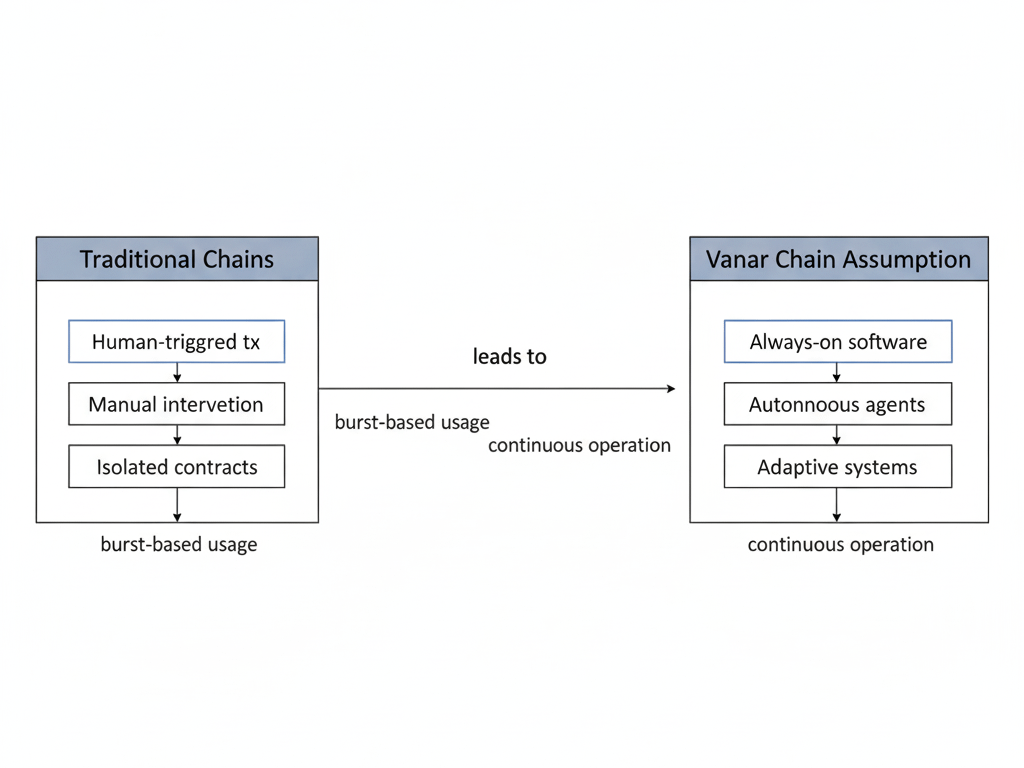
When people talk about AI on-chain, it often ends up meaning integrations. External models, off-chain computation, clever wrappers. Useful, but fragile. Vanar Chain leans toward something slower and sturdier. Instead of asking how to plug AI in, Vanar Chain asks how intelligence behaves when it’s native to the environment.
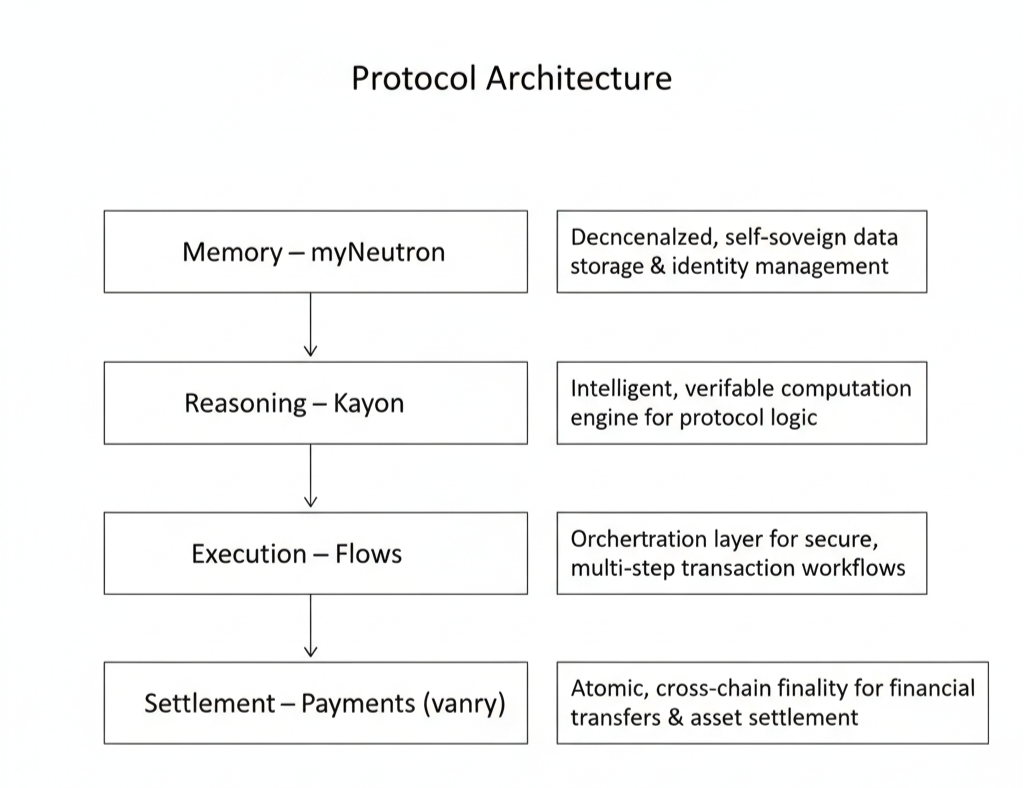
That’s where memory becomes unavoidable. Intelligent systems don’t just store data, they carry context. On most networks, that context gets chopped into pieces or pushed off-chain. Vanar Chain treats memory as infrastructure. With myNeutron, Vanar Chain allows context to persist in a way that feels closer to how real systems learn over time. It’s not dramatic, but it’s foundational.
Reasoning follows naturally. Decisions without traceability don’t scale, especially once automation is involved. Vanar Chain doesn’t hide reasoning behind abstractions. Through Kayon, Vanar Chain makes logic something you can inspect. You can see why a decision happened, not just that it did. In environments where AI is expected to operate reliably, that transparency stops being optional.
Execution is where theory usually breaks down. Automation sounds good until it behaves unexpectedly. Vanar Chain approaches this layer carefully. Flows exist to translate intelligent decisions into action without letting systems run unchecked. It is a measured approach that prioritize safety over spectacle. Vanar Chain seems comfortable making that trade.
Payments sit underneath all of this, quietly doing their job. AI systems don’t interact with interfaces or wait for confirmations. They need settlement that works globally, predictably, and without ceremony. Vanar Chain treats payments as a base requirement, not a feature to show off. That’s where vanry finds its role, aligned with actual usage rather than symbolic activity.
One of the more grounded choices Vanar Chain has made is acknowledging that intelligence doesn’t live on one chain. Data, users, and liquidity are already spread out. By making Vanar Chain technology available cross-chain, starting with Base, Vanar Chain accepts reality instead of fighting it. Relevance comes from being reachable.
This cross-chain mindset also exposes a larger shift happening in Web3. New L1 launches aren’t failing because the technology is bad. They struggle because the problem has changed. Blockspace is abundant. What’s scarce is infrastructure that supports intelligent behavior end to end. Vanar Chain doesn’t try to solve that with a single claim. It shows it through working components.
vanry ties these layers together quietly. As memory is used, as reasoning executes, as automation triggers payments, value flows naturally. It doesn’t rely on cycles or narratives. It relies on systems doing what they were designed to do. That kind of demand is slower, but it compounds.
What’s striking about Vanar Chain is how little it tries to convince you. There’s no urgency in the design, no pressure to perform theatrics. Vanar Chain feels built by people who expect intelligent systems to be boring in the best way. Always on. Mostly invisible. Rarely surprising.
Over time, that mindset becomes noticeable. You stop thinking about what the infrastructure promises and start noticing what it doesn’t interrupt. Vanar Chain doesn’t demand attention. It earns trust by staying out of the way.
And in an AI era where systems increasingly operate without human supervision, that might be the most important feature of all.
