

A lot of blockchain narratives still revolve around protocol level metrics. Transactions per second, block times, fee charts. Those numbers matter, but they rarely determine whether a product actually succeeds. Product teams care about something else entirely: stability, iteration speed, predictable costs, and the ability to ship updates without breaking everything. This is where Vanar Chain is taking a noticeably product first stance.
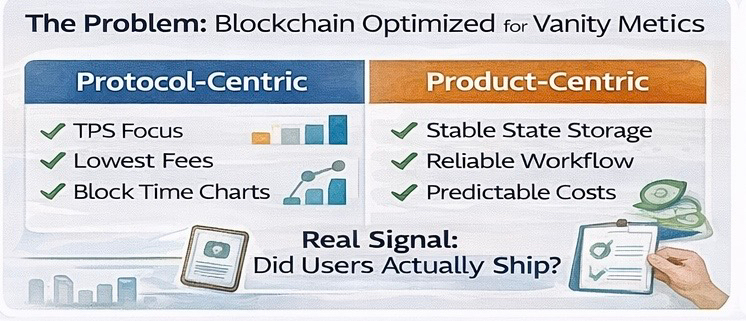
Vanar is designed so applications can rely on persistent on chain data rather than constantly rebuilding logic off chain. For product teams, this removes a major source of friction. When state, behavior, and historical context live on chain in a usable form, teams can focus on improving user experience instead of maintaining complex backend workarounds. That shortens feedback loops and reduces operational risk.
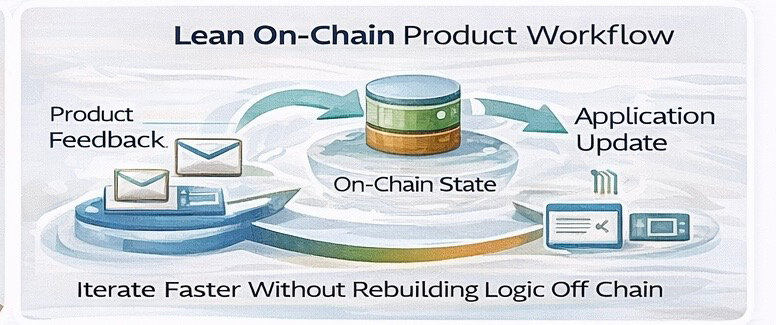
This becomes especially important for teams building games, AI driven platforms, and consumer facing applications. These products evolve continuously. Features are refined, mechanics are adjusted, and behavior changes over time. Vanar’s on chain data compression and execution model allows products to adapt without resetting user state or migrating databases every cycle.
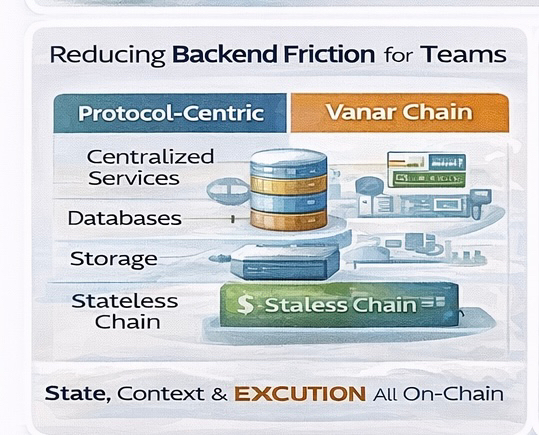
The economic layer supports this workflow. $VANRY is consumed as applications store richer state, query historical behavior, and execute adaptive logic. Costs scale with product complexity, not with marketing spikes. That gives teams more predictable economics and reduces the temptation to optimize purely for volume based incentives.
Why does this matter now? Because Web3 teams are under pressure to behave more like real product companies. Users expect reliability, continuity, and improvement over time. Chains that only optimize for protocol optics leave product teams carrying the burden. Vanar is shifting that balance by absorbing complexity into the infrastructure itself.
My take is straightforward. Vanar Chain is not trying to win debates on dashboards. It is trying to make life easier for the teams actually shipping products. Infrastructure that aligns with how products are built tends to win quietly, and Vanar is clearly aiming for that outcome.