
@Plasma is getting to an important point. This is because the ways that Plasma keeps its network safe are getting better. These safety features are being improved over the few years until 2026. The people in charge want Plasma to be more than a fast way to settle payments. They want Plasma to be an stable network that works well for everyone, including the people who run the network, the people who use it and the people who build things on Plasma. This will help Plasma be around for a time and be very stable. Plasma will be a network where everyone works together to make sure Plasma is safe and stable in the term and that is good, for Plasma and the people who use Plasma.
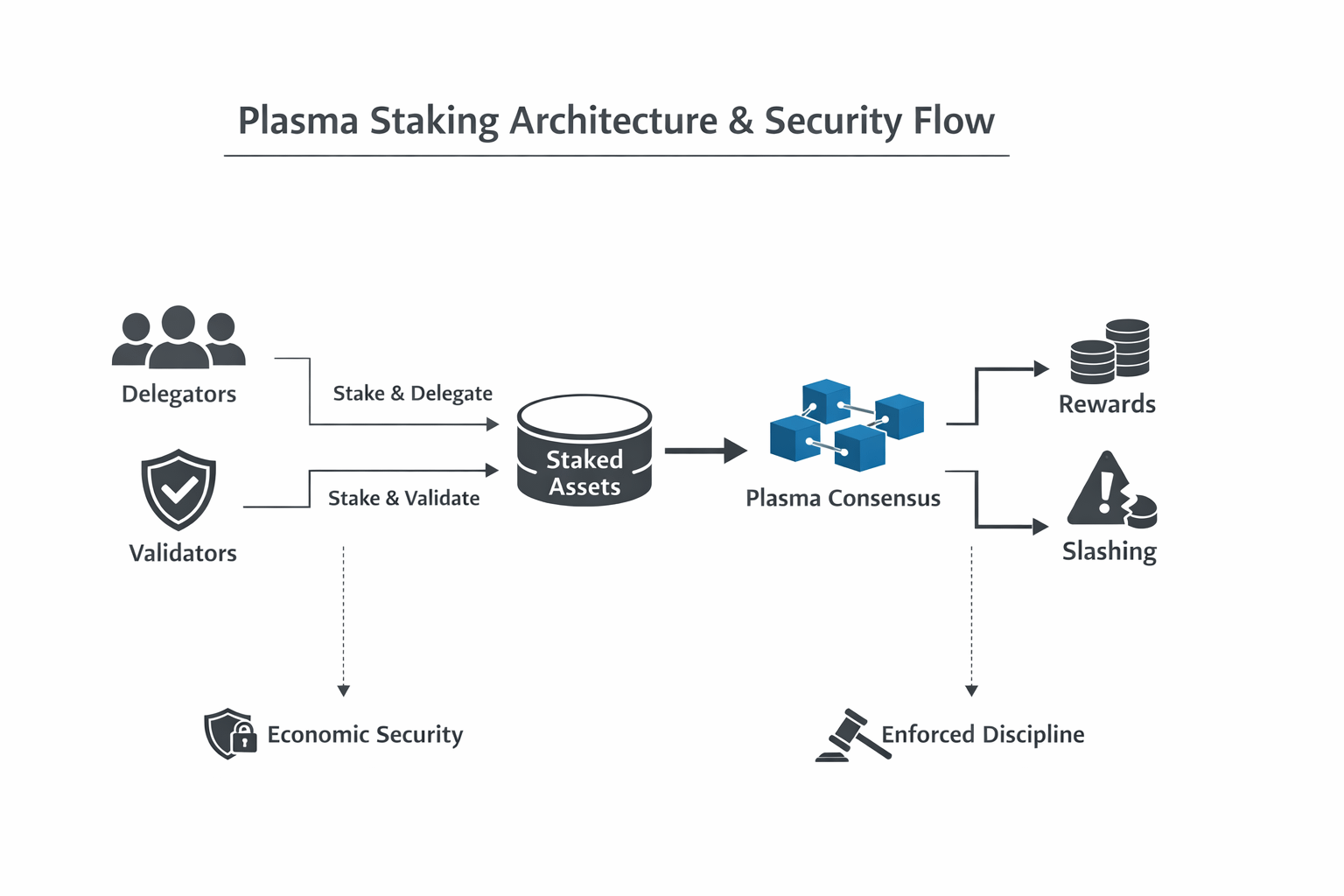
The main idea of the 2026 vision is that staking is the key to keeping everything secure. To be a validator you have to put up some value to be part of making blocks and checking transactions. This value that you put up is, like a promise that you will behave honestly. When validators do what they are supposed to do they get rewards that they can count on.. When they do something bad or are careless they get punished and it affects the value they put up. This makes it very clear what happens if you try to be dishonest versus if you follow the rules and participate fairly. The 2026 vision relies on staking to make sure everyone is doing the thing.
Plasma staking is supposed to be easy to use. It does not want a few people to have all the power. Instead the plasma staking network wants to help people work together to keep it safe. This way people who do not have a lot of plasma staking and big organizations can help keep plasma staking secure without having to do all the work themselves. When people work together like this it helps spread out the power of plasma staking which makes it harder for someone to control it and reduces the risk of something going wrong with the people who verify transactions, on the plasma staking network.
Security in 2026 is not about locking up capital. The thing, about Plasma is that it is expected to put staking and guarantees that we can verify. Validators will say that the state of the network has changed in ways and we can check this on the network by ourselves. The ways we detect fraud and solve disputes are meant to be easy to see and automatic. This means we do not have to rely much on people agreeing with each other when something goes wrong. Instead we follow the rules that are built into the Plasma protocol.
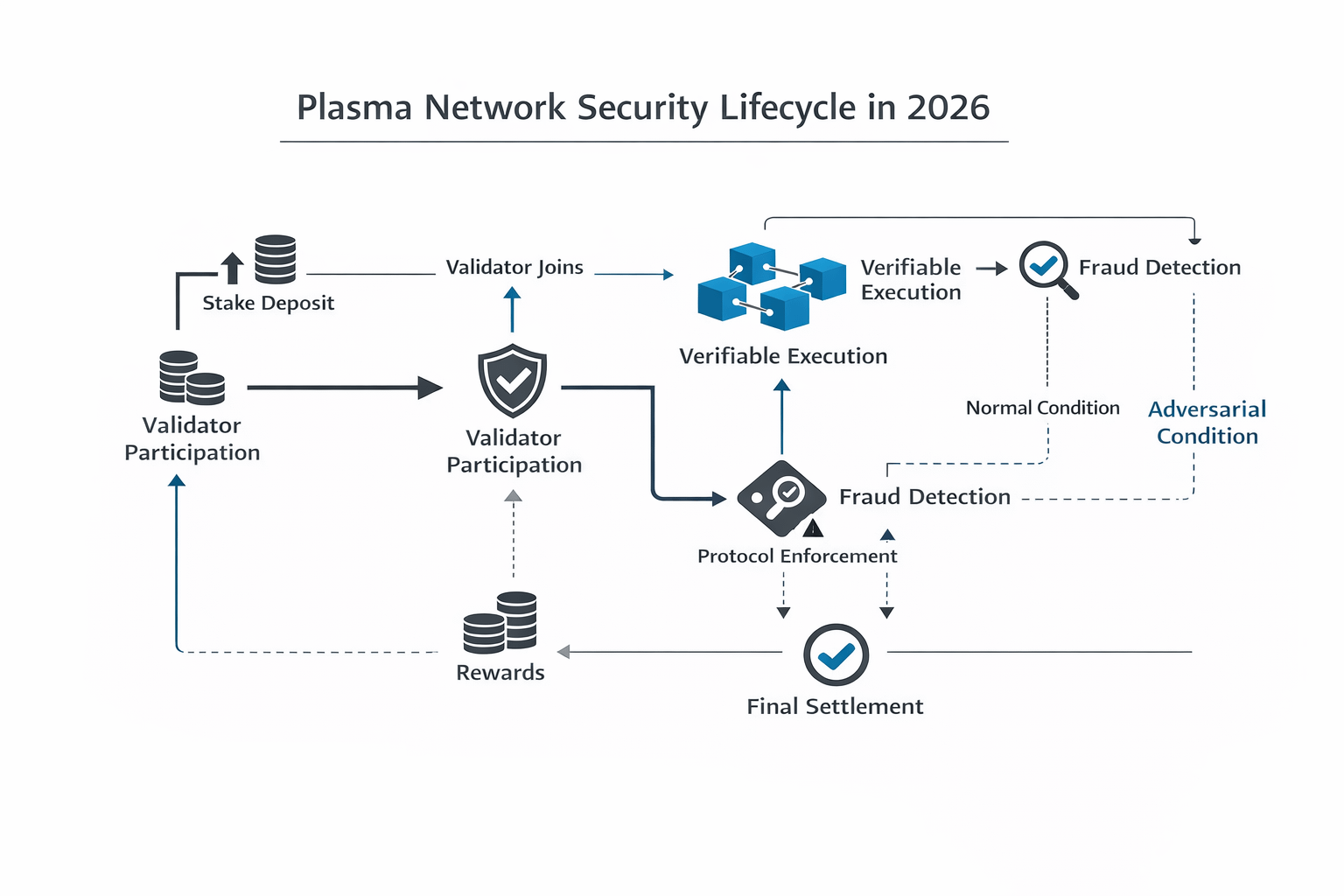
People really want to see Plasma and the applications that use it work together closely especially when it comes to staking and the incentives that applications offer. The people who make applications that use Plasma might be able to give some of the money they make from fees or rewards to the validators who help them with their work. This way the people who keep the network safe are rewarded for helping the network be used for real things not just for doing their job. Over time this could mean that some validators become really good, at helping with payments or other financial things while others become really good at helping with applications that need to handle a lot of users. This is what people mean by Plasma and its applications working together.
The 2026 rollout will probably also bring in staking parameters. So the network will not have fixed thresholds. The network can change the stake reward rates and the severity of slashing based on what is happening at that moment. When the 2026 rollout is used a lot or there is a lot of risk the protocol can make security stronger, on its own. When things are calm the 2026 rollout can reduce the amount of capital needed and make things more efficient. The 2026 rollout can do this because it has staking parameters.
For users and builders the result is a network where security is visible measurable and economically enforced. Staking becomes more than yield. It becomes participation in governance resilience and long term credibility. Plasma 2026 is shaping staking into a living system that adapts with the network while preserving the core promise of fast final settlement and trust minimized execution.

