
In the fast-moving crypto market, many tokens rise and fall based purely on hype cycles and short-term trading sentiment. Plasma’s XPL token has experienced its share of volatility, but looking beyond price charts reveals a broader conversation about its intended role within a developing blockchain ecosystem. Understanding XPL’s real utility requires shifting focus from speculation toward its technical design, network function, and long-term use cases.
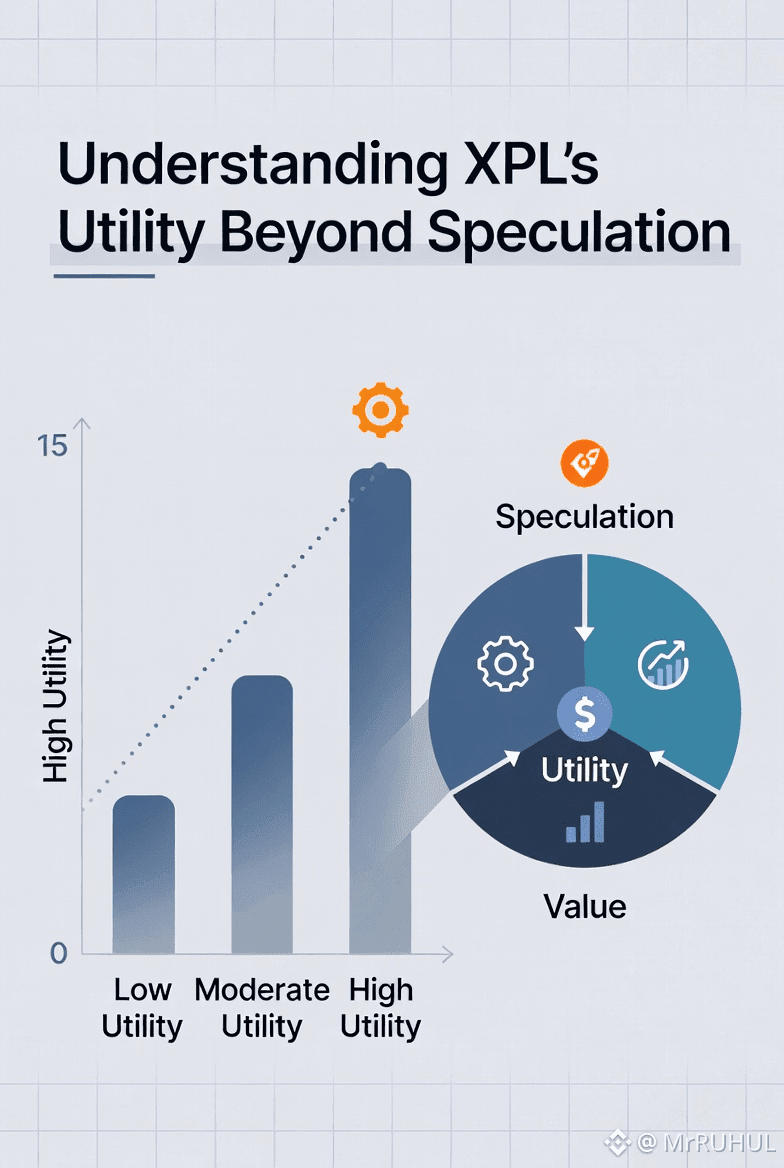
At its core, XPL was designed to support a blockchain infrastructure aimed at handling stablecoin transactions and scalable decentralized finance (DeFi) applications. Instead of serving solely as a tradable asset, the token plays a functional role within the network — powering transaction fees, enabling smart contract execution, and facilitating decentralized interactions. This foundational utility is important because sustainable blockchain ecosystems depend on tokens that provide operational value rather than just market excitement.
Another area where XPL aims to offer real utility is through governance and network participation. Token holders may be involved in decision-making processes related to protocol upgrades, parameter adjustments, and ecosystem development. This governance layer encourages community engagement and decentralization, giving users a voice in how the platform evolves over time. When implemented effectively, governance functions help transform a token into a core component of the network’s long-term sustainability.
XPL also has potential utility in liquidity provision and staking mechanisms. By staking tokens or participating in network validation processes, users can contribute to blockchain security while earning incentives. This approach supports decentralization while encouraging long-term holding behavior instead of constant speculative trading. Additionally, liquidity incentives can help maintain stable markets for decentralized exchanges and financial applications built on the platform.
Beyond technical functions, XPL’s broader value proposition lies in enabling real-world blockchain adoption. If developers build applications that leverage Plasma’s infrastructure — such as payment systems, tokenized assets, or automated financial tools — the demand for XPL could grow organically through usage rather than speculation. The difference between hype-driven tokens and utility-driven ones often comes down to whether the ecosystem produces consistent user activity and meaningful solutions.
Of course, real utility does not automatically guarantee success. Adoption challenges, developer interest, and competition from established blockchains remain significant hurdles. Without active users and compelling applications, even well-designed tokens can struggle to maintain relevance. That’s why evaluating XPL requires a balanced perspective — acknowledging both its functional design and the execution risks ahead.
Ultimately, understanding XPL’s utility beyond speculation means recognizing its role as more than just a price chart. From powering transactions and governance to supporting decentralized finance and potential real-world applications, the token’s true value will depend on whether the ecosystem evolves into a practical and widely used platform. For long-term observers, the real question isn’t just where the price goes next — it’s whether the network delivers the adoption needed to turn technical potential into lasting utility.