
When Dusk was founded in 2018, it was born out of a quiet frustration shared by many builders watching the blockchain industry grow in the wrong direction for real finance. The technology was powerful, but the narrative was narrow. Radical transparency was celebrated as a virtue, even though anyone who had worked inside banks, capital markets, or asset management knew a simple truth: finance cannot function without privacy. Deals fall apart, institutions face legal exposure, and individuals lose trust when sensitive information is exposed. Dusk began with a different emotional starting point—the belief that financial dignity, confidentiality, and accountability should coexist, not compete.
Dusk was designed for a world that already exists, not an idealized one. In real financial systems, privacy is not about hiding wrongdoing; it is about protecting participants. Traders safeguard strategies, companies protect balance sheets, and investors expect discretion. Dusk reflects this human reality by embedding privacy directly into its foundation. Transactions on the network are confidential by default, yet provable and verifiable. This balance restores something often missing in blockchain conversations: trust without exposure.
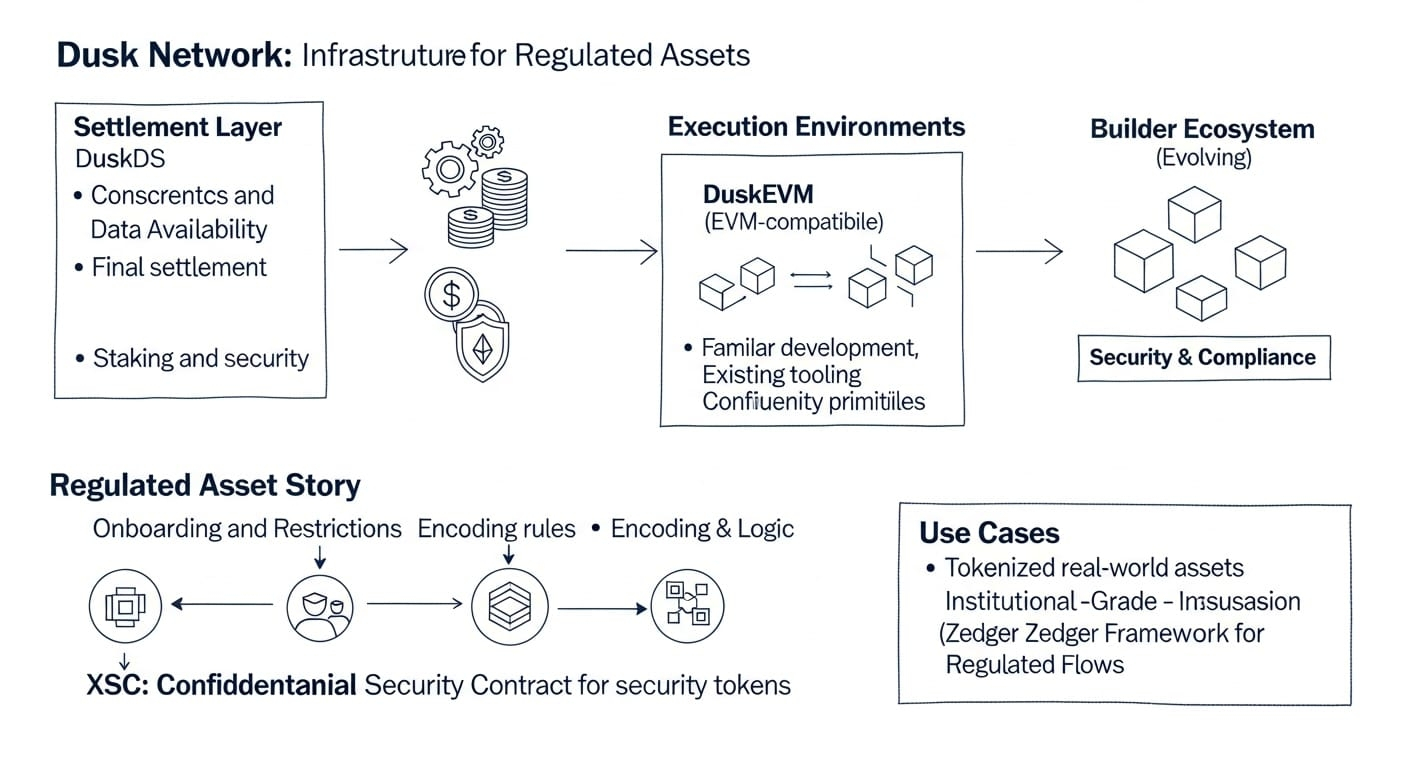
What makes Dusk emotionally compelling is its refusal to treat regulation as an enemy. Many blockchain systems frame compliance as a compromise or a burden. Dusk takes the opposite stance. Regulation exists because people were harmed when systems lacked oversight. Markets collapsed, savings disappeared, and confidence eroded. By acknowledging this history, Dusk builds auditability into the protocol itself. Regulators and auditors are not shut out, but neither are users forced to broadcast their financial lives to the world. Selective disclosure becomes a bridge between innovation and responsibility.
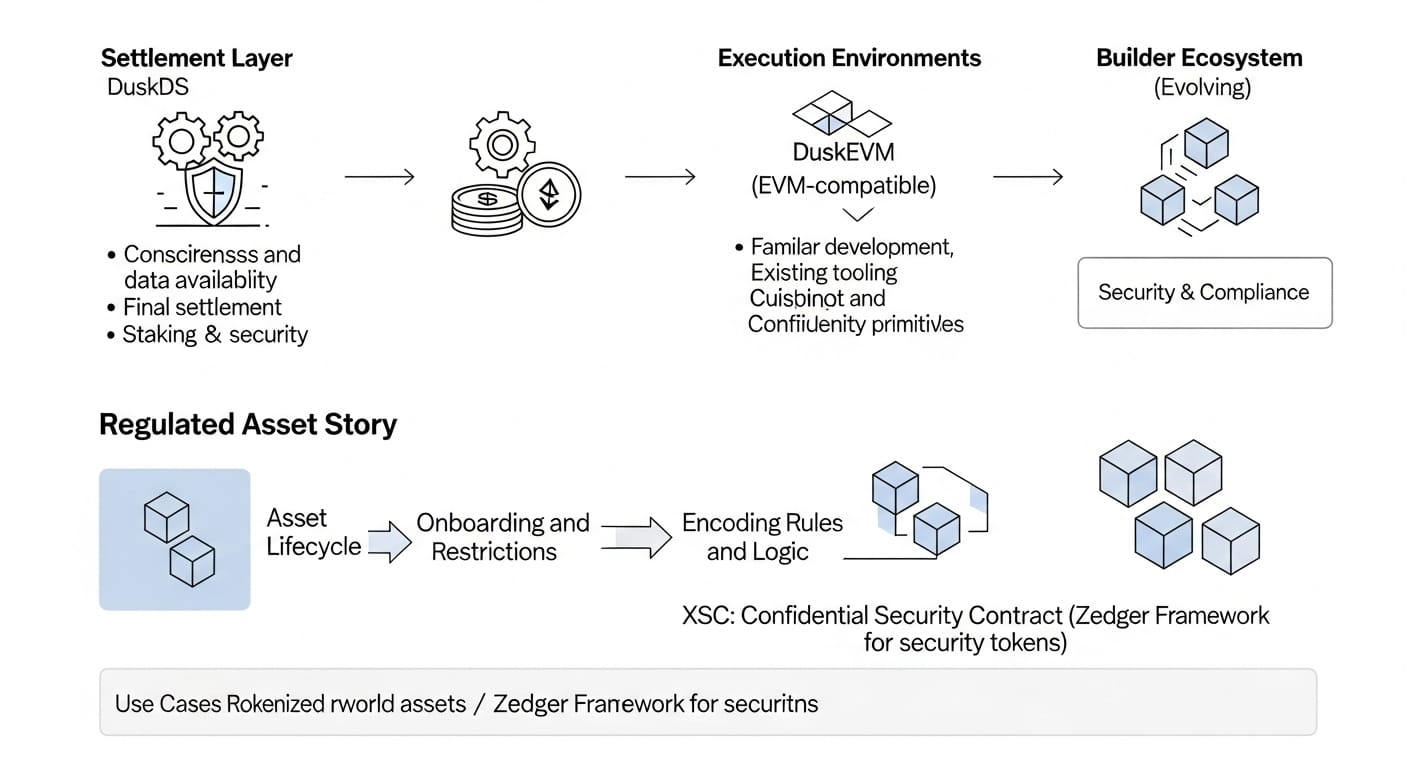
The modular architecture of Dusk mirrors how real institutions evolve. Laws change. Markets adapt. Technologies mature. Instead of locking everyone into a rigid structure, Dusk allows its components to grow independently. This flexibility is not just technical elegance it is empathy for the pace at which real organizations move. Institutions cannot afford disruptive overhauls every year, and Dusk respects that reality by offering stability where it matters and adaptability where it is needed.
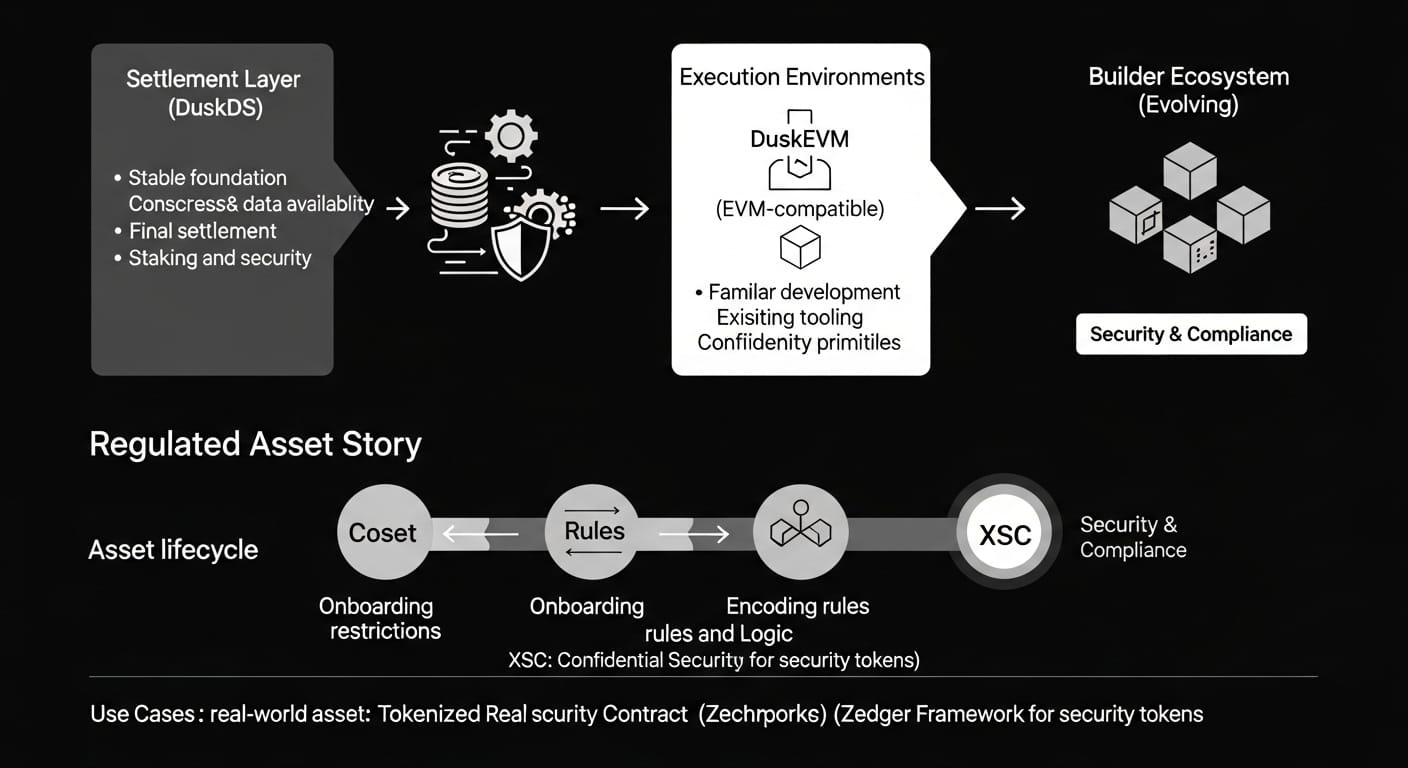
Underneath this architecture is a consensus system built for calm, not chaos. Financial infrastructure must feel boring to be trusted. Settlement must be predictable. Finality must be clear. Dusk’s proof of stake design prioritizes reliability because uncertainty is costly in finance, not just economically, but emotionally. Confidence is fragile. When systems behave erratically, participants pull back. Dusk is engineered to do the opposite: to reassure by design.
The promise of tokenized real-world assets often sounds revolutionary, but the emotional barrier is fear. Institutions worry about leaking investor data. Issuers worry about legal exposure. Investors worry about losing protections they rely on. Dusk addresses these fears directly. By allowing assets like securities and funds to exist on-chain with compliance rules enforced and private data protected, it turns tokenization from a risky experiment into a credible evolution. It offers continuity rather than rupture.
In decentralized finance, Dusk’s approach feels almost quietly rebellious. Instead of chasing permissionless extremism, it builds space for responsibility. Compliant DeFi on Dusk acknowledges that institutions want innovation, but not at the cost of their licenses or reputations. Identity checks, transfer restrictions, and audit trails are not seen as limitations, but as enablers signals that decentralized systems can grow up without losing their soul.
At a deeper level, Dusk represents a shift in how blockchain relates to society. It is not trying to replace financial systems out of anger or distrust. It is trying to improve them out of care. Care for privacy. Care for accountability. Care for the people and institutions that move value through the world every day.
Dusk’s vision is not loud or utopian. It is grounded, deliberate, and human. It understands that financial infrastructure is ultimately about people about their livelihoods, their confidence, and their sense of security. By designing a blockchain where privacy is respected, rules are enforceable, and trust is rebuilt through cryptography rather than blind faith, Dusk offers something rare in the industry: a future that feels both innovative and safe.