
Most chains say “AI” and mean a chatbot bolted on top of the same old stack. That’s the blunt truth. What keeps pulling me back to @vanar is that the story is less about slogans and more about design choices that feel intentionally AI-first: semantic transactions, built-in vector search, and a stack that treats memory + reasoning as part of the infrastructure, not an app-layer afterthought. �
 Vanarchain
The small detail that stuck with me is a phrase on the Vanar site: “semantic transactions.” It’s a weirdly specific way to describe a blockchain, and it hints at the real target—apps that don’t just execute, but interpret context and meaning, then act faster because the chain is built for AI inference and distributed compute. �
Vanarchain
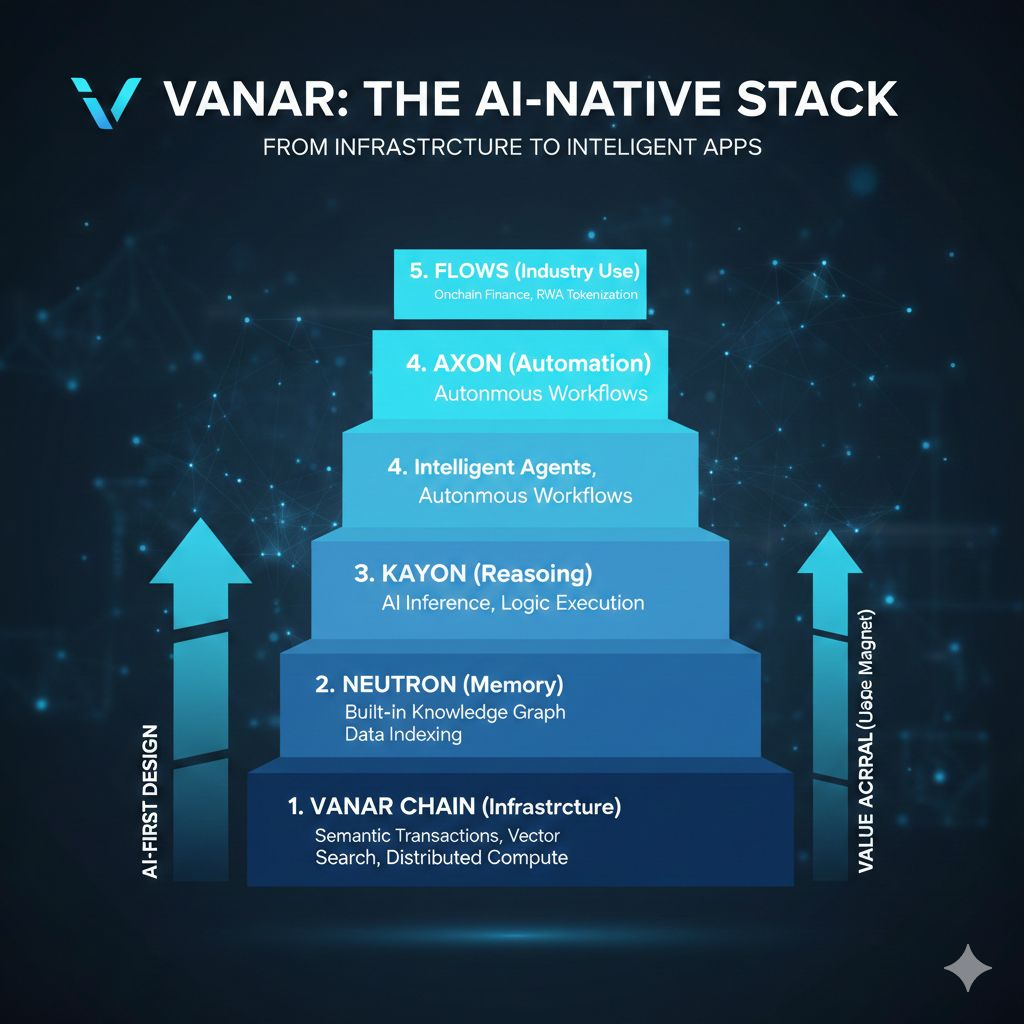
If you zoom out, the 5-layer Vanar stack (Vanar Chain → Neutron → Kayon → Axon → Flows) reads like a roadmap for how intelligent apps actually get built: infrastructure first, then memory, then reasoning, then automation, then industry use. That layering matters when you’re serious about AI agents, onchain finance, and tokenized real-world infrastructure living on the same rails. �
Vanarchain
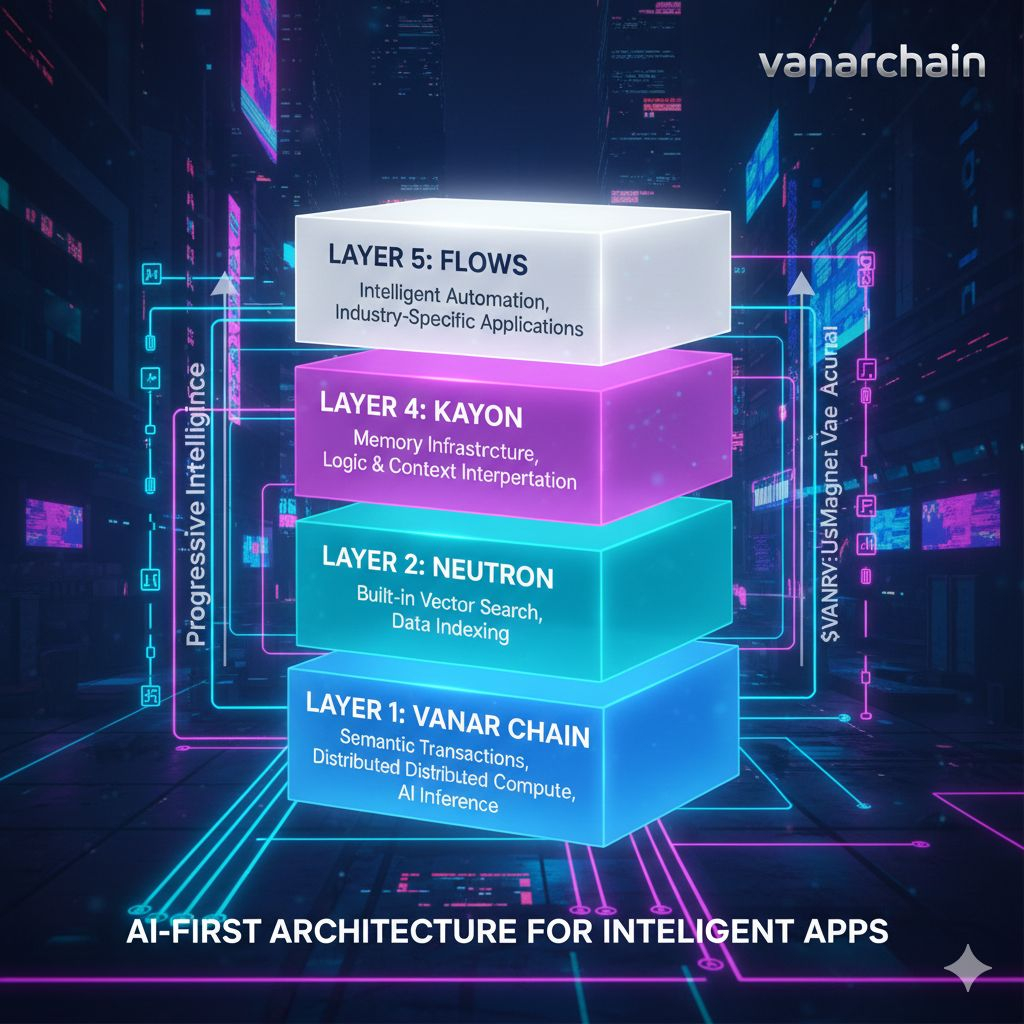 This is why $VANRY discussion gets more interesting when you stop treating it like a ticker and start treating it like a “usage magnet.” If the chain is where builders ship real AI workloads, value accrual becomes a byproduct of activity, not just vibes. I’m not saying it’s guaranteed—nothing is. But the architecture is trying to earn the narrative the hard way, and I respect that.