

Whenever I think about why people trust or stop trusting payment systems, it always comes back to one moment: checkout. Not settlement reports not confirmations later not dashboards. Trust is decided in the instant someone clicks “pay” and waits for an answer.
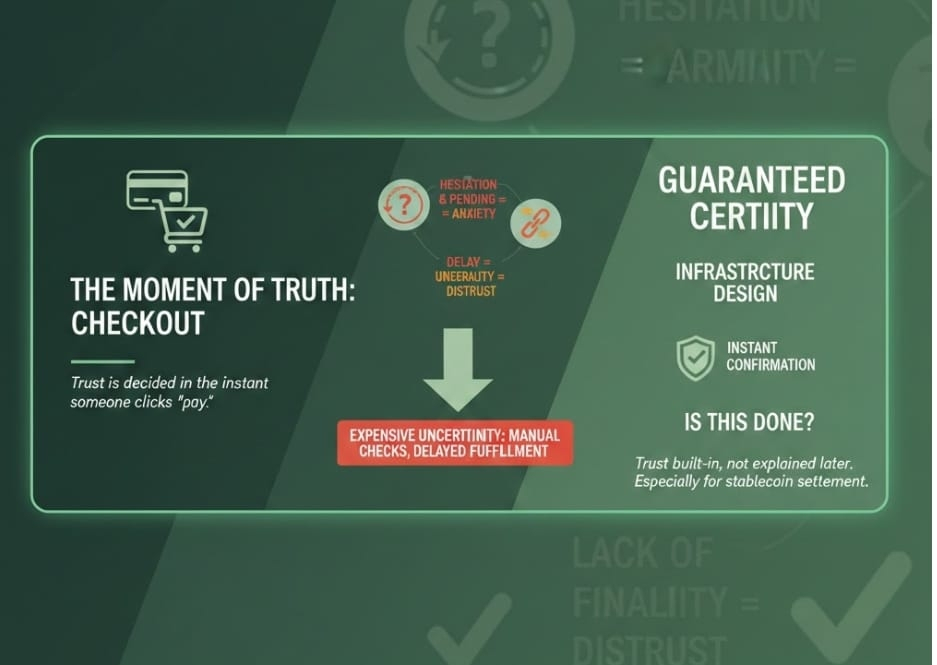
From what I’ve seen, most users don’t care how advanced a system is. They care about whether the outcome feels final. At checkout, hesitation creates doubt. A pending state creates anxiety. Even a small delay can make people question whether money really moved. That uncertainty lingers long after the transaction is technically complete.
What often gets overlooked is that checkout isn’t just a UI problem. It’s an infrastructure problem. Many systems are designed to look smooth at the surface, while underneath they rely on assumptions that settlement will eventually resolve. That works until it doesn’t. When something goes wrong, users experience confusion, merchants introduce extra safeguards, and institutions slow everything down to manage risk.
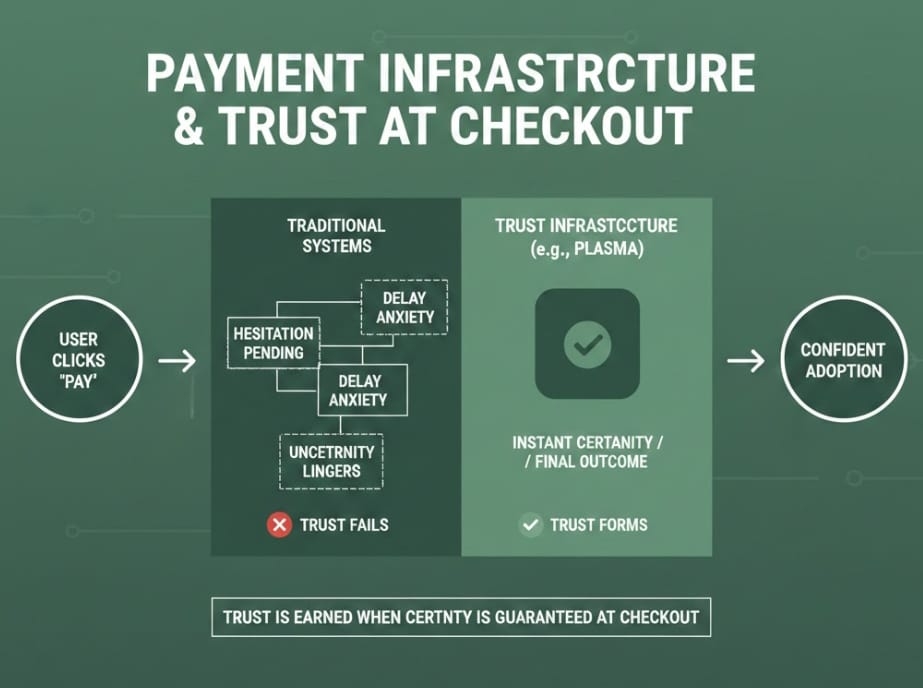
In real payment environments, uncertainty at checkout is expensive. It leads to manual verification, delayed fulfillment and defensive processes that add friction for everyone involved. Over time, these workarounds become normalized, masking the fact that the infrastructure itself never guaranteed trust at the critical moment.
In my view, payment infrastructure should be judged by how confidently it answers the checkout question: Is this done? Trust shouldn’t arrive later through explanations or reconciliations. It should be built into the system so that certainty exists immediately, especially when dealing with stablecoin settlement at scale.
That’s why infrastructure approaches like those explored by Plasma feel directionally right to me. By combining familiar execution with deterministic outcomes, the focus shifts away from post-payment fixes and toward confidence at the moment value moves. That’s where trust actually forms.
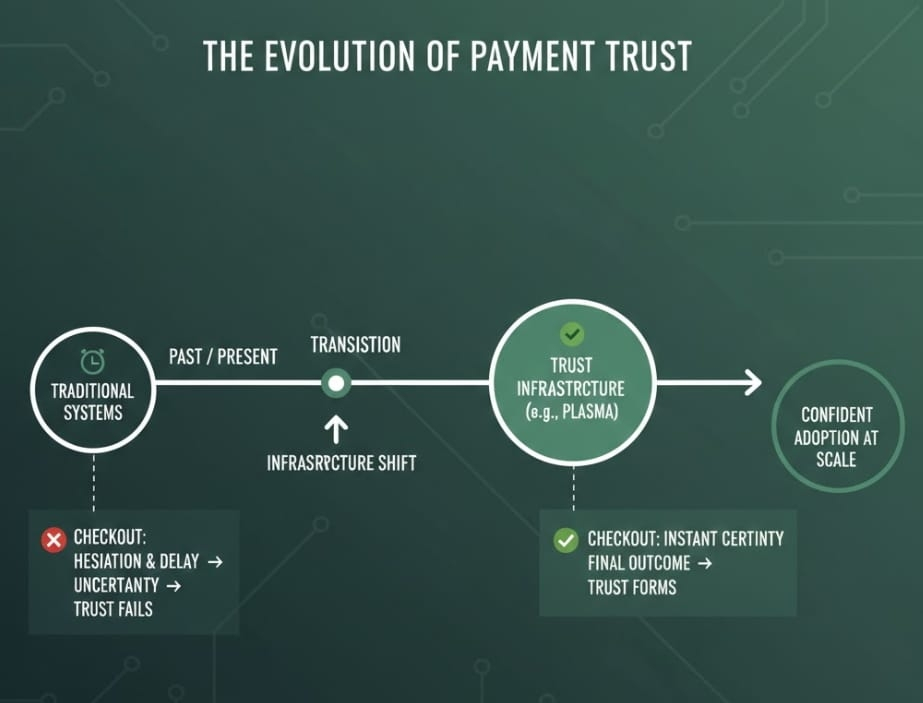
The more I observe payment behavior, the clearer it becomes adoption doesn’t fail because people don’t understand payments. It fails because systems ask them to accept uncertainty at the exact moment they need confidence.
Payment infrastructure earns trust when certainty is guaranteed at checkout not explained afterward.