

Reliable systems often appear boring because their primary job is to maintain stability when the surrounding environment becomes unpredictable. In the world of decentralized infrastructure, we are seeing a shift where value is no longer just about trading volume, but about how effectively a protocol can coordinate physical resources like bandwidth and hardware. This shift matters now because as decentralized applications scale, the cost of moving data incorrectly can lead to systemic fragility. The $WAL token functions as the essential coordination mechanism that prevents this chaos by aligning the interests of storage providers with the long-term needs of the network.
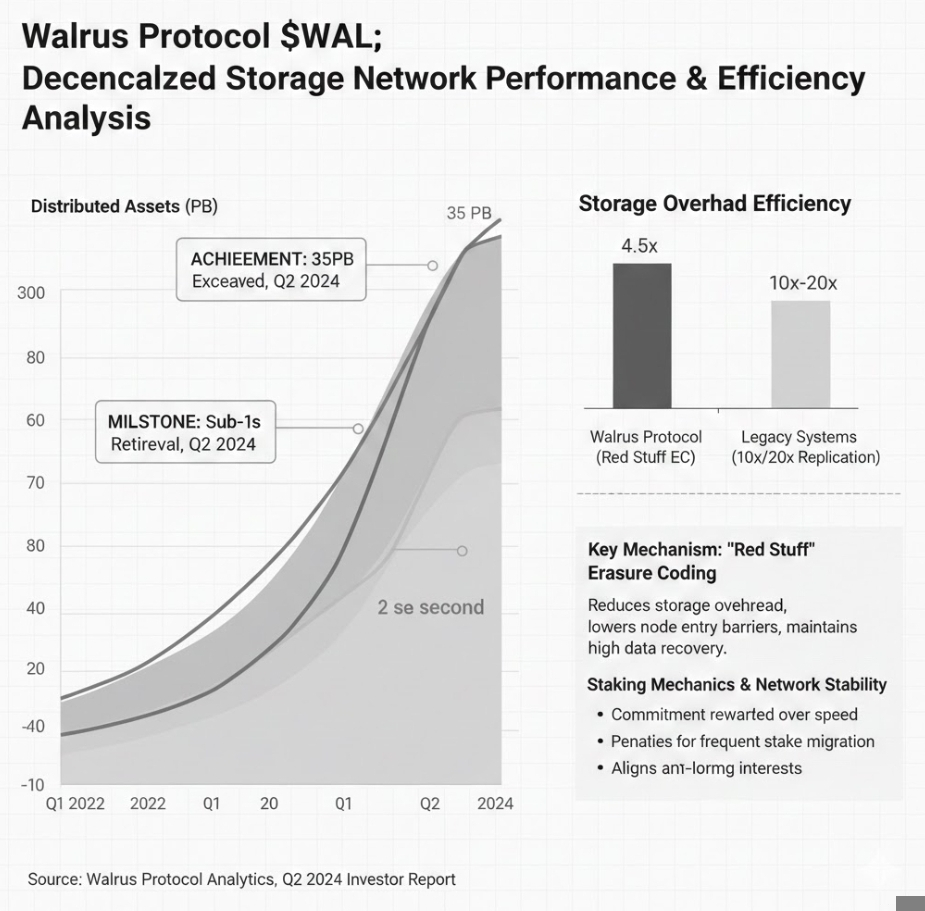
A clear signal of this maturity surfaced recently as the network surpassed 35PB of distributed assets with a reported retrieval time under one second. This throughput is significant because it validates the "Red Stuff" erasure coding model, which reduces storage overhead to roughly 4.5x compared to the 10x or 20x replication seen in older systems. By lowering the physical barrier to entry for nodes while maintaining high recovery rates, #walrus creates a specialized environment where data isn't just parked, but remains active and programmable. If infrastructure becomes this efficient, what does that mean for the next generation of AI-driven dApps that require massive, verifiable datasets?
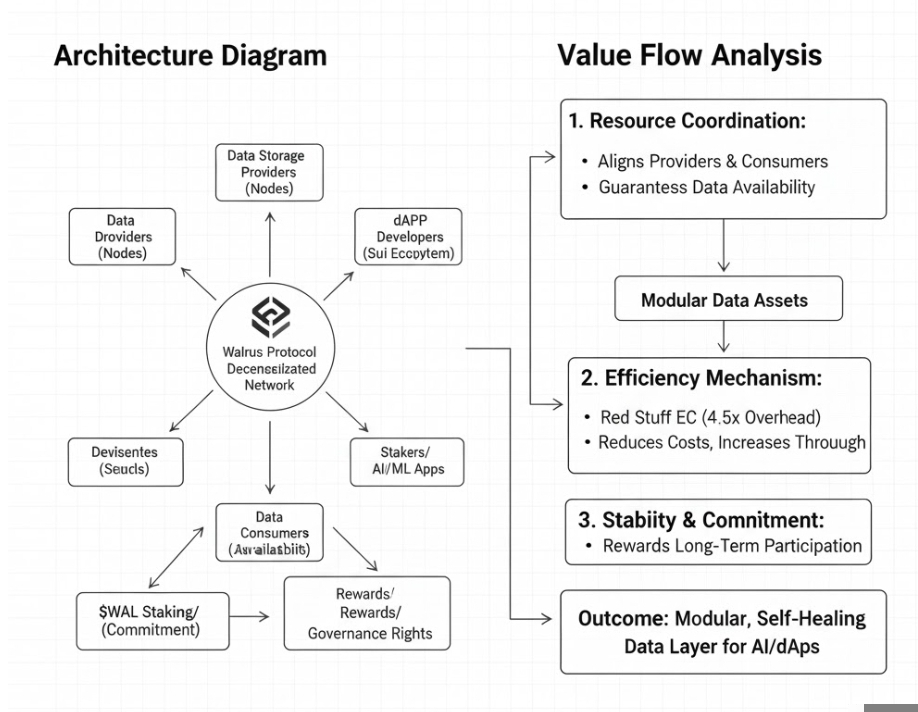
For those contributing to the ecosystem, the focus should remain on the mechanics of participation rather than short-term market noise. The protocol explicitly penalizes frequent stake migration to avoid the high migration costs of moving data across nodes, essentially rewarding commitment over speed. By interacting with the @Walrus 🦭/acc , participants are helping build a self-healing layer that turns raw storage capacity into a modular asset for the entire Sui ecosystem. This suggests that the real value of the system lies in its ability to stay functional and cost-effective even as global data demands continue to accelerate.