
Most blockchains chase the spectacle of open staking wars, where whales dominate leaderboards and volatility turns delegation into a high stakes gamble. Dusk Network, though, feels like a quiet, anonymous auction its Proof of Blind Bid (PoBB) delegation system isn't about outbidding in plain sight but earning trust through hidden commitments, aiming for a reliability that's almost indifferent to the chaos of crypto cycles.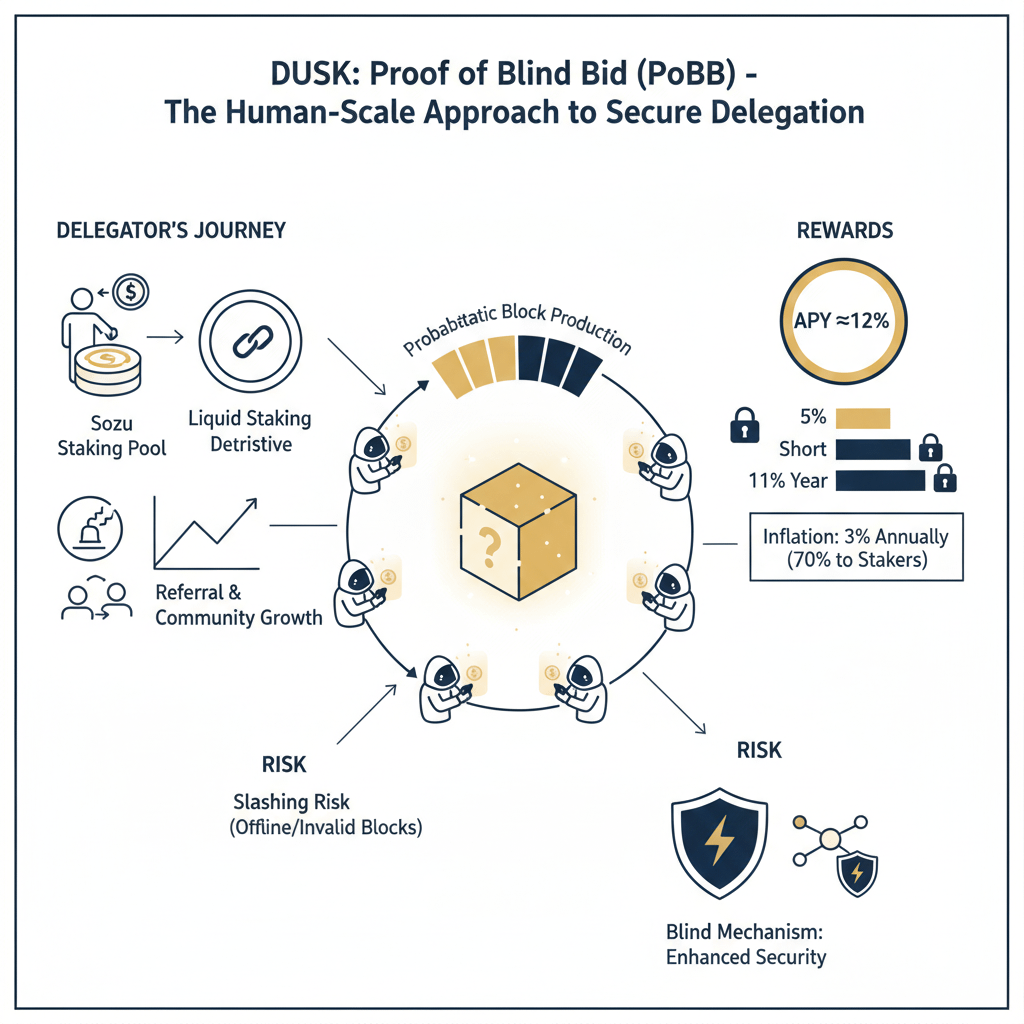
When I first started looking closely at @Dusk foundation, what stood out wasn’t the buzz around privacy preserving finance or zero knowledge proofs though those are impressive. It was how PoBB reimagines delegation as a human scale solution to the frustrations of traditional staking. In most PoS systems, delegators face the anxiety of picking validators amid public power struggles, where big players can collude or target smaller ones. PoBB flips this: validators bid blindly with staked DUSK tokens to generate a "score" for block production the higher the blind bid, the better the probabilistic chance, but all anonymously. This anonymity shields against Sybil attacks and whale manipulations, making delegation feel less like a lottery and more like a fair draw. For everyday users, it solves the hesitation of committing funds; you delegate without fearing visible dominance games, focusing instead on steady participation.
The idea that really clicked for me was how this ties into rewards and risks in a pragmatic way. Rewards come probabilistically from block proposals and validations, with an APY hovering around 12% tiered by lock up periods to encourage long term stability, like 5% for short stints versus 11% for a year. Delegators earn a share without running nodes, thanks to Hyperstaking's smart contracts that enable pools and liquid staking derivatives. This means you can stake, get a tradable token back, and use it in DeFi without full lock in, addressing the real pain of illiquidity that turns people off from securing networks. On the risk side, slashing looms for validators who go offline or submit invalid blocks, potentially affecting delegators' stakes proportionally a deliberate nudge toward reliability. But PoBB's blind mechanism minimizes targeted exploits, trading some raw decentralization for enhanced security.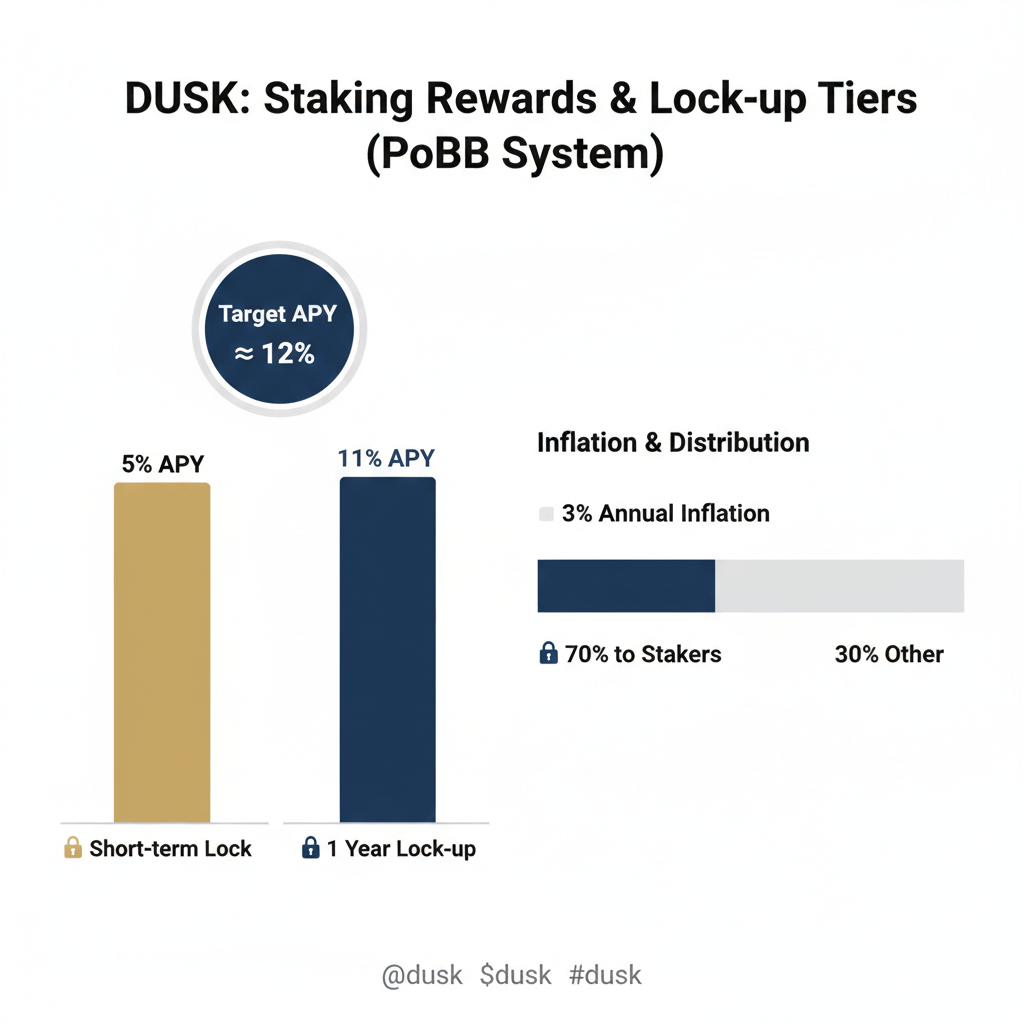
Stepping back, Dusk's ecosystem shows this in action: tools like Sozu for delegated staking let newcomers join without tech hurdles, while referral models reward community growth, fostering organic adoption. On chain, it's stress tested in privacy focused apps, like compliant token issuances where repetitive, small stake actions build habits rather than speculative frenzies. Yet, honest balance is key PoBB's curated anonymity might limit validator diversity compared to fully open systems, and inflation (3% annually, with 70% to stakers) could pressure token value if usage doesn't scale. Explorer glitches or setup complexities exist too, framed as compromises for a compliant, privacy first infrastructure that prioritizes real world finance over maximalist ideals.
If Dusk succeeds, most delegators won’t dwell on the bids or scores; they’ll just stake seamlessly, risks fading into the background like reliable electricity powering daily life. That might be the most human strategy in blockchain building security that's felt in its absence, not its flash.