

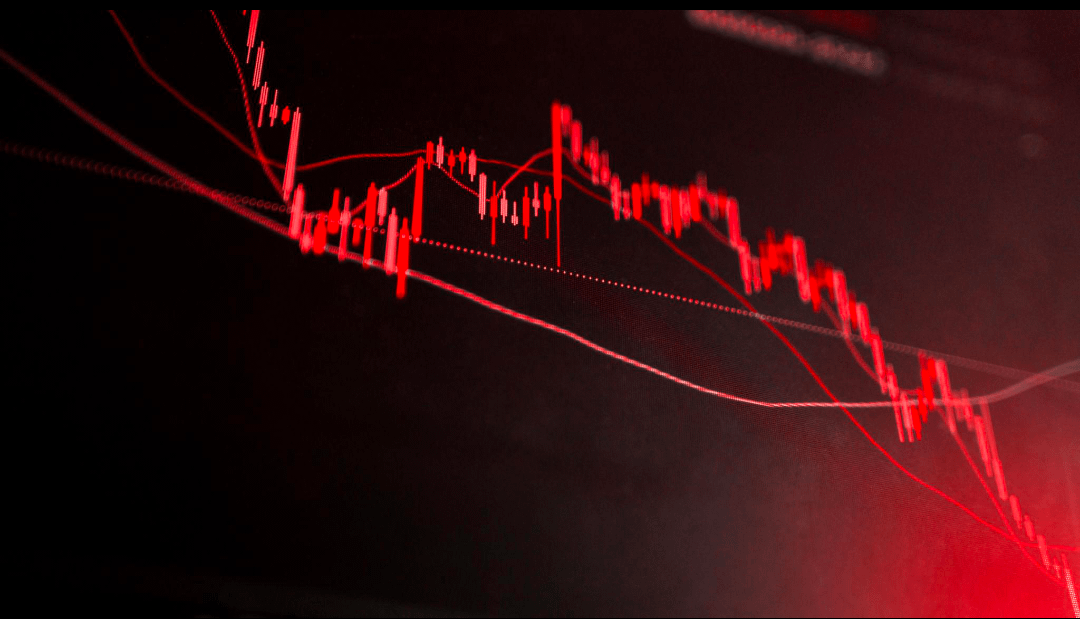
Bitcoin has dropped to its lowest level in over a year, and the shift in mood was immediate. This was not loud panic or sudden chaos. It was a slow heavy move lower that caught many off guard and forced the market to reassess risk.
As always, the weakness did not stay inside crypto. Stocks closely tied to Bitcoin such as MicroStrategy (MSTR) and Coinbase (COIN) fell alongside it, in many cases faster and deeper than Bitcoin itself.
What actually happened
Bitcoin did not crash in a single moment. It lost key support levels that had held for months. Once those levels broke, automated selling kicked in. Stop losses were hit. Leverage was forced out. Selling fed on itself.
At the same time, the broader financial environment remains tight. Interest rates are high, liquidity is limited, and investors are far less willing to hold risky assets. Bitcoin was one of the first places that pressure showed up.
Why crypto stocks are falling harder
Crypto stocks do not simply track Bitcoin. They amplify it.
MicroStrategy (MSTR)
MicroStrategy holds a very large amount of Bitcoin on its balance sheet. When Bitcoin falls, the value of that treasury drops and the company’s leverage looks riskier. Investors react quickly, which is why MSTR often moves more aggressively than Bitcoin in both directions.
Coinbase (COIN)
Coinbase depends heavily on trading activity. When prices fall sharply, retail traders step back, volumes decline, and revenue expectations are revised lower. Even if the business remains strong long term, the stock reflects current fear and uncertainty.
This is bigger than two stocks
The pressure is spreading across the entire crypto equity space. Bitcoin miners are squeezed by lower prices and high operating costs. Crypto ETFs are seeing cautious positioning. Blockchain related stocks are being treated as part of the same risk group.
From a market perspective, it is all one trade and that trade is being reduced.
Capitulation or just a pause
There are signs that suggest this is not pure panic. Long term Bitcoin holders are not rushing to sell. Large wallets are not dumping aggressively. Historically, deep drawdowns often lay the groundwork for future recoveries.
But there are also reasons to stay cautious. Liquidity has not improved. Macro conditions remain restrictive. Big technical breakdowns usually need time to stabilize, not just a quick bounce.
Right now the market is not focused on upside. It is focused on safety.
What to watch next
The next signals will come from behavior, not predictions. Watch whether Bitcoin can hold above recent lows. Watch if selling pressure starts to slow. Watch whether crypto stocks stop underperforming Bitcoin. Watch volatility and see if it begins to calm.
When fear stops accelerating, the market can begin to rebuild.
Final thought
Bitcoin reaching a one year low is not just a chart event. It is a confidence reset. Crypto stocks are simply reflecting that reality more sharply.
This is not the end of the story. It is a moment where the market steps back, reassesses risk, and decides what is worth holding.
Sometimes the most important move is not buying or selling. It is watching closely while the noise fades.
