
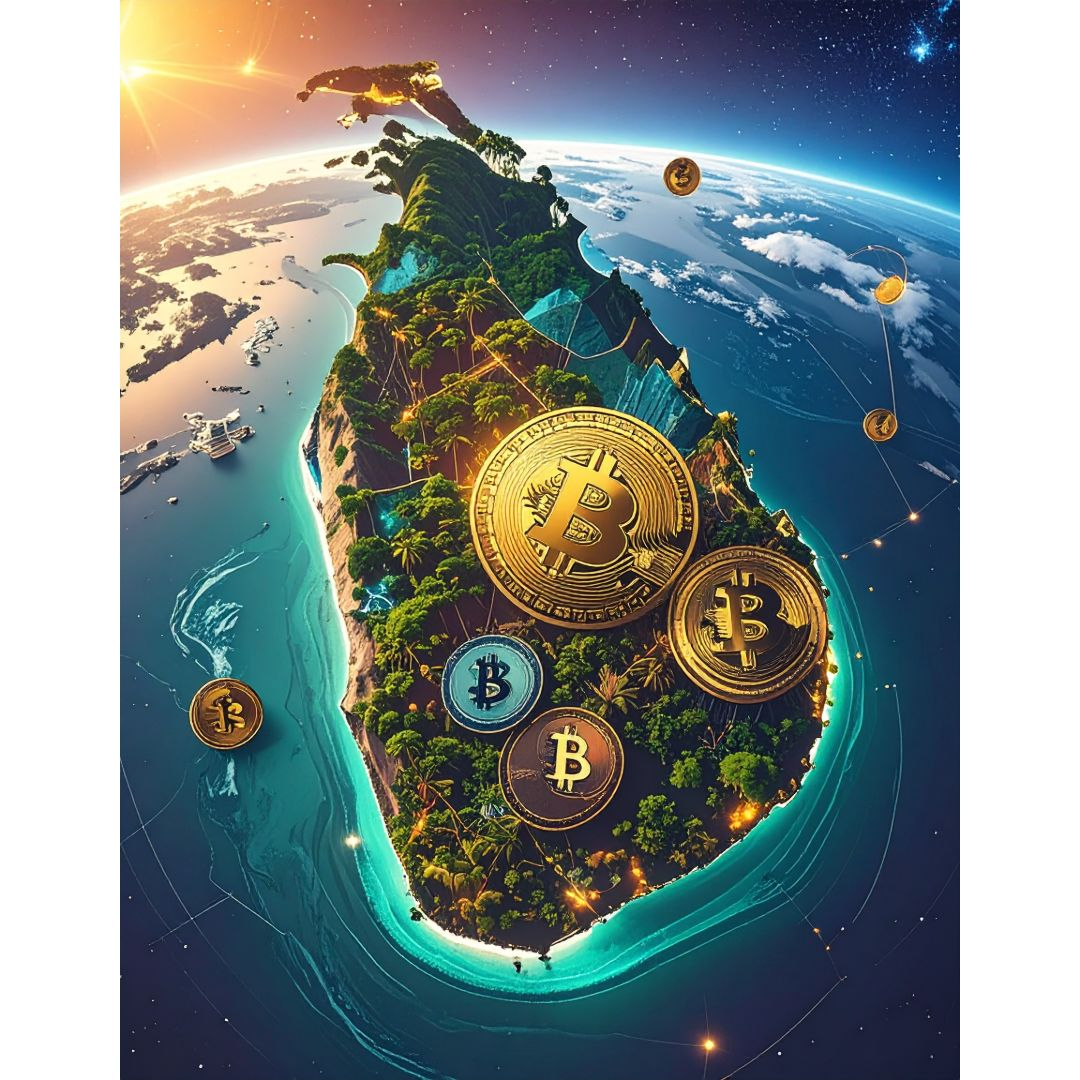
A quiet yet significant financial shift is unfolding across Sri Lanka. As inflation pressures persist and the rupee continues to weaken, more citizens — from tech-savvy youth to small business owners — are increasingly turning to cryptocurrencies as an alternative store of value outside the traditional banking system.
📊 According to research published in the South Asian Journal of Finance, over 320,000 Sri Lankans currently own some form of digital currency. Global data firm Datawallet projects this figure could climb to 1.16 million users by 2026, highlighting the rapid pace of adoption.
💡 For many participants, crypto is no longer viewed purely as a speculative asset. Instead, it is increasingly seen as a hedge against inflation and long-term currency depreciation.
🗣️ “Young professionals and small investors are quietly experimenting with crypto to preserve value,” said a Colombo-based financial analyst. “Much of this activity is happening outside formal markets, but it’s steadily expanding.”
🌐 Most transactions occur through offshore exchanges or peer-to-peer platforms, as Sri Lanka has yet to approve or license domestic crypto service providers. This places much of the activity in a regulatory grey zone, beyond direct oversight by authorities.
⚠️ The Central Bank of Sri Lanka (CBSL) has repeatedly cautioned the public about virtual assets. Governor Nandalal Weerasinghe recently reiterated that only the Sri Lankan rupee holds legal tender status, stressing that crypto investments carry significant risk despite not being outright banned.
📜 To enhance monitoring, the CBSL has proposed amendments to the Financial Transactions Reporting Act (FTRA). These changes would require Virtual Asset Service Providers (VASPs) to register with the Financial Intelligence Unit (FIU) and comply with AML/CFT regulations, similar to banks.
📈 Meanwhile, global crypto markets continue to surge. Bitcoin, the world’s largest cryptocurrency, is trading near US$109,000, marking a sharp rise since late 2024. Some analysts believe prices could approach US$150,000 before the end of 2025, driven by institutional demand and regulatory clarity abroad.
🔐 Despite this momentum, Sri Lankan investors remain exposed. Without legal recognition at home, losses from hacks or failed overseas platforms offer little legal protection. “If assets disappear, recovery options are extremely limited,” warned a financial law expert.
🔮 As economic uncertainty lingers, crypto’s growing appeal reflects a deeper desire for financial independence. Whether Sri Lanka chooses regulation or continued caution may determine if this movement becomes a structured financial evolution — or a high-risk experiment.


THANKYOU 🙏