

Vanar Chain is built with a clear intention to make Web3 feel practical for everyday use, not only for crypto native users, and the way the project frames itself today is closer to a full platform than a simple Layer 1 that stops at fast blocks and cheap fees, because Vanar is trying to combine execution, data, and intelligence into one stack that can support real products where users do not want friction and builders do not want complexity.
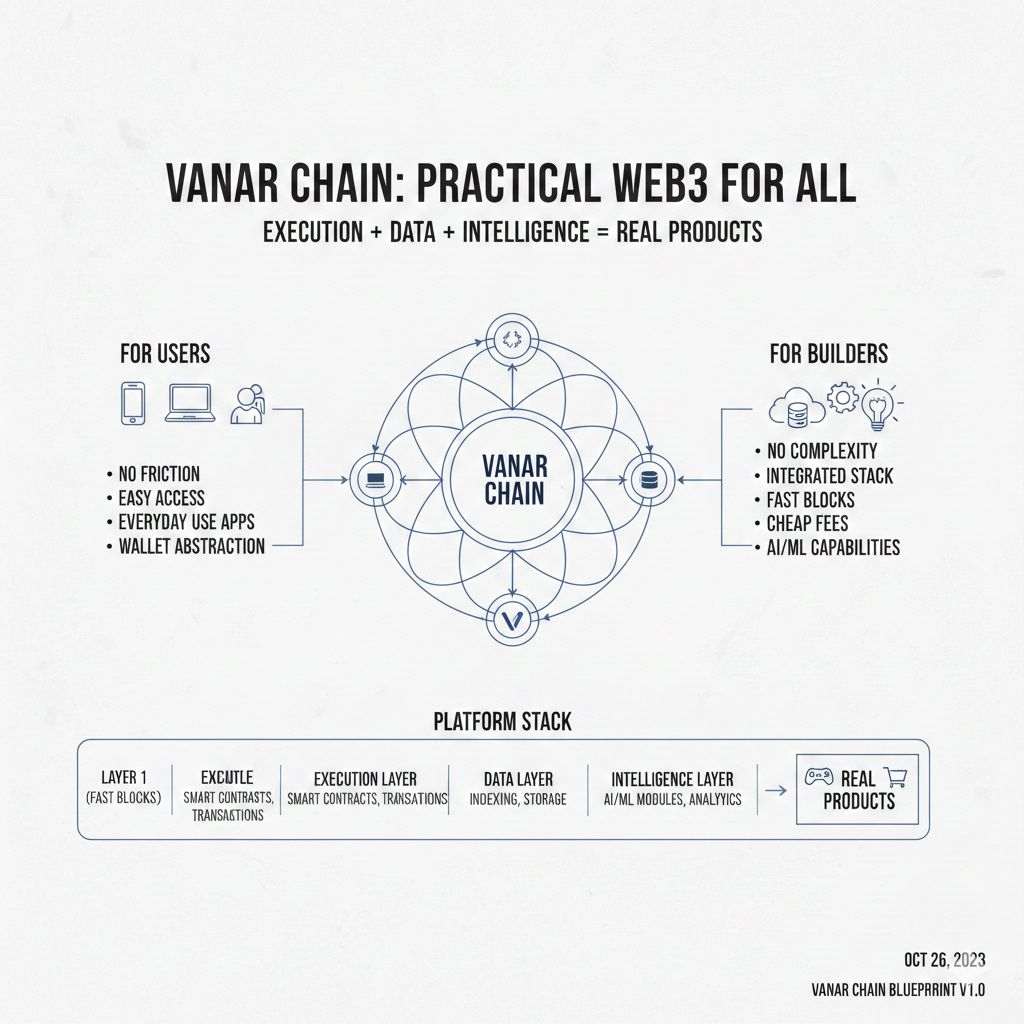
At the foundation there is the chain itself, and the important detail is that Vanar is pushing an EVM compatible approach so developers can build with familiar tooling while still benefiting from Vanar specific design choices, which matters because the fastest route to adoption usually comes from reducing the time it takes for a team to ship something usable, and Vanar keeps repeating the same underlying theme across its public materials, that the chain should behave like an infrastructure layer for consumer scale experiences where predictability and low overhead are non negotiable.
Where Vanar starts to separate its identity is in what it places above the base chain, because it does not treat data like an afterthought that sits in external databases and is later referenced by smart contracts, instead it presents Neutron as a semantic memory layer where information can be compressed into structured knowledge objects called Seeds, with the goal that applications can store meaning rather than only store raw files, and the moment you accept that direction you can see why the project keeps linking its vision to real world finance and tokenized assets, since those domains demand verifiable context, auditability, and rules that can be enforced without relying on brittle offchain coordination.
On top of that memory layer, Vanar introduces Kayon as the reasoning component that can query what has been stored and apply logic in a way that is designed to be useful for compliance and policy enforcement, which is a subtle but serious ambition because it implies the chain is meant to do more than process transfers, it is meant to help an application decide whether a transfer, a settlement, or an action should happen at all when real constraints are involved, and that is also why the project describes itself as moving from programmable systems toward intelligent systems, not as marketing decoration but as a statement about where it wants the development workflow to live.
The other pieces of the stack are just as revealing even when they are not fully surfaced yet, because Axon is described as the automation layer and Flows is described as the application layer, and that signals that Vanar is planning to package common real world workflows into reusable rails, so builders are not forced to rebuild the same components repeatedly, which is usually where many chains lose momentum, because developers can get a prototype running quickly but they struggle to ship complete products that include automation, policy, and user friendly flows.
The VANRY token sits inside this design as the operational fuel and the alignment mechanism, because it is intended to pay for network activity and to secure the network through staking, and the token story also carries a continuity element from earlier ecosystem roots, which is meaningful because it shows Vanar is not starting from zero in terms of community or awareness, but is evolving its direction and sharpening its thesis around adoption focused infrastructure that can serve consumer apps as well as finance oriented use cases.
What matters most right now is that Vanar is actively shaping a narrative that is broader than gaming and entertainment even though those remain part of its origin and ecosystem surface area, because the current positioning is clearly aiming at a bigger lane where semantic data, reasoning, and compliance friendly logic are treated as first class primitives, and this is exactly where the long term test becomes simple and unforgiving, since the project will be judged less by how attractive the vision sounds and more by whether developers can actually use Neutron and Kayon to ship applications faster, safer, and with fewer moving parts than they could elsewhere.
If you are looking at what comes next from a builders perspective, the path is straightforward even if the work is not, because Vanar needs to turn its higher layer concepts into daily tools with clear examples, strong documentation, and reference applications that prove the advantage, and it also needs to keep expanding the surrounding product surface so onboarding, staking, exploration, and developer workflows feel smooth enough that teams stay inside the ecosystem rather than using Vanar as a temporary experiment.
My takeaway is that Vanar is not betting on speed alone, and it is not trying to win by copying the same playbook as every other Layer 1, because its real bet is that context and verifiable meaning will become a core requirement for the next wave of applications, especially in areas like payments and tokenized assets where rules and proof matter, and if Vanar can make semantic memory and onchain reasoning feel natural to use while keeping the chain experience simple for end users, then the project has a credible route to becoming a practical home for products that aim beyond speculation.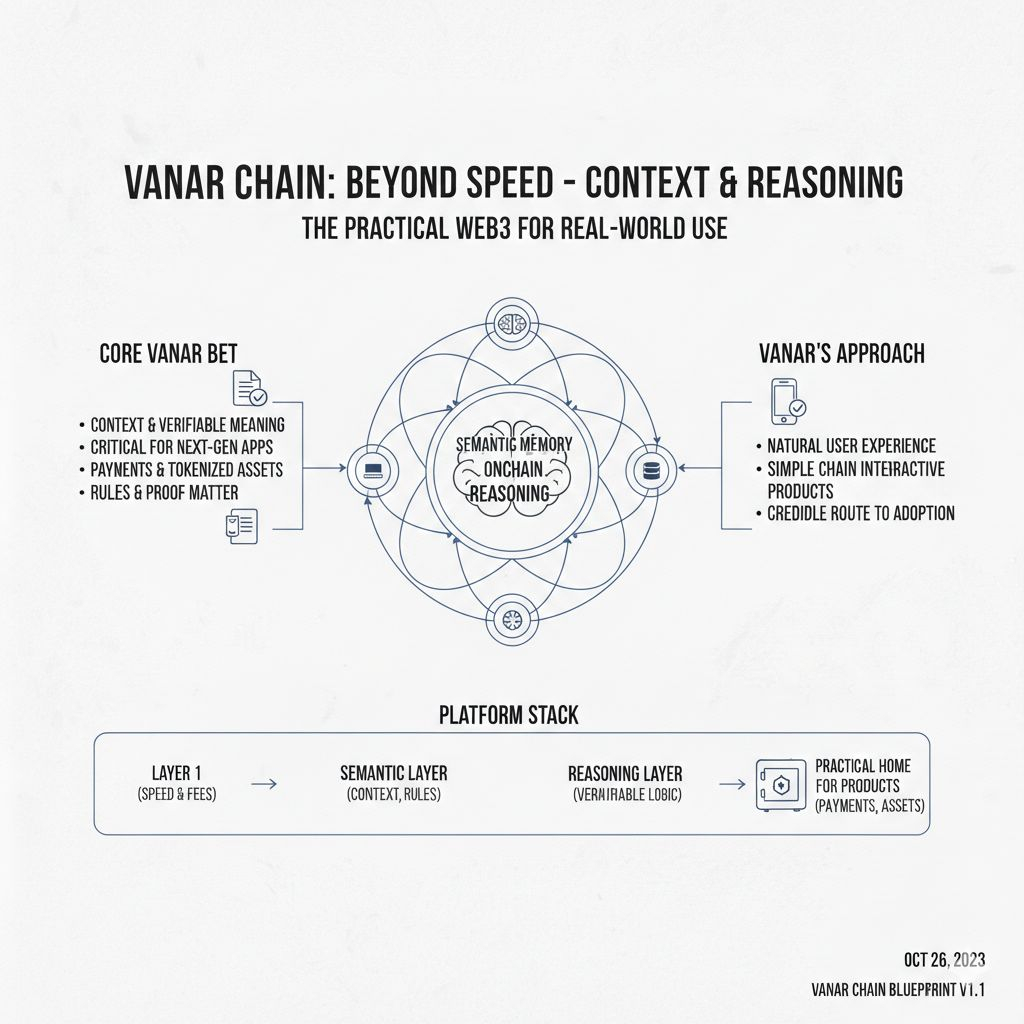
Vanar For the last 24 hours specifically, what typically changes most visibly in public view is market activity and community chatter rather than protocol level releases, and I did not see a clearly confirmed official release note in that tight window from primary sources, so the most reliable way to capture what is truly new is to track direct announcements from the project itself, and if you paste any fresh update link you saw, I can fold it into this same flow so it reads cleanly while still explaining what changed, why it matters, and what it signals about what Vanar is building next.