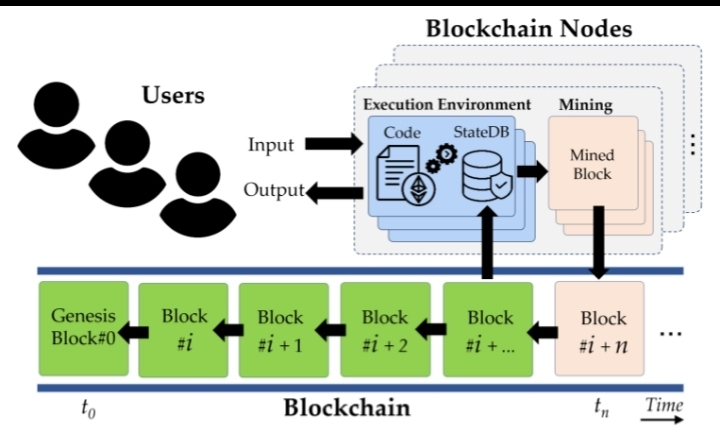
In the modern digital world, data has become the most valuable resource. From personal photos and videos to enterprise records, artificial intelligence datasets, NFTs, and blockchain histories, everything depends on reliable data storage. Yet most of this data still lives on centralized cloud platforms controlled by a handful of corporations. While these systems are convenient, they introduce serious problems: censorship risks, privacy concerns, rising costs, data breaches, and complete dependency on centralized authorities.
Blockchain technology promised decentralization, transparency, and user ownership, but one major challenge has remained unsolved for years: how to store large amounts of data efficiently and securely in a decentralized way. Traditional blockchains are not designed to store large files, and existing decentralized storage solutions often struggle with cost, performance, or flexibility.
This is where Walrus (WAL) enters the picture.
Walrus is a next-generation decentralized storage protocol built natively on the Sui blockchain, designed specifically to handle large-scale data storage in a cost-efficient, programmable, and censorship-resistant manner. Rather than competing with blockchains, Walrus complements them by becoming a foundational data layer for Web3.
What Is Walrus?
Walrus is a decentralized blob storage and data availability network. The term “blob” refers to large, unstructured data such as images, videos, audio files, AI datasets, archives, and application data. Walrus allows this type of data to be stored off-chain while remaining verifiable, secure, and accessible through blockchain coordination.
Unlike traditional storage platforms, Walrus does not rely on a single company or server. Instead, data is distributed across a network of independent storage nodes that are economically incentivized to store and serve data honestly.
Walrus is not just storage — it is programmable storage. Stored data is represented and managed through smart contracts on the Sui blockchain, enabling developers to build decentralized applications that interact directly with stored data in a trustless way.
Why Walrus Was Built on Sui
The choice of Sui blockchain is not accidental. Sui is a high-performance Layer-1 blockchain designed around parallel execution and an object-centric model. This makes it particularly well-suited for managing complex assets such as storage objects.
In the Walrus architecture:
Sui handles coordination, including metadata, ownership, payments, governance, and proofs.
Walrus nodes handle data storage, availability, and retrieval.
This separation allows Walrus to scale efficiently without bloating the blockchain, while still benefiting from on-chain security and composability.
The object-based model of Sui allows stored data to behave like on-chain assets. Storage capacity, blobs, and permissions can be owned, transferred, split, merged, or extended using smart contracts. This is a major leap forward compared to older storage networks.
How Walrus Works: Technical Architecture Explained Simply
Blob Creation and Encoding
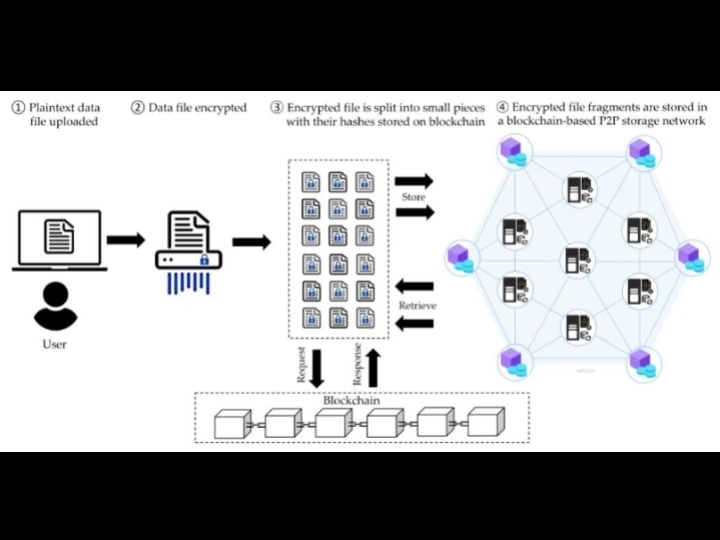
When a user uploads a file to Walrus, the file is not stored as a single piece. Instead, it is divided into many smaller fragments called slivers. These slivers are encoded using an advanced erasure-coding scheme known as RedStuff.
Erasure coding allows the system to reconstruct the original file even if a large percentage of slivers are missing. This dramatically improves resilience while reducing the need for excessive duplication.
Decentralized Distribution
The encoded slivers are distributed across multiple independent storage nodes in the Walrus network. No single node holds the entire file, and no single failure can compromise availability.
Compared to traditional replication models that require storing the same data many times over, Walrus achieves strong fault tolerance with significantly lower storage overhead. This makes the network more cost-efficient for users.
On-Chain Metadata and Proofs
The actual data is stored off-chain, but its metadata and availability proofs are recorded on the Sui blockchain. This ensures that:
The data can be verified without downloading it.
Users can prove that storage providers are fulfilling their obligations.
Smart contracts can reference and manage stored data securely.
Data Retrieval
When data is requested, the network retrieves enough slivers from available nodes to reconstruct the original file. Because only a subset of slivers is required, retrieval remains fast even if some nodes are offline.
WAL Token: The Economic Engine of Walrus
The WAL token is the native cryptocurrency that powers the Walrus ecosystem. It aligns incentives between users, storage providers, validators, and governance participants.
Storage Payments
Users pay WAL tokens to store data for a specified duration. These payments are distributed over time to storage node operators who provide reliable service.
This pay-for-storage model ensures that:
Storage providers are fairly compensated.
Data remains available as long as payments continue.
Network resources are allocated efficiently.
Staking and Network Security
Storage node operators are required to stake WAL tokens. Token holders can also delegate their WAL to trusted operators. This staking mechanism discourages malicious behavior and ensures long-term reliability.
Nodes that fail to meet performance standards can be penalized, while well-performing nodes earn rewards.
Governance
WAL holders participate in decentralized governance. They can vote on protocol upgrades, pricing parameters, incentive models, and network rules. This ensures that Walrus evolves according to community consensus rather than centralized control.
Token Supply
Walrus has a fixed total supply of WAL tokens, distributed across ecosystem incentives, community programs, development funding, and staking rewards. This controlled supply model helps maintain long-term sustainability.
Real-World Use Cases of Walrus
Decentralized Applications (dApps)
Many decentralized applications require large amounts of off-chain data, such as user-generated content, media assets, or application state. Walrus provides a reliable storage backend without forcing developers to rely on centralized servers.
NFTs and Digital Media
NFTs often depend on off-chain storage for images, videos, and metadata. Walrus ensures that NFT content remains accessible, verifiable, and censorship-resistant, reducing the risk of broken links or lost assets.
AI and Machine Learning Data
AI models require massive datasets that are expensive to store and distribute. Walrus offers a decentralized alternative for hosting training data, inference models, and shared datasets.
Blockchain Archives and History
Blockchains generate large amounts of historical data. Walrus can store archived blockchain states, transaction histories, and snapshots without overloading the main chain.
Decentralized Websites and Content Platforms
Websites, blogs, and media platforms can be hosted entirely on decentralized infrastructure using Walrus as the storage layer, improving resistance to censorship and downtime.
Walrus vs Other Decentralized Storage Networks
While projects like Filecoin, Arweave, and IPFS have made important contributions, Walrus introduces several key differences:
Programmability: Walrus storage integrates directly with smart contracts.
Efficiency: Lower redundancy requirements reduce costs.
Performance: Optimized for fast access rather than pure archival.
Blockchain Integration: Native coordination through Sui.
Rather than replacing existing solutions, Walrus occupies a unique position as a general-purpose, application-friendly storage layer.
Challenges and Risks
No project is without challenges. Walrus must continue improving decentralization as the network grows. It also faces strong competition from both decentralized and centralized storage providers.
Adoption outside the Sui ecosystem will require strong tooling, education, and cross-chain integrations. Long-term success depends on real usage, not just speculation.
The Future Vision of Walrus
Walrus aims to become a universal storage layer for Web3. Future development may include:
Cross-chain access from Ethereum and other blockchains
Advanced storage marketplaces
Enterprise-grade tooling
Improved developer SDKs
Integration with AI and data-intensive applications
As decentralized applications mature, the need for reliable decentralized storage will only grow. Walrus positions itself as a foundational infrastructure layer for this future.
Final Thoughts
Walrus is not just another crypto token or storage project. It represents a thoughtful re-design of how data can be stored, verified, and accessed in a decentralized world. By combining efficient storage techniques, strong economic incentives, and deep blockchain integration, Walrus addresses one of the most critical challenges facing Web3 today.
For developers, creators, enterprises, and users who believe in data ownership and censorship resistance, Walrus offers a powerful and practical solution — one that could shape the next generation of decentralized infrastructure.