
Can on-chain AI memory create narrative advantages so strong that new players are permanently locked out of relevance?
I was standing in a government office last year, waiting for a clerk to verify a document I had already submitted twice. Same form. Same ID. Same data. He scrolled through his system, frowned, and asked me to explain my situation again. Not re-upload. Not re-sign. Explain. From scratch. I remember noticing the ceiling fan wobbling slightly and thinking: the system has perfect records, but zero memory. Everything exists, yet nothing is remembered in a way that helps the next interaction. Each visit resets the story. Every user is a stranger, forever.
That moment stuck with me because it wasn’t just bureaucracy being slow. It was structural amnesia. Institutions collect massive amounts of data, but they don’t retain context. They store fragments, not narratives. And because there’s no persistent memory of interactions, the burden of continuity falls on the individual. You repeat yourself. You re-prove yourself. You re-earn relevance every single time.
Step back and look at this as a pattern, not a paperwork issue. Modern systems are built like whiteboards, not diaries. They can hold information temporarily, erase it, and move on. What they can’t do is remember why something mattered before. They reward whoever shows up loudest or latest, not whoever has the deepest history. In these systems, relevance decays fast, and newcomers are treated the same as long-term participants because the system can’t tell the difference in any meaningful way.
Here’s the uncomfortable reframing: we’ve optimized for storage, not memory. Storage is cheap and infinite. Memory is expensive and political. Memory decides whose past counts. And because most digital systems avoid making that decision, they default to neutrality—which in practice means erasure. Your previous actions don’t compound. They expire.
This is why entire platforms feel repetitive and shallow over time. Social feeds forget what they’ve learned. Games reset seasons. Financial systems reset trust with every new product or policy. Even reputation systems are usually snapshots, not continuums. They rank you, but they don’t remember you. That’s not an accident; it’s a design choice driven by regulation, risk management, and short-term optimization. Persistent memory creates accountability. Accountability creates liability. So systems choose amnesia.
Now bring AI into this picture. Most AI systems today are powerful, but stateless. They respond brilliantly in the moment and forget everything afterward. Each interaction is isolated. This makes them safe, controllable, and easy to deploy—but also fundamentally shallow. There is no long-term narrative advantage for users or agents interacting with them. No one builds history; everyone competes on the same flat plane of prompts and outputs.
That flatness feels fair, but it isn’t neutral. It advantages whoever has the most resources right now: compute, capital, distribution. If memory doesn’t persist, only scale matters. And if scale matters, incumbents always win.
This is where the idea of on-chain AI memory becomes uncomfortable in a useful way. Persistent, verifiable memory changes the geometry of competition. Instead of every interaction resetting the game, actions accumulate. Decisions leave traces that can’t be quietly rewritten. Over time, narratives harden.
Vanar enters the conversation here—not as a savior, but as an experiment in whether memory itself can be infrastructure. The architecture focuses on keeping certain forms of state—identity context, agent memory, interaction history—available and composable at the protocol level. Not everything is remembered. But what is remembered is shared, verifiable, and resistant to selective forgetting.
This matters because memory creates asymmetry. If an AI agent remembers prior interactions, it doesn’t just get smarter; it becomes situated. It develops a past. And once you have a past, you can’t pretend every participant is starting from zero anymore.
That’s powerful—and dangerous.
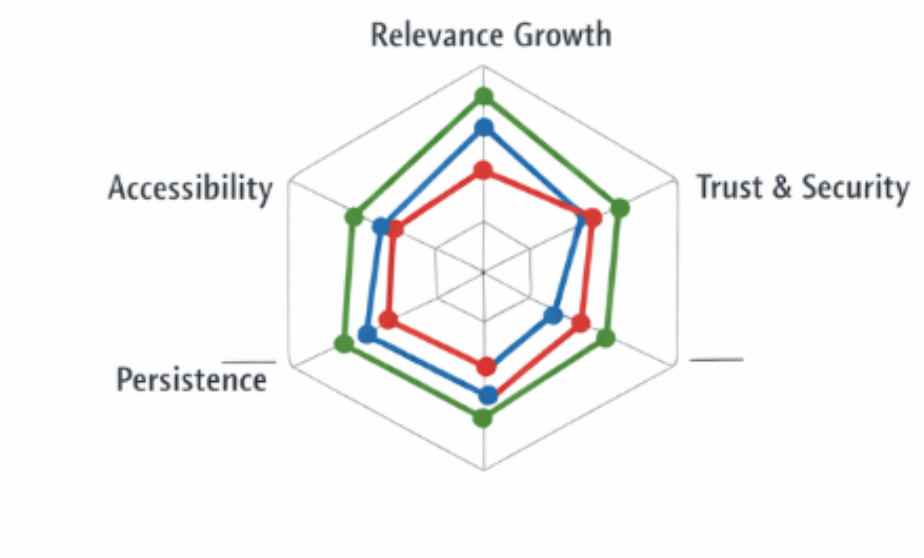
Consider how institutions already weaponize memory. Credit scores follow you for years. Legal records persist long after behavior changes. These systems lock people out of opportunity based on historical snapshots that lack nuance. On-chain memory risks repeating this mistake at machine speed. If early AI agents accumulate rich, trusted histories, latecomers may never catch up. Not because they’re worse, but because relevance compounds.
Vanar’s design leans into this tension instead of pretending it doesn’t exist. Token mechanics tied to usage, staking, and participation create feedback loops where long-term contributors gain structural advantages. That’s not marketing spin; it’s an explicit bet. Memory isn’t neutral. It creates winners and losers. The question is whether those dynamics are transparent and contestable, or opaque and arbitrary.
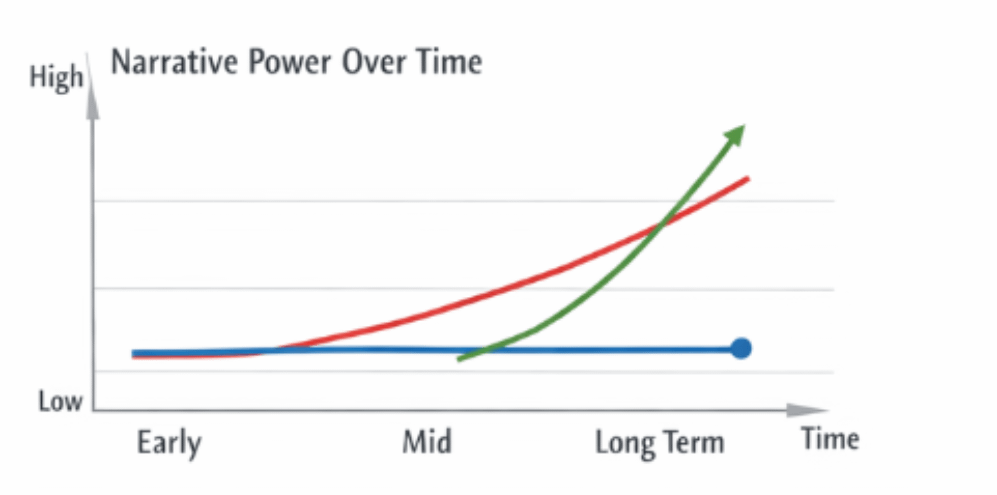
To ground this, imagine two AI agents operating in the same ecosystem. One has a year of on-chain memory: successful interactions, verified outcomes, contextual knowledge of users and environments. The other is new, clean, and technically identical. In a stateless system, they’re interchangeable. In a memory-rich system, they are not. One carries narrative weight. The other is invisible.
That’s the core risk hiding behind the hype. On-chain AI memory doesn’t just enable better agents; it creates historical moats. And once those moats exist, markets stop being purely competitive and start resembling social hierarchies. Early actors become institutions. Late actors become applicants.
Vanar tries to mitigate this through modular memory layers and governance constraints, but there’s no perfect solution. You can limit what gets remembered, but then you weaken the advantage memory provides. You can allow memory decay, but then you reintroduce amnesia. You can let users opt out, but then relevance fragments.
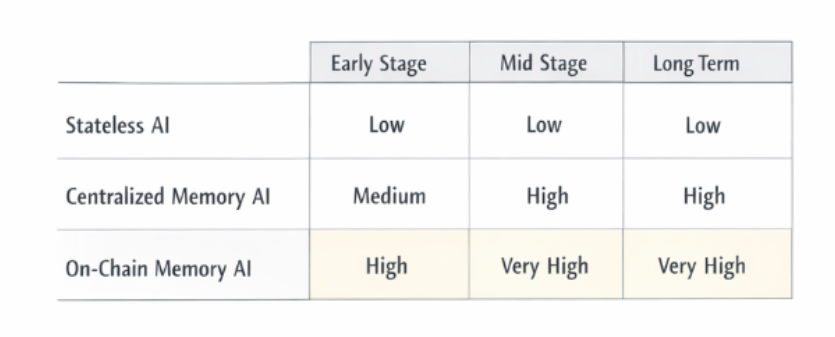
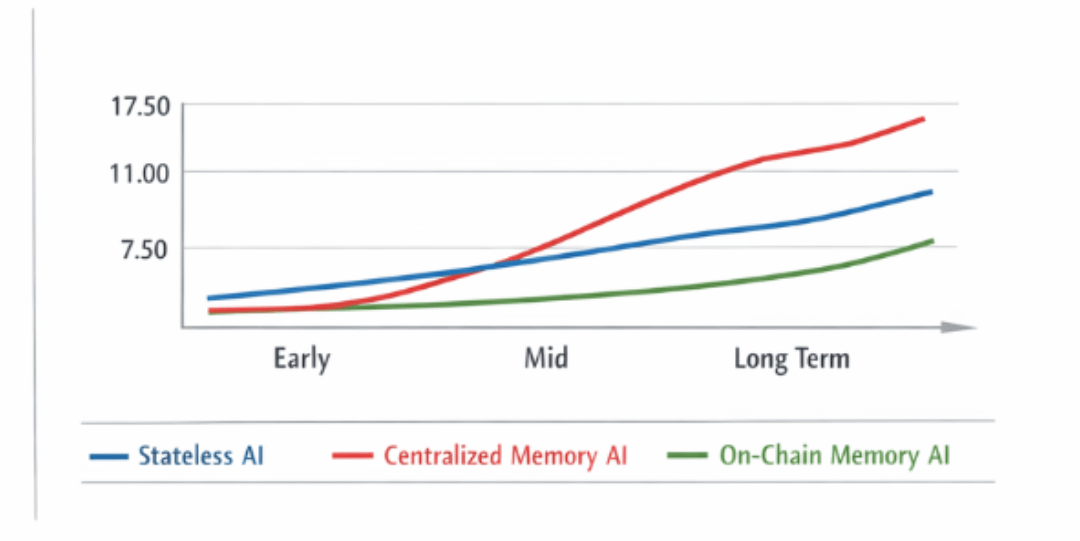
One visual that clarifies this trade-off is a simple timeline table comparing three systems: stateless AI, centralized memory AI, and on-chain memory AI. Rows track factors like relevance accumulation, entry barriers, and error persistence over time. The pattern is obvious: as memory persistence increases, so do both narrative power and lock-in risk. This isn’t theory; it mirrors how institutions evolve.
A second useful visual is a framework mapping “memory depth” against “contestability.” On one axis, how much historical context an agent retains. On the other, how easy it is for new agents to challenge incumbents. Stateless systems cluster high contestability, low depth. Fully persistent systems cluster the opposite. Vanar’s design sits uncomfortably in the middle, and that’s intentional. It’s trying to balance narrative continuity with open competition—but balance is not stability.
What bothers me, and what keeps me interested, is that this problem doesn’t have a clean ending. If on-chain AI memory works, it will create systems that finally remember us—but it may also create systems that never forget. If it fails, we’re stuck with powerful but shallow agents and endless resets. Either way, relevance becomes something you earn once or something you fight for forever.
So here’s the unresolved tension I can’t shake: if narrative advantage compounds on-chain, and memory becomes the real asset, do we end up building ecosystems where the first stories told are the only ones that ever matter—and everyone else is just commenting on history they can’t change?