
For a long time I’ve thought that blockchains are like old mail couriers. They deliver your parcel, but you’re always waiting, checking your watch, wondering when it’ll show up. And that’s fine if what you really want is an official receipt of ownership or a bank‑level transfer of value. But when people start talking about games, metaverses, data storage, or AI that interacts with you live, that wait becomes a weight. It hangs underneath everything it’s trying to support.
Lately, there’s been a lot of conversation around a blockchain called Vanar. On paper, it’s trying to do something a bit different: not just log transactions but keep data accessible and instantly usable, even in contexts where latency — those tiny pauses — shatters the flow. That’s a shift in thinking, and it makes you wonder whether infrastructure can ever feel alive rather than just dependable.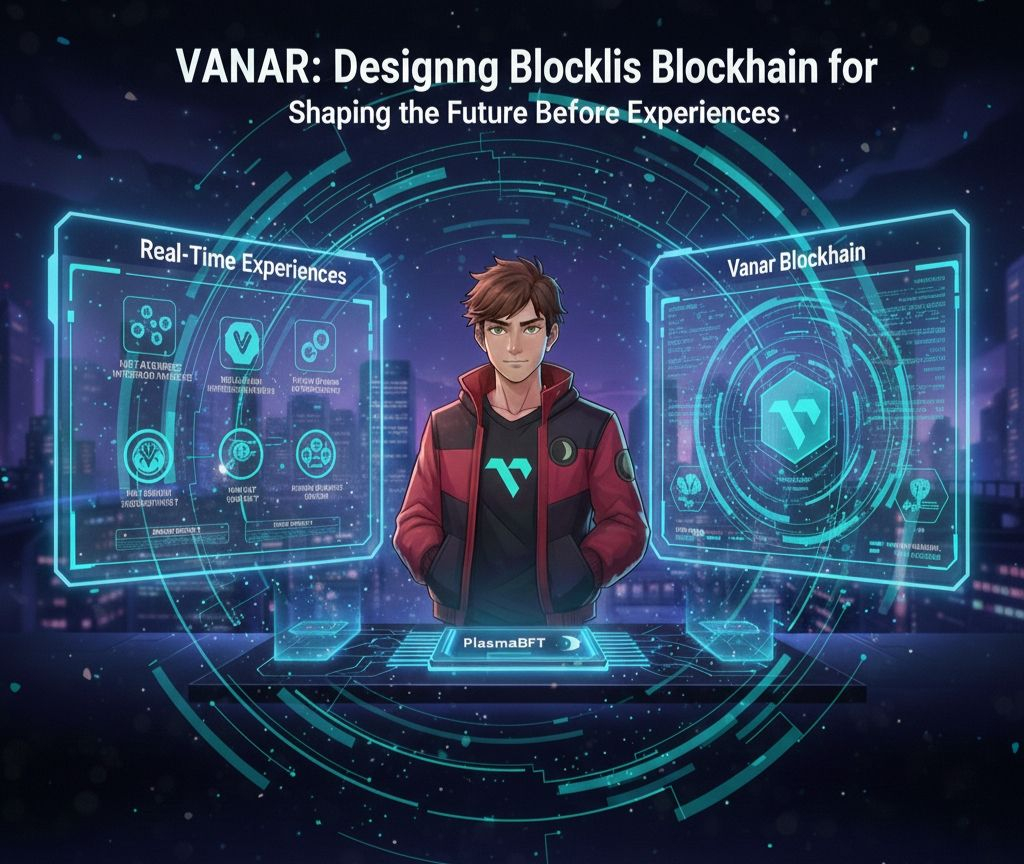
I’m not saying this is a done deal. Some parts feel like prototypes you’d find people tinkering with in a garage. Other parts feel like early models of something that might matter. If you lean into the technical notes and roadmap, you can see both the ambition and the unanswered questions.
What Vanar Is Trying Beneath the Surface:
I remember when most blockchains couldn’t store anything but transaction hashes, and people shrugged. Now, if a system can’t store rich data in a way that apps can reason about it, it’s seen as half‑baked. Vanar’s answer to this has a name: Neutron. It’s a kind of data engine that can take a big file, like a 25‑megabyte video, and shrink it down so a blockchain can handle it — not just store a pointer to something on someone’s server. The claim is compression ratios up to 500:1, which sounds wild until you remember that traditional onchain data limits basically force developers to dump heavy stuff off chain and hope IPFS or cloud storage doesn’t fail on them. Neutron turns that idea inside out by making those compressed units — called “Seeds” — self‑contained and verifiable on the chain itself.
It’s weirdly relatable when you think of it as packing a suitcase. Most blockchains are like those tiny airline carry‑ons where you can only squeeze in a toothbrush and a change of socks. Neutron is more like one of those expandable bags you jam clothes into, somehow still close and zip. The detail that each Seed can include text, images, even embedded context is curious because it starts to blur the line between ledger and memory. That’s not what typical blockchains were built for; they were built to keep score, not to remember stories.
Moments Where Reality Gets Messy:
I’ve been watching users talk about Vanar’s testnets and apps. It isn’t all dry tech talk. On one subreddit post I saw people hyped about a long‑running treasure hunt event — a community‑driven game that runs weeks, not minutes. It’s not massive mainstream adoption, but it’s a sign that people are trying to use this thing rather than just theorize about it.
And that’s where the human side enters. Because sometimes developers build infrastructure that’s elegant but deserted. Other times there’s noise and chaos, real usage that follows imperfect patterns. There’s talk in the community about memory layers that “don’t reset,” and about moving from purely theoretical stacks to real products that people interact with daily. That feels like testing whether this technical stack is part of people’s lives rather than just a conversation piece.
But that’s also where risk creeps in. When adoption is still concentrated around testnets and niche events, the project’s long‑term relevance depends on whether real applications actually stick. It’s easy enough to generate buzz and incentives; it’s much harder to get sustained usage where people pay for services, build businesses on top of it, or rely on it for shared infrastructure.
Tokens, Ecosystem, and Real Decisions:
Some parts of Vanar feel more than theoretical. The project’s native token, VANRY, isn’t just a ticker symbol. It’s used for transaction fees, staking, and powering smart contracts. That’s typical, sure, but there’s been activity around listing it on major exchanges, which means broader liquidity and visibility. A Kraken listing, for example, connects the token with a much wider set of traders and holders, and that matter in practical terms — people can actually move value in and out without niche bridges or obscure markets.
Behind that are real decisions around how to build community and ecosystem. Subscription models for products like myNeutron are emerging. These might sound corporate, but this is also where you start seeing users and revenue as intertwined rather than purely speculative. Subscriptions unlock advanced features — everything from memory storage to enhanced AI tools — and revenue from those is reportedly tied back into the token economy with buybacks and burns. That’s a deliberate attempt to link usage with economic feedback loops.
Whether this model resonates with Web3 users — who are often skeptical of anything that sounds like “pay for utility” — remains to be seen. Some crypto communities embrace it, others recoil at subscription barriers. Real world reaction will shape the narrative far more than blog posts ever do.
When The Foundations Get Tested:
There’s a deeper tension here. A blockchain that tries to keep rich data onchain and avoid external servers is addressing a real problem: centralized outages at big cloud providers have historically brought down NFT references, APIs, and app layers even when the chain itself hums along. It’s one thing to store a contract; it’s another to store proof of a document’s authenticity without relying on someone else’s bucket storage. That’s essentially what the Neutron stack is aiming for — a self‑contained ecosystem where the data and its meaning live on the chain itself, not somewhere off in cloud land.
But this shift isn’t free of thorny questions. How much does it cost in real load? What about decentralization when we start adding AI reasoning and data memory into the mix? And what happens when a system tries to be both a ledger and a memory bank and a reasoning engine? These aren’t rhetorical concerns; they’re the kinds of problems engineers and communities will tussle with as the network scales beyond early adopters.
A Human Take On Risk and Reward:
I keep coming back to something a friend said the other day: fast and cheap sounds nice but you only notice slow and expensive when you’re trying to build something meaningful. Vanar’s blend — faster blocks, low fixed fees, AI‑compatible data storage — feels like a response to that. If you’re building something that needs human attention rather than accountant precision, these elements start to make sense.
But it’s just as easy to imagine a scenario where developers choose alternative stacks simply because they have bigger communities or more established tooling. The tech might be intriguing without ever becoming mainstream.
So yes, if you’re curious about where blockchains might go when they try to act more like memory banks than settlement engines, Vanar is worth watching. But it’s still early. Real test will be when the infrastructure is heavy under load, when apps built on it need to scale, and when user behavior tells you whether this “real‑time” ideal actually matters in everyday use.
@Vanarchain $VANRY #Vanar