

Somewhere along the way, fully public finance stopped feeling strange. Wallet balances, transaction histories, counterparties all visible, permanently. It didn’t happen because everyone agreed this was ideal. It happened because early blockchains made transparency easy, and privacy hard. Over time, that design choice turned into an assumption no one really challenged.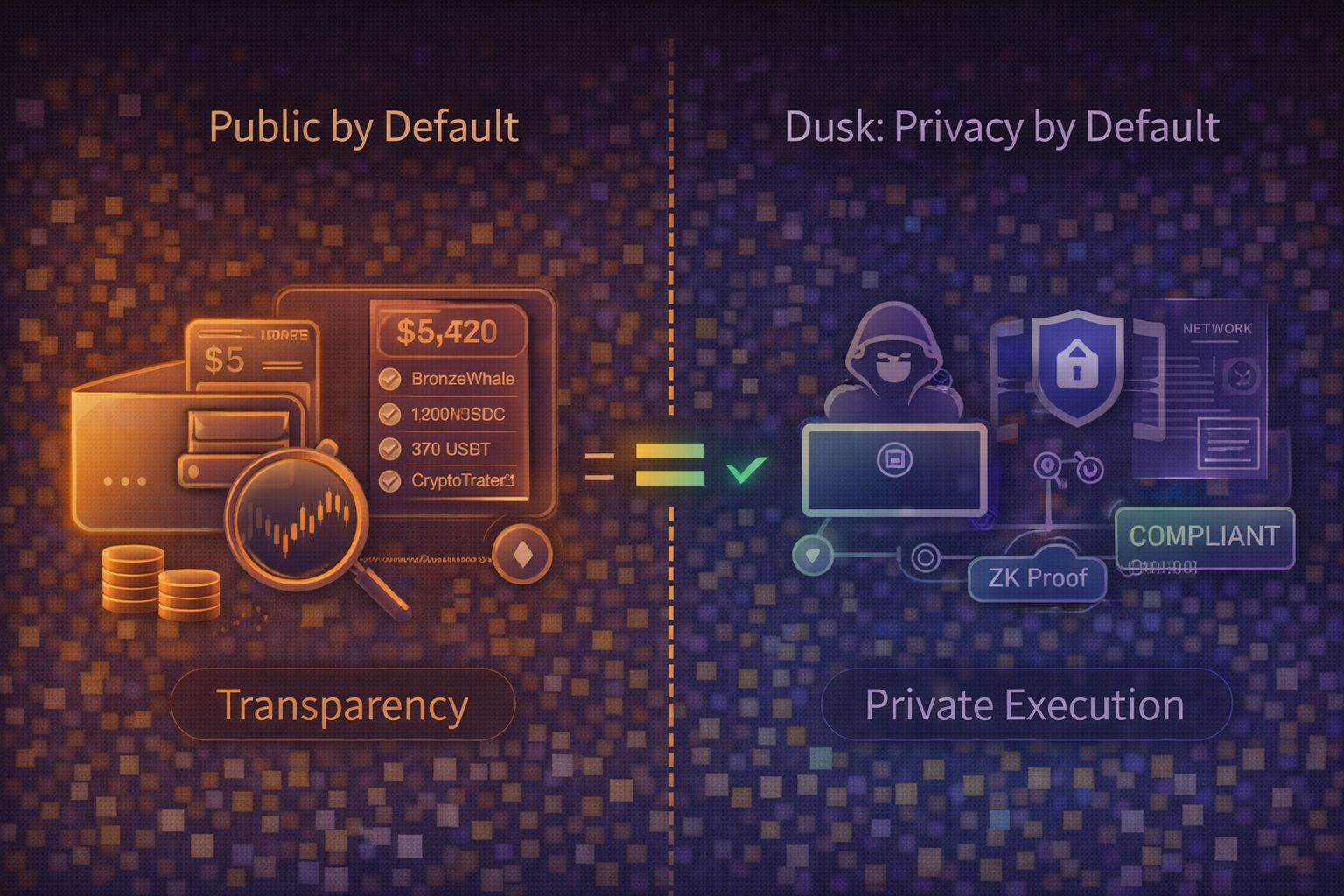 That assumption works fine in experimental environments. But it starts to feel fragile the moment finance becomes serious. Businesses don’t operate with their strategies exposed. Individuals don’t publish their spending histories. In traditional systems, privacy isn’t a feature it’s the baseline. Public blockchains quietly reversed that without much debate.
Dusk pushes back on this idea at the infrastructure level. Instead of asking users to accept radical transparency, it starts from a different premise: financial logic should be private by default, even when it’s programmable. Transactions can be executed and verified without revealing amounts, counterparties, or internal contract state. The network still enforces correctness it just doesn’t turn every action into public information.
What’s interesting is that Dusk doesn’t frame this as a privacy-maximalist project. The design includes selective disclosure, acknowledging that regulators and institutions may need proof without broadcasting everything to the market. That puts Dusk in an uncomfortable middle ground. Privacy advocates often want zero visibility. Regulators often want total visibility. Dusk assumes both pressures exist and builds around that tension instead of choosing a side.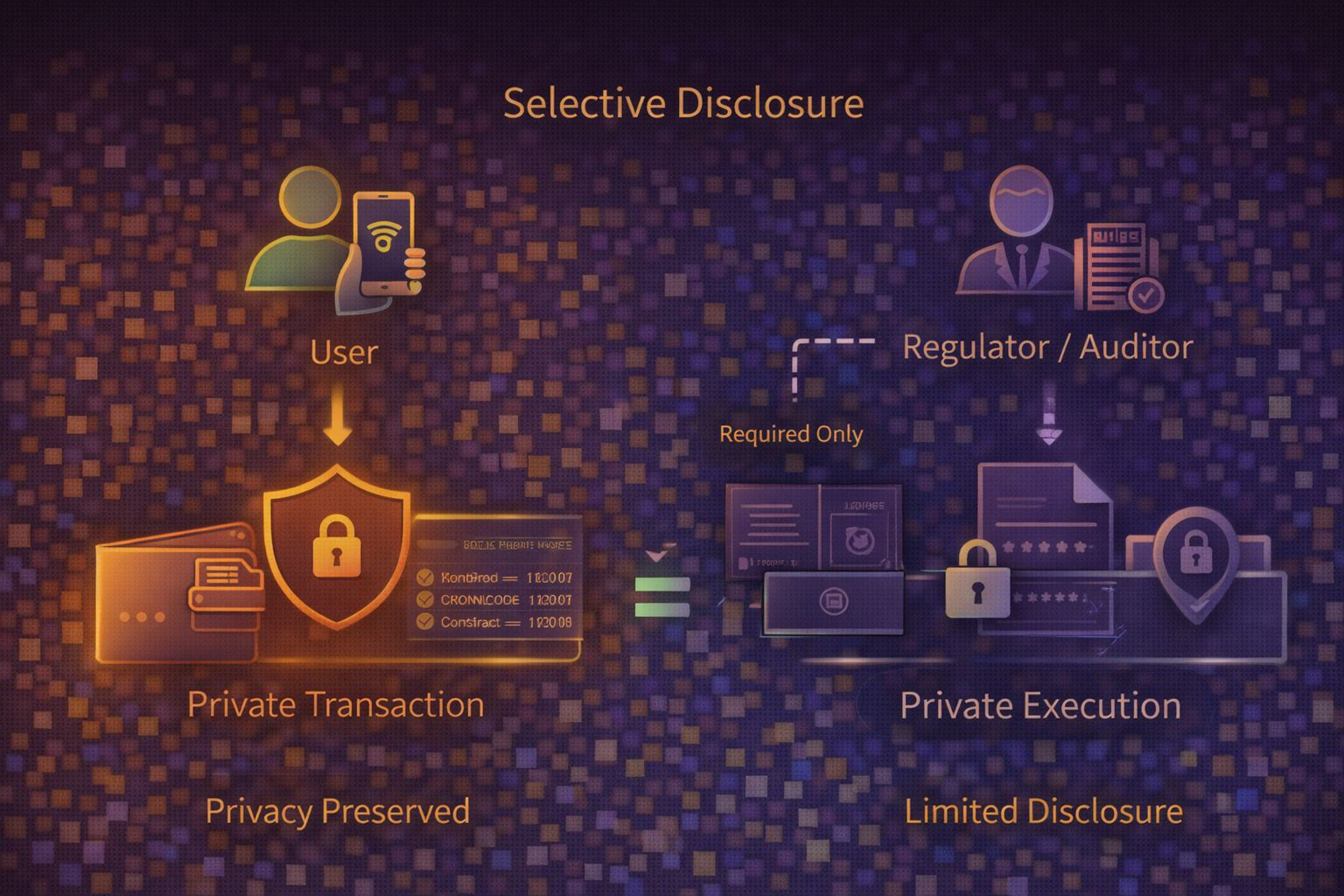 Whether this approach succeeds is still an open question. Privacy adds complexity. Compliance adds constraints. And building systems that satisfy both is harder than optimizing for one. But pretending that large-scale finance will move onto permanently transparent rails feels increasingly unrealistic.
Dusk is making a quiet bet that this contradiction won’t disappear and that infrastructure should be built for the world as it actually operates, not the one early crypto experiments assumed. Even if it takes time to play out, questioning the “public by default” norm already feels overdue.