
Most blockchains are engineered for the adrenaline of trading volatile swings, speculative bursts, and the constant hum of market makers chasing yields. Plasma, though, feels like it's built to fade into the background, a quiet infrastructure for everyday payments that prioritizes seamlessness over spectacle. It's not about riding waves; it's about creating steady currents where money moves without friction, designed from the ground up for real-world transfers rather than casino like bets.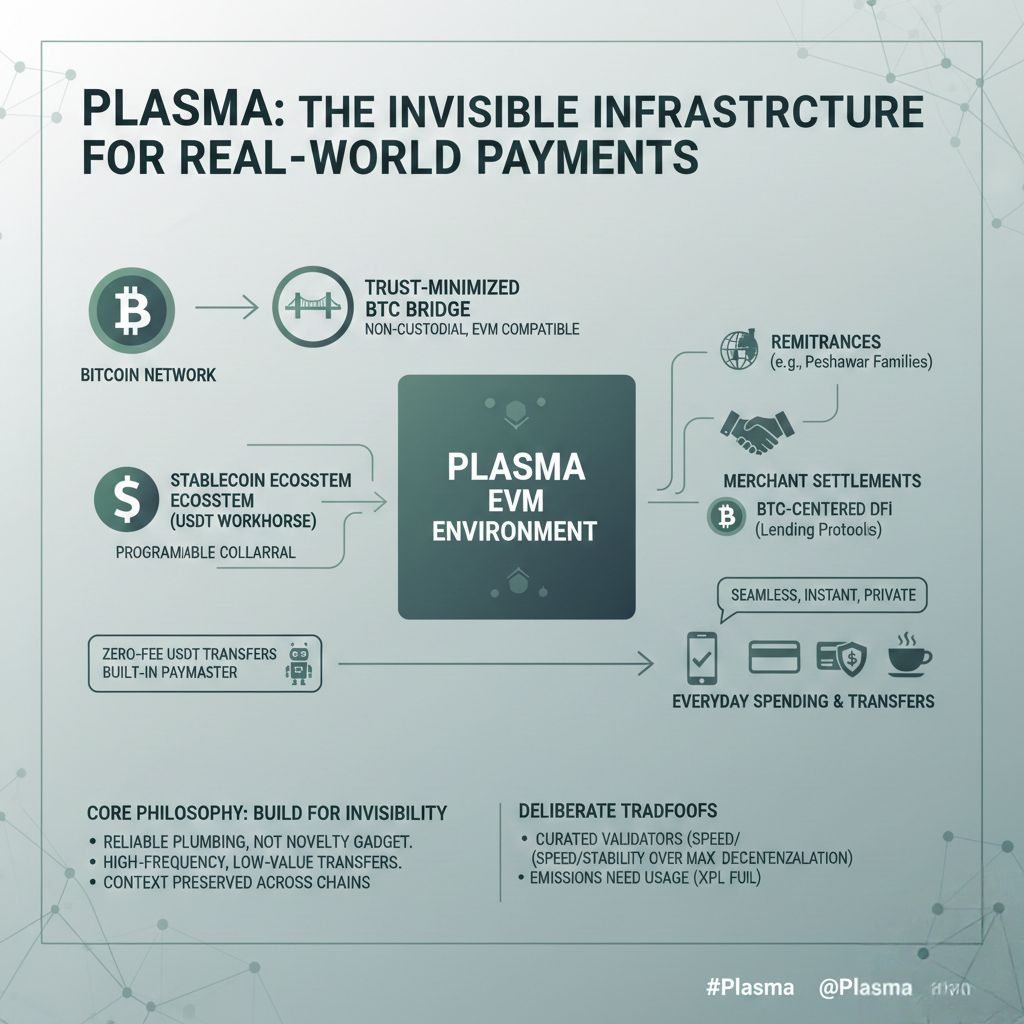
When I first started looking closely at Plasma's bridge infrastructure, what stood out wasn’t the flashy tech specs or the promise of moonshots. It was the deliberate shift in mindset: what if a blockchain wasn't optimized for traders flipping assets, but for people sending remittances, settling invoices, or just paying for coffee across borders? Plasma's core ambition is to make stablecoin payments think USDT as the workhorse feel as effortless as swiping a card, without the hidden fees or delays that plague traditional systems. The philosophy here is radical in its humility: build for invisibility. If it works, users won't marvel at the blockchain; they'll forget it's there, treating it like reliable plumbing rather than a novelty gadget.
The idea that really clicked for me was Plasma's native Bitcoin bridge, a trust minimized gateway that lets BTC flow directly into an EVM compatible environment without custodians or intermediaries. In a trading focused chain, bridges are often afterthoughts clunky add ons prone to hacks and high costs, geared toward arbitrage plays. But Plasma flips this: the bridge is woven into the fabric, enabling BTC to serve as programmable collateral for stablecoin ecosystems. Imagine a freelancer in Pakistan receiving BTC from a client, then seamlessly bridging it to Plasma to mint or back USDT for daily spending no wrapped tokens, no extra layers of risk. This solves a real frustration: the hesitation users feel when bridging assets, where one wrong move means lost funds or exorbitant gas. By designing for payments, Plasma ensures bridges aren't bottlenecks but enablers, supporting high frequency, low value transfers like remittances that total trillions globally but get ignored in hype driven chains.
Stepping back, another core mechanic that underscores this payments first approach is the zero fee USDT transfers powered by a built in paymaster. Traders might shrug at fees they're just the cost of playing the game but for everyday payments, even a few cents creates hesitation, especially in emerging markets where margins are thin. Plasma sponsors gas for stablecoin sends, meaning you don't need XPL tokens just to move money; it's utility focused, treating stablecoins as the primary workload. Tie this to custom gas tokens and upcoming confidential payments, and you get a system where privacy and predictability reign. For brands or games, this means no immersion breaking fee spikes during microtransactions; for consumers, it's context preserved across chains, like carrying your wallet seamlessly from Bitcoin's security to EVM DeFi without re explaining or re authenticating everything.
This ties into real ecosystems emerging on Plasma. Take remittances: platforms like those partnering with issuers could stress test the bridge for cross border flows, where BTC inflows collateralize stablecoin outflows for families in places like Peshawar. Or merchant settlements think B2B payments where predictability trumps speculation, enabling on chain patterns of repetitive, small actions rather than bursty trades. Even Bitcoin centered DeFi: Plasma's bridge opens doors for BTC as backing in lending protocols, blending the king of crypto with stablecoin rails for hybrid finance that's practical, not just performative.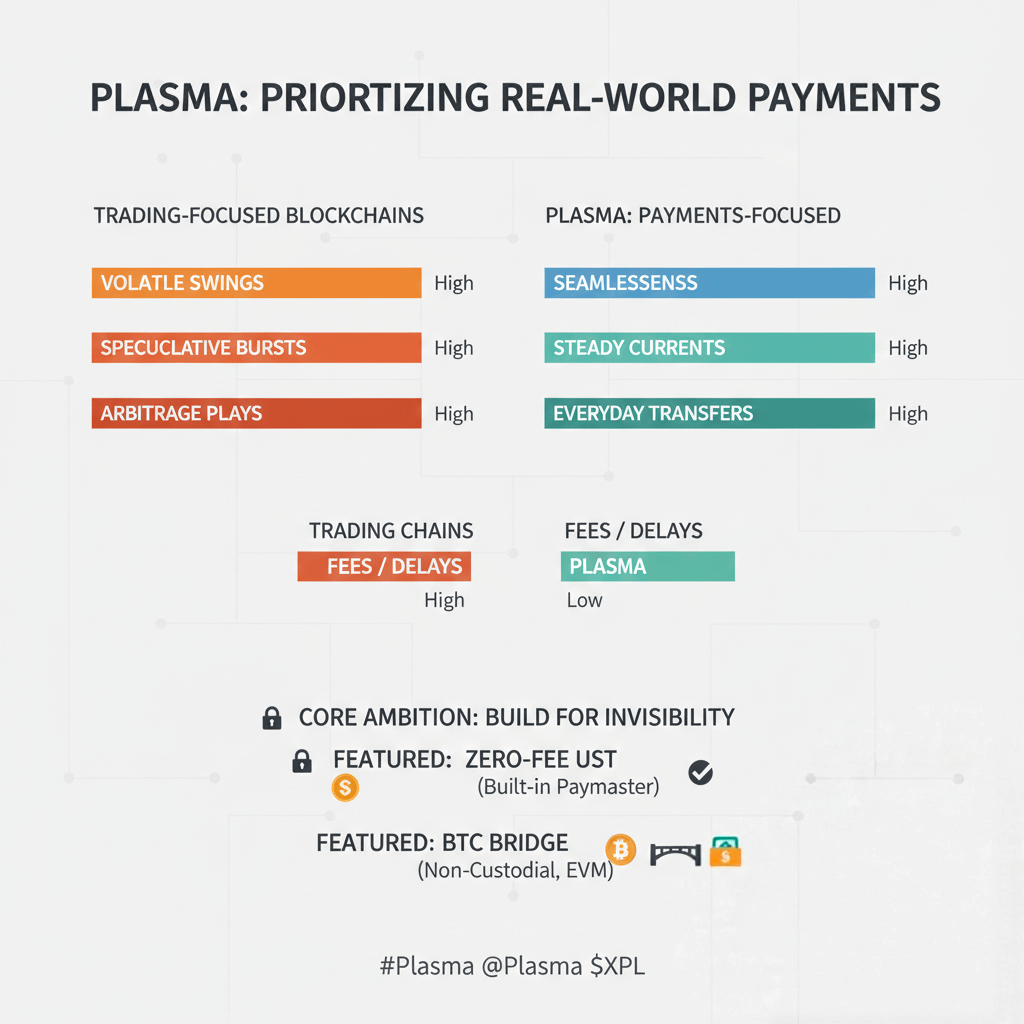
Honest balance, though: this payments centric design involves deliberate tradeoffs. The curated validator model prioritizes speed and stability over maximal decentralization, which might irk purists but makes sense for high stakes transfers where downtime equals lost livelihoods. The Bitcoin bridge, while non custodial, relies on network assumptions that could face glitches in early rollouts, and emissions for XPL as fuel need genuine usage to avoid inflationary pitfalls it's not set it and forget it. These are compromises for adoption, framing Plasma as a pragmatic tool rather than an ideological experiment.
If Plasma succeeds, most users won’t geek out over the bridge tech or the payments paradigm; they'll just use it, habitually, like flipping a light switch. Money will move instantly, privately, across chains, powering lives without demanding attention. That might be the most human strategy in crypto: building infrastructure that serves quietly, letting people focus on what matters beyond the ledger.