
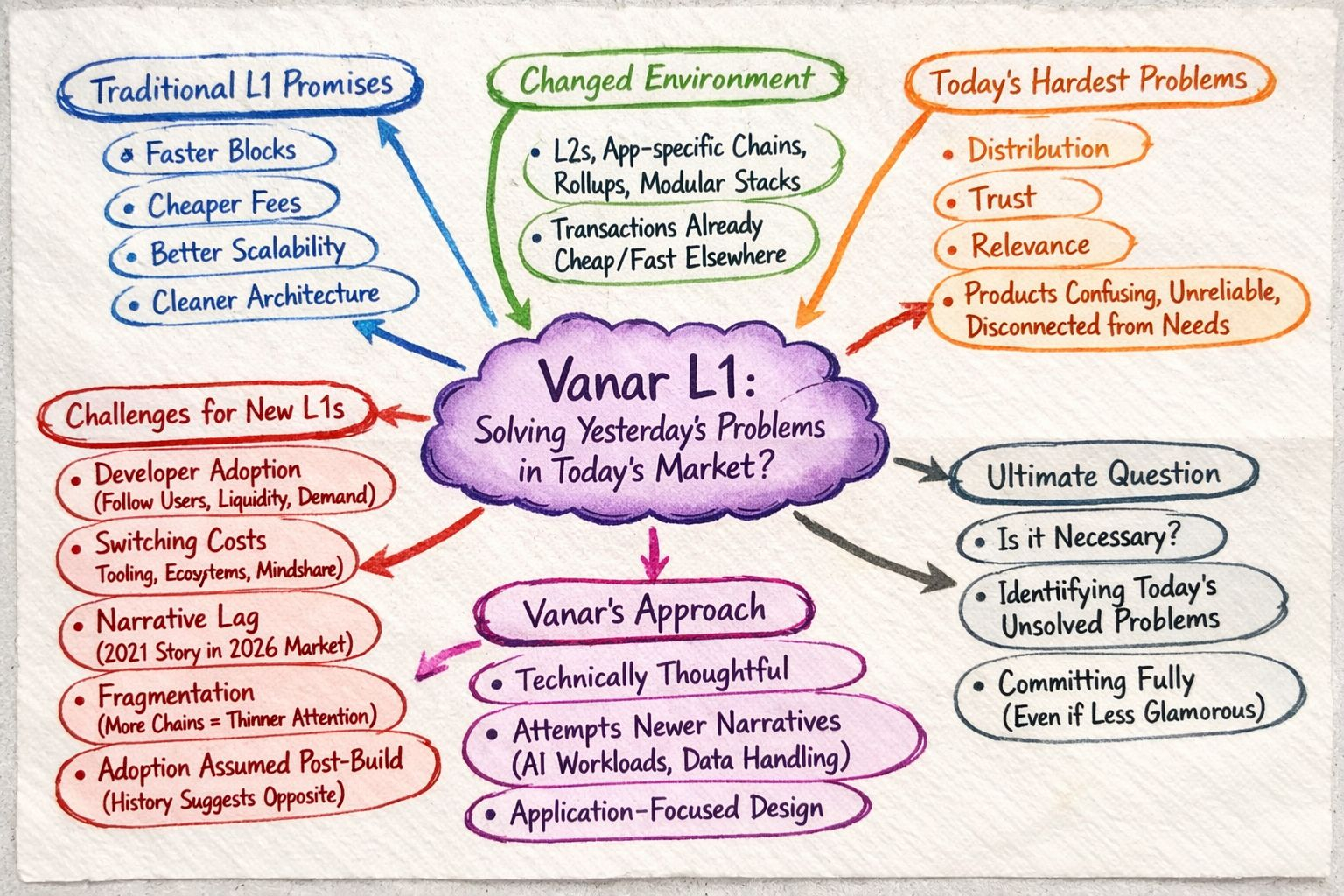
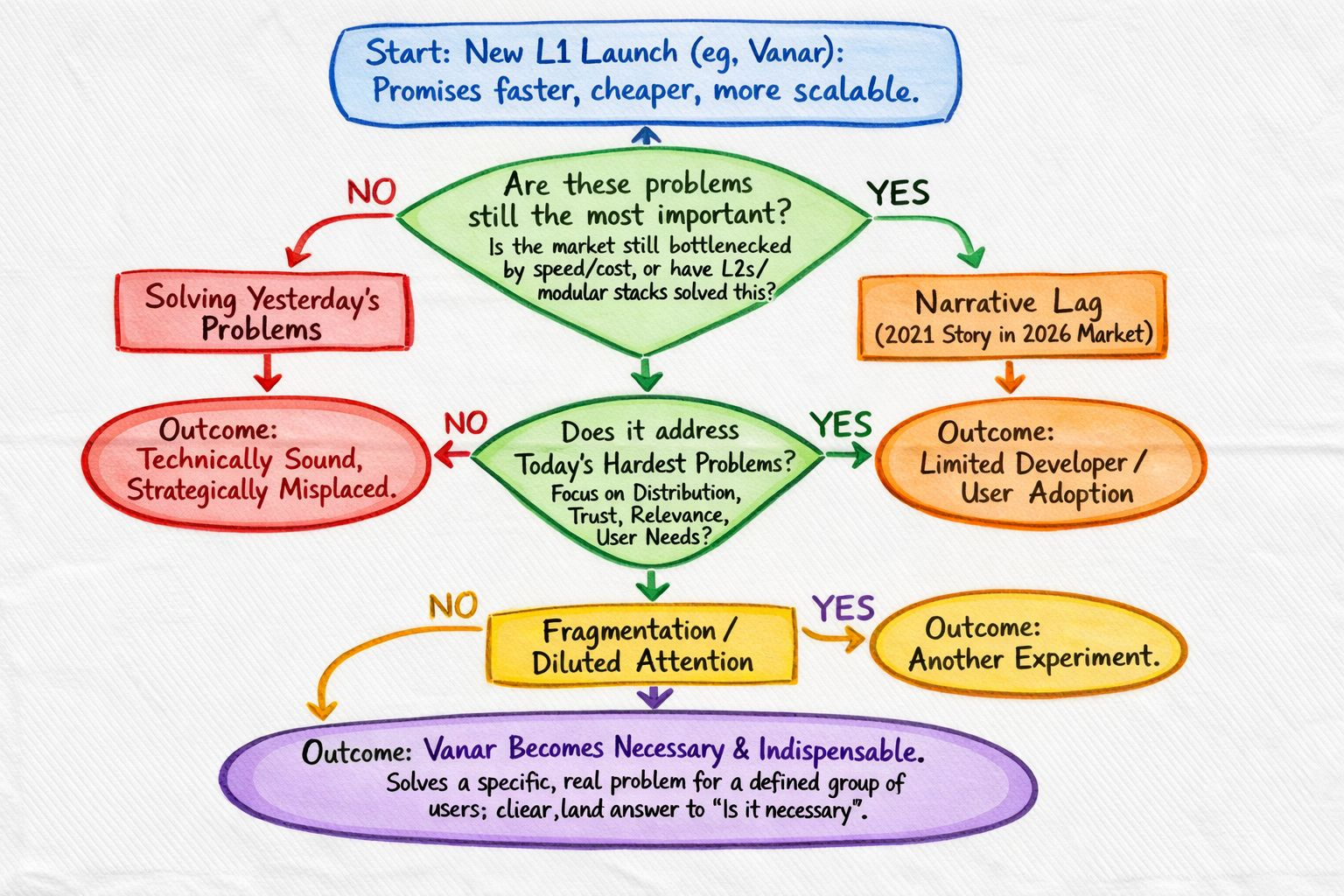
Each market cycle seems to bring the same claim: this new Layer 1 will correct the errors of the previous ones with faster blocks, lower fees, better scaling, and a cleaner design. It sounds good in theory. However, after studying projects such as Vanar, I keep thinking that many new L1s seem to be made to fix problems that are no longer the biggest issues.
For a while, the main problems in crypto were obvious. Ethereum was costly, and transactions were slow. Users complained about gas fees, crowding, and bad user experience. At that time, starting a new L1 that promised speed and low costs was a good idea because it was a clear benefit.
But things have changed
Now, users can use Layer 2s, app-specific chains, rollups, and modular stacks. Transactions are already cheap in many places, and speed is common. Scaling, at least in basic terms, is not as big of an issue as it once was. Yet, many new L1s still say the same thing: faster, cheaper, more scalable.
That’s why I’m not so sure
When I look at Vanar, I don’t think it’s a bad project. It’s clear that they have considered the design carefully. But I also see that the industry seems to keep trying to increase the amount of data that can be processed, while adoption problems are still there. Most users don’t stop using crypto because blocks are slow. They stop because products are confusing, not reliable, or just not useful.
The biggest problems now are not about speed. They are about getting people to use the products, building trust, and making them relevant.
Who will actually use this chain, and why?
New L1s often think that developers are just waiting for a 'better' base layer to switch to. But developers go where the users, money, and demand are. Switching is not easy. Tools, communities, and awareness are more important than small tech improvements.
Another problem is that many L1s are still talking about what was happening in 2021, but we’re heading into 2026. Back then, it was all about DeFi, NFTs, and speculation. Now, people are more interested in AI, data, stablecoins, business uses, and basic infrastructure. If a new L1 doesn’t fit with what people actually want, it might be well-made, but it won’t be in the right place.
Vanar does try to work with newer ideas, such as AI tasks, data handling, and designs focused on applications. That’s a good start. But we should still be careful. Just because blockchains are 'ready' to support AI, doesn’t mean that developers will choose them over the systems they already use.
Another worry is things becoming too spread out. Each new L1 adds another system, another coin, and another set of reasons to use it. At some point, we have to ask, 'Should we even build this?' More chains don’t automatically make things better. Sometimes they just divide attention.
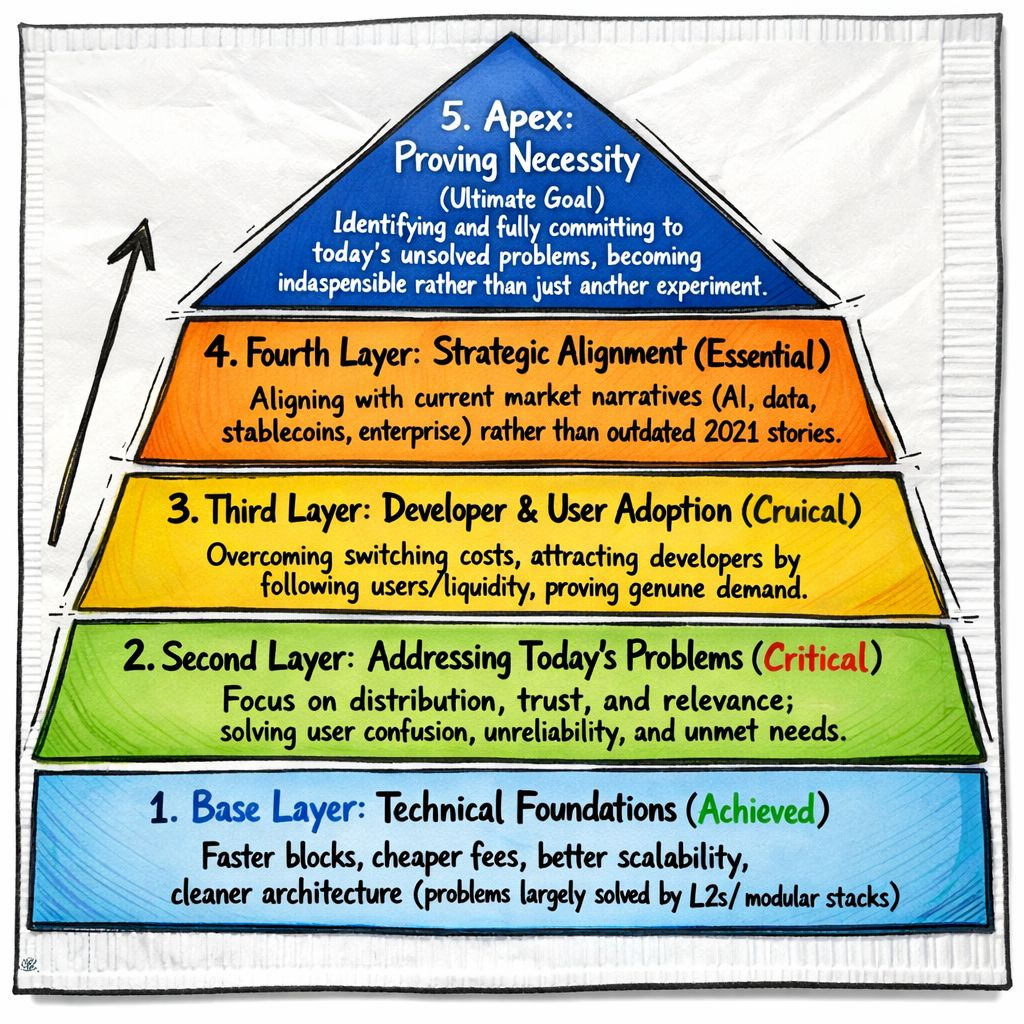
I worry that many L1 launches still think that people will start using the chain after it’s built. History shows the opposite. Platforms that do well usually grow because they fix a specific problem for a certain group of people. Claims that they can do everything usually don’t last.
This doesn’t mean that Vanar, or any new L1, is certain to fail. It just means that it’s harder than they say. It’s not enough to just solve old problems better than old chains. The real challenge is to find the problems people have today and commit to fixing them, even if they’re not exciting.
In the end, I keep asking if new L1s are needed, not if they are faster or cheaper. Until that question is clearly answered, being doubtful isn’t negative, it’s just realistic.