
In the crypto space, we often talk about how value grows using abstract ideas like token models, future plans, or guesses about adoption that hasn't happened yet. But looking at products that are actually being used can change your mind quickly. How people really use things can cut through the hype and show what's important. Checking out the live products on Vanar gives a clear lesson in how value is created over time, and how it's often not understood.
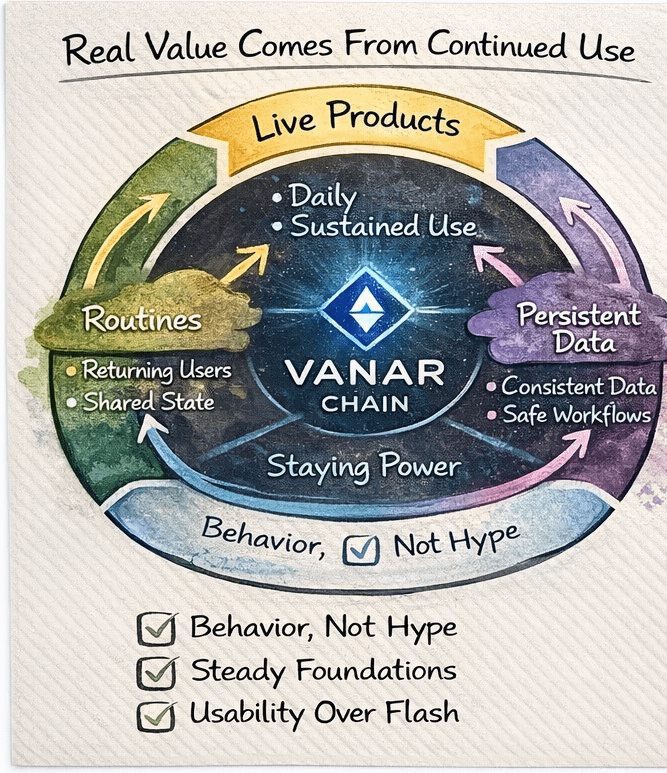
One thing you learn fast is that value doesn't start with tokens. It starts with what people do. With real products, users have to decide whether to stay, trust the system, and create processes around it. When people keep coming back, save data, or keep processes running for a long time, value starts to build up quietly, without the crazy price guesses.
Vanar's live products show this difference clearly. Instead of focusing on short-term interactions or quick rewards, their products focus on keeping things going steadily. They offer stable data, reliable actions, and infrastructure that doesn't restart every time something changes. This stability is subtle, but it's the base. Systems that people rely on daily gain value in a different way than systems people just try out once.
Another point is that long-term value growth likes boring reliability more than obvious new features. Many platforms try to grab attention by constantly adding new stuff. Live products change this. Changes that cause problems, instability, or redesigns become issues. Users want systems that feel predictable, even if they're not exciting. Vanar's live products show this approach: fewer big updates, and more focus on making sure things keep working as expected.
This affects how value builds up. When the base is steady, developers can build on top of it without worrying that things will change suddenly. This creates a strong ecosystem over time. Moving away becomes costly, not because you're locked in, but because of the trust that's built through doing things again and again.
Live products also make clear the difference between usage and just activity. Many blockchains report good stats like transactions, wallets, and speed. But live applications show whether that activity means anything. Are users saving important stuff? Are processes running longer than a quick test? Are applications made to last?
On Vanar, the presence of live products shows a focus on lasting longer rather than quick growth. This doesn't promise success, but it changes how quickly value grows. Instead of depending on hype, value grows slowly as systems become part of daily processes.
Another idea is that long-term value is often not direct. Users of live products might not even see the token or think about the chain. This might seem like a weakness when you're thinking about prices, but it's often a strength in how it's set up. When the base fades into the background, it's harder to replace. Value grows at the base level because it's not the main point anymore.
This goes against a common idea in crypto: that token demand has to come first. Live products suggest the opposite. Usefulness comes before demand. Dependence comes before making money. This is normal in traditional infrastructure businesses. In crypto, it still feels strange.
Finally, live products create responsibility. Claims about being able to scale, being cheap, or being ready for AI can't hide behind future promises. Real usage shows problems right away. This pressure creates better systems over time, even if growth is slower.
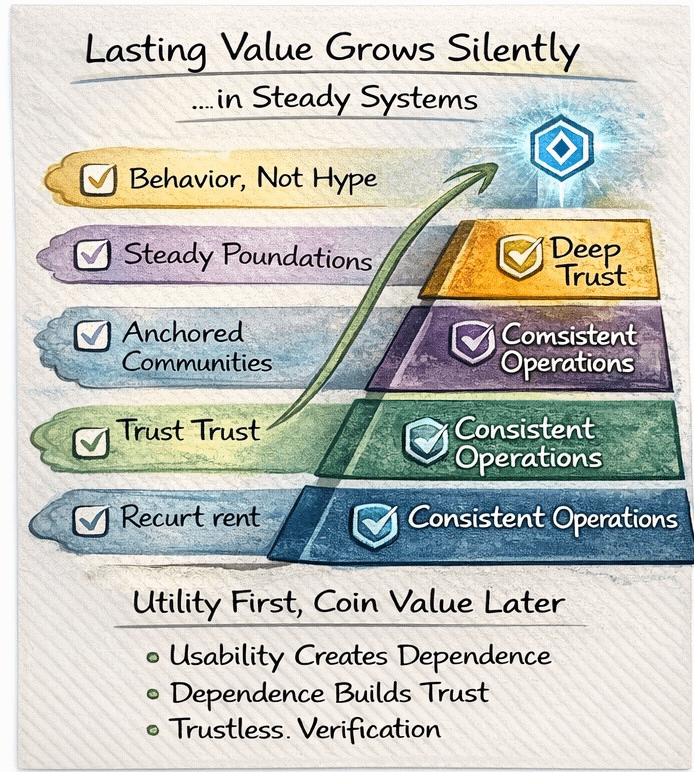
What Vanar's live products really show is that long-term value growth isn't showy. It's built up slowly. It's created through reliability, repetition, and being needed. Tokens might grab that value eventually, but only if the systems underneath deserve to matter.
In a space that's all about what's next, live products remind us that lasting value doesn't come from expecting things. It comes from things that already work, and keep working even when no one is paying attention.