
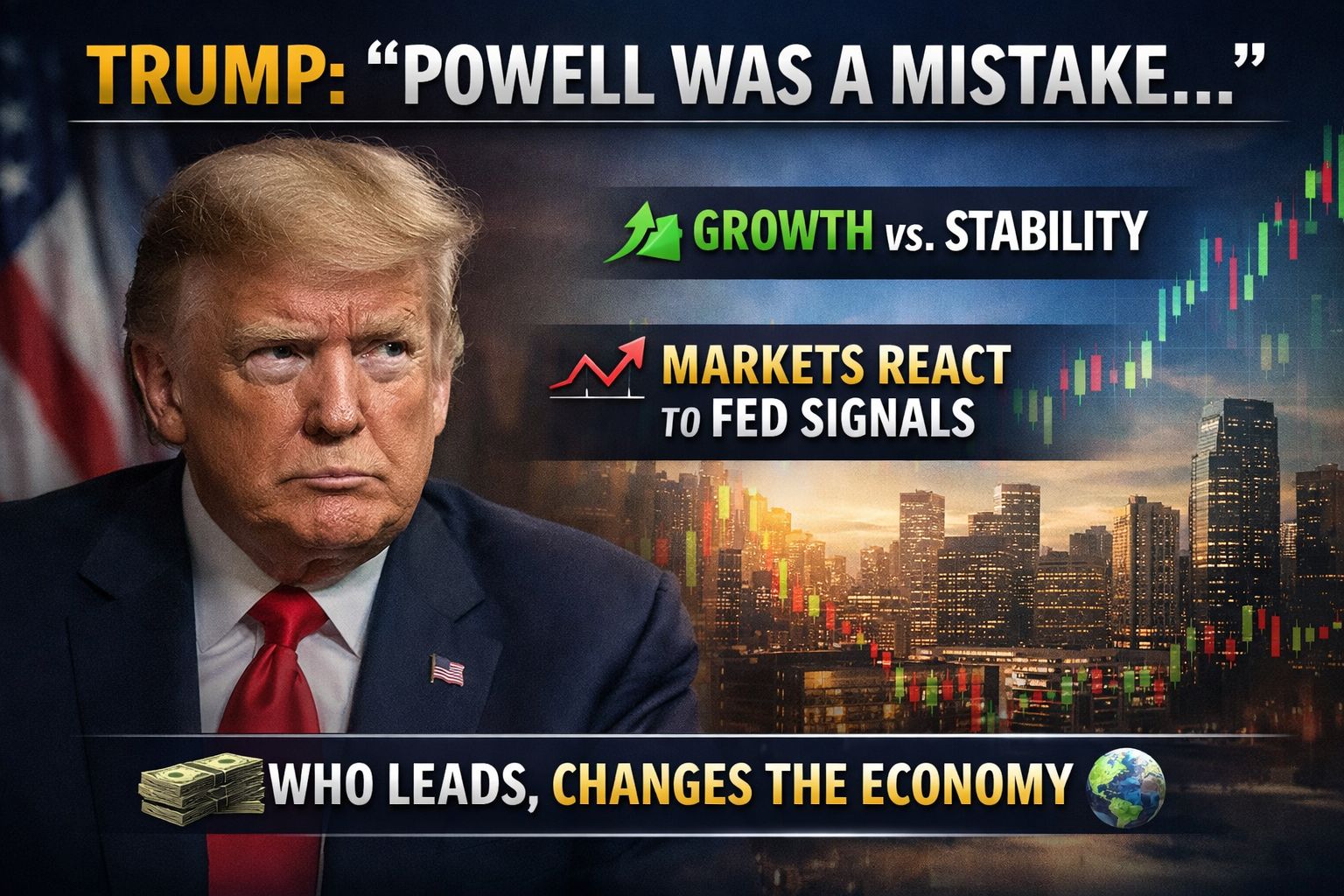
 Former President Donald Trump recently admitted that appointing Jerome Powell as Federal Reserve Chair was a wrong decision. He said he should have chosen Kevin Warsh instead, arguing that a different monetary approach could have delivered much stronger economic growth.
This comment matters because the Federal Reserve doesn’t just control interest rates — it influences liquidity, credit availability, investor confidence, and overall risk-taking. Tight policy slows growth and pressures asset prices, while easier policy encourages borrowing, investment, and expansion.
Trump has long believed Powell focused too much on caution and inflation control, even when growth could have been pushed further. In contrast, Warsh is seen as more growth-oriented, favoring flexible policy when inflation risks are manageable. From Trump’s perspective, that mindset could have unlocked faster economic momentum.
The deeper issue here isn’t personalities — it’s philosophy. Central banking always balances stability versus growth. A cautious Fed protects long-term credibility but may limit short-term expansion, while a growth-first approach can boost markets but carry higher risks.
Why does this matter now? Because markets react to expectations, not just actions. Public criticism of past Fed leadership and hints at a more aggressive future stance can already influence stocks, bonds, real estate, and crypto.
The key takeaway: central bank leadership shapes entire economic cycles. One appointment can quietly affect growth, capital flows, and asset prices for years. Trump’s statement is a reminder that economic outcomes depend less on promises — and more on who controls the levers of money.$BTC #USRetailSalesMissForecast #USTechFundFlows #WhaleDeRiskETH #GoldSilverRally #Binance