
I’ve been in crypto long enough to notice a pattern: we keep saying we want “mass adoption,” but we still force users to do things that feel like a technical exam. Sign this. Confirm that. Approve again. Pay gas. Swap for gas. Try a different wallet. Repeat. And then we act surprised when normal people leave after five minutes.
That’s why Fogo Sessions instantly caught my attention. Not because it’s a flashy buzzword, but because it tackles the most exhausting part of on-chain life: the constant friction between what I want to do and what the blockchain demands I do just to get started.
When I read how @Fogo Official describes Sessions, I didn’t interpret it as “another feature.” I saw it as an attempt to change the relationship between the user and the chain. And honestly, that’s a much bigger deal than most people realize.
“The next wave of Web3 won’t be won by the chain with the loudest narrative. It’ll be won by the chain that feels the least annoying to use.”
FOGO0.02532+2.26%

The Problem I Think Fogo Is Solving: Web3 Still Feels Like Work
Most crypto products are built for people who already understand crypto. That’s like building a smartphone that only makes sense if you already know how to solder a motherboard.
What frustrates me isn’t the concept of signing transactions — I understand why signatures matter. What frustrates me is the frequency and repetition. If I’m using a trading app, a game, or any high-activity dApp, forcing me to sign every single action kills the experience. It breaks flow. It makes everything feel slow, even if the chain itself is fast.
#fogo Sessions, as they explain it, introduces a simpler mental model:
Instead of signing every action, I can grant an application limited access to my assets for a limited time.
That line matters a lot, because it shifts the experience from constant interruption to controlled permission.
“I don’t want to remove security — I want security that doesn’t constantly interrupt me.”
What “Sessions” Mean to Me: Controlled Access, Not Blind Trust
A Session isn’t about giving a dApp full control. It’s about giving permission with boundaries — boundaries that I, as the user, can define. The way Fogo frames it makes it sound like an access pass that expires, rather than an open-ended approval that I forget about and regret later.
And I love that concept because it aligns with how real digital experiences already work in normal tech:
I authorize access
I set limits (time, scope, actions)
the system works smoothly until it expires
and I’m not interrupted every 20 seconds
That’s not “less secure.” That’s actually more realistic security — the kind that matches human behavior.
Because the truth is: when people get interrupted too often, they start clicking approve mindlessly. That’s where mistakes happen.
“A security model that trains users to blindly click is not a strong security model.”
Gasless Is Not a Luxury, It’s a Requirement for Real Adoption
This part is personal for me because I’ve watched so many newcomers get stuck at the same place:
They download a wallet, they try a dApp, and then… gas fees. Suddenly they’re told they need a token they don’t have, on a chain they don’t understand, bought from an exchange they’ve never used. That is not an onboarding flow — that’s a maze.
Fogo’s messaging around Sessions being gasless via paymasters is the type of product decision I respect, because it recognizes something very simple:
People don’t want to manage “gas strategy.” They want to use an app.
If dApps can sponsor transactions on behalf of users at the point of use, the user experience changes dramatically. It becomes closer to how the internet actually works:
I click “do the thing”
the product handles the complexity
I get the outcome
I’m not saying fees disappear. I’m saying the burden moves away from the user’s first interaction. And that alone can be the difference between someone staying or leaving.
“If the first time someone touches Web3 they hit a fee wall, they don’t learn — they bounce.”
Wallet-Agnostic Sounds Small, But It’s a Big Deal for Growth
One of the most underrated obstacles in crypto is wallet fragmentation. People have preferences. People have habits. People have a wallet installed already and they don’t want to change it just to try one new app.
So when $FOGO says Sessions are wallet-agnostic — compatible with whatever SVM wallet I choose — I interpret that as a growth decision.
Because the fastest way to shrink your market is to tell users:
“Only these wallets are supported.”
The fastest way to expand it is to say:
“Bring whatever wallet you already use.”
That single stance changes how I judge a project. It tells me $FOGO is thinking in ecosystem terms, not just tech terms. If you want a community-driven network, you can’t build a product that constantly tells the community to adapt to you. You build something that adapts to them.
“Adoption becomes easier when the product meets users where they already are.”
“Security First” Isn’t a Slogan If the Design Is Actually Restrictive by Default
This is where I get picky, because “security first” is a phrase every project uses. But I don’t care about slogans — I care about the design logic behind them.
What makes Fogo’s framing feel different is the emphasis on limited access and limited time. Those two constraints are the backbone of responsible permissioning.
If I grant access, I want:
a clear boundary on what the app can do
a clear expiry so nothing lasts forever
the ability to revoke
and ideally, a permission model that doesn’t escalate silently
This is exactly why Sessions make sense as a concept. Because the “default” in crypto has often been either:
sign everything individually (secure but painful), or
approve something broad (smooth but risky)
Sessions aim for a third option:
smooth, but still bounded.
That’s the balance I’ve been waiting to see more projects attempt.
“Real security is not just strong cryptography — it’s reducing the chances that humans will make predictable mistakes.”
Why I Think This Matters Even More for Trading Ecosystems
I’ve said it before and I’ll say it again: the most demanding user in crypto is not the casual collector. It’s the trader.
Traders need:
speed
flow
repeat actions
quick adjustments
minimal interruptions
consistent execution
When you force a signature every few seconds, you destroy the experience. And in trading, experience is execution. Execution is everything.
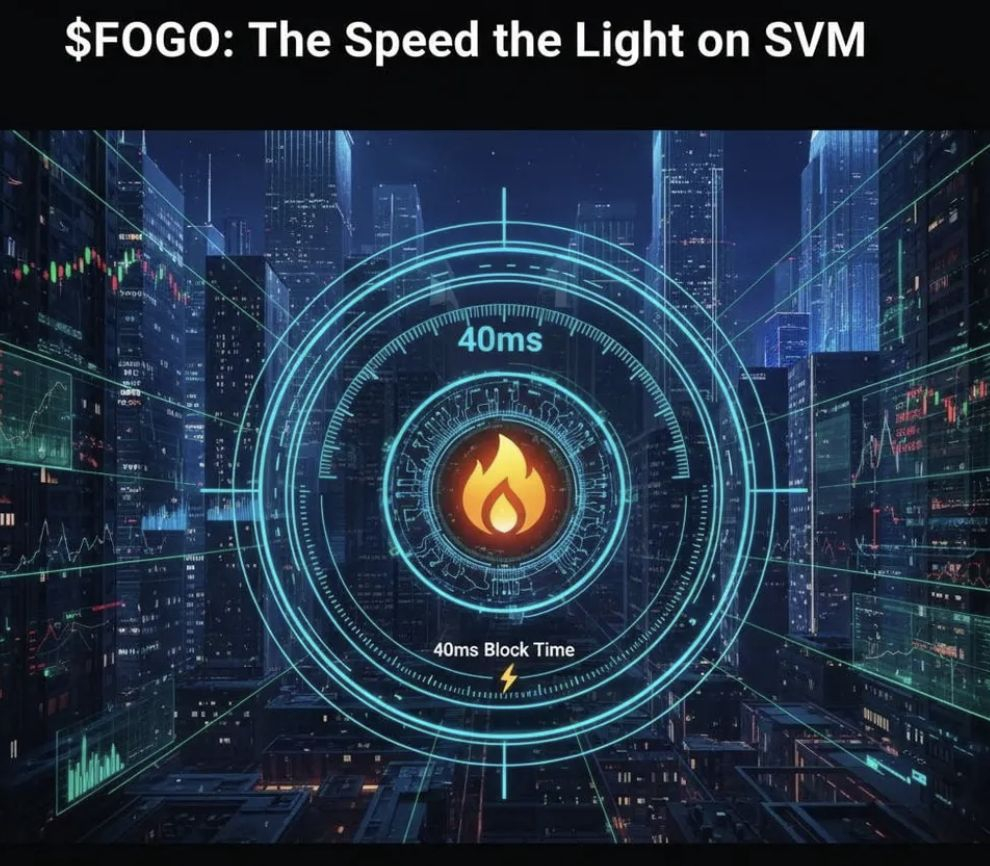
So if Fogo is positioning itself as a high-performance ecosystem (and especially if it’s trying to become the “fastest SVM Layer-1” type of narrative), then Sessions are not optional. They’re strategic. Because speed at the chain level doesn’t help if the user layer is still stuck in constant approvals and fee juggling.
In my head, it becomes one integrated idea:
Fast chain + smoother sessions + gasless interaction + wallet flexibility = a product that finally feels modern.
“A chain isn’t truly fast if the user still has to stop and sign every step.”
My Honest Take: Sessions Are How Web3 Stops Feeling Like a Demo
If I strip away the hype and look at what Sessions represent, I see something deeper:
It’s Fogo saying: we want Web3 to feel normal.
Not “normal” as in centralized. Normal as in:
the user isn’t punished for being new
the product doesn’t interrupt constantly
the app experience is fluid
permissions are clear and limited
and the complexity stays behind the scenes
That is literally how mainstream technology wins. Not by demanding the user learn infrastructure — but by hiding it.
This is why I think Fogo Sessions can become a defining piece of the ecosystem’s identity, not just a technical module. Because if people start associating Fogo with “the chain where on-chain apps actually feel smooth,” that’s a reputation you can’t fake with marketing.
“The projects that win won’t teach users crypto. They’ll make users forget they’re using crypto.”
Where I Think This Goes Next
If Fogo keeps pushing Sessions as a standard and not just a one-off concept, I can see a few natural expansions:
clearer session templates for different app types (trading, gaming, social, DeFi)
session analytics and controls that make permissions transparent
safer defaults that prevent “over-permissioning”
broader integrations so Sessions become a shared expectation across the ecosystem
And if they execute on that, I genuinely think Sessions can become the thing that outsiders point to and say:
“Okay, this is why it feels different.”
That’s the kind of differentiation that lasts longer than a trend.
My Final Opinion
I’m not calling Fogo Sessions a miracle. I’m calling it a serious UX decision.
And I’m at a point where I trust UX decisions more than I trust big promises. Because big promises are cheap. But reducing friction while staying security-minded is hard.
From everything I’m seeing, Sessions are Fogo choosing to compete on what actually matters:
making on-chain interaction feel effortless without making it careless.
And for me, that’s exactly the direction Web3 needs.
“The future won’t be ‘more transactions.’ It’ll be better experiences — and Sessions feel like a real step in that direction.”