

For a long time, progress in blockchain and AI followed the same instinct. Make things faster. Reduce costs. Increase throughput. Execution speed became the benchmark, and whoever processed more transactions or prompts per second was seen as winning. However, as systems matured, something quietly changed. Execution stopped being the bottleneck.
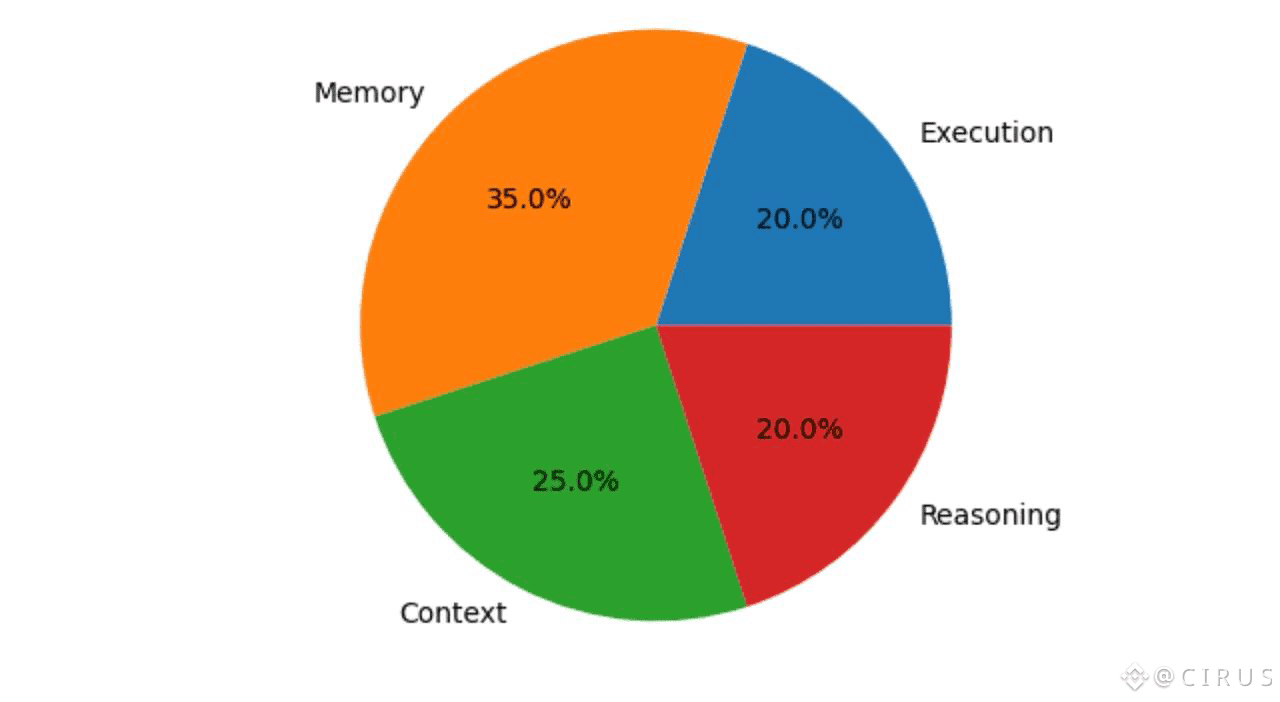
Today, execution is cheap. Compute is abundant. Models are powerful. Yet despite this, most intelligent systems still feel fragile. They reset. They forget. They repeat themselves. And when pushed beyond narrow tasks, they fall apart. This is not a failure of models or hardware. It is a failure of infrastructure.
What VANAR is addressing sits exactly in this gap.
Modern systems no longer struggle to act. They struggle to remember why they acted, what they learned, and how those learnings should shape future decisions. Without memory, intelligence never compounds. It restarts from zero each time. That may be acceptable for short interactions, but it breaks entirely when systems are expected to operate continuously across tools, users, and time.
This is where VANAR’s direction becomes meaningful.
Rather than competing on raw execution, VANAR treats execution as a solved layer. The real differentiator is coherence. Can a system behave consistently tomorrow based on what it experienced today? Can it adapt without losing context? Can it operate across environments without fragmenting its identity?
Most AI agents today cannot. They rely on stateless prompts, brittle handoffs, and repeated instructions. As a result, they consume more resources over time instead of becoming more efficient. They do not improve through use. They merely repeat.
VANAR flips this model by anchoring intelligence to persistent memory and reasoning infrastructure. Memory here is not just storage. It is continuity. It is the ability for systems to retain intent, decisions, and relationships over time. When memory is native to infrastructure, intelligence stops being recreated at the application level again and again.
This shift has direct implications for builders.
Instead of designing around resets, developers can design around growth. Workflows no longer need constant re-prompting. Agents no longer lose state between actions. Systems begin to feel less like tools and more like collaborators that improve through interaction.
This matters because the next wave of applications will not be static products. They will be living systems. Autonomous workflows. AI-driven coordination. Persistent agents managing real economic activity. None of these can function reliably without memory and reasoning at the infrastructure layer.
VANAR’s approach recognizes this reality early.
It does not frame intelligence as a feature to be added later. It treats intelligence as a structural property of the system itself. By doing so, it allows builders to focus on outcomes rather than plumbing. They no longer need to recreate intelligence primitives inside every application. They can rely on the network to preserve coherence across time.
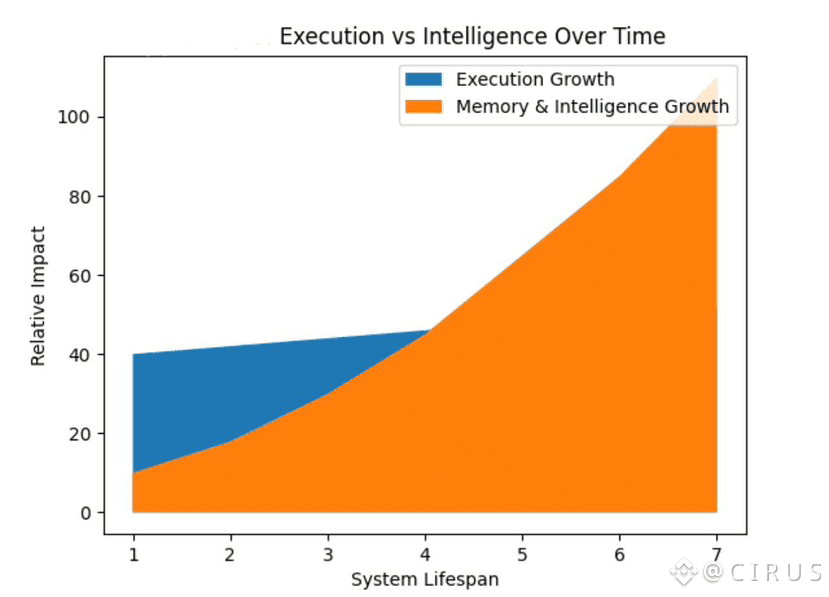
Over time, this changes how value accrues.
Systems that remember compound. Systems that forget stagnate. As usage grows, VANAR-based systems do not become more expensive to maintain. They become more efficient. Context reduces waste. Memory reduces redundancy. Reasoning reduces error.
My take is simple. The future of intelligent systems will not be decided by who executes fastest, but by who remembers best. VANAR is positioning itself exactly at that layer, where intelligence stops being disposable and starts becoming durable.
