
Walrus doesn’t behave like most Web3 infrastructure.
Not because it’s faster.
Not because it’s louder.
It behaves differently because it stays quiet in places where other systems rely on noise.
That difference is easy to miss if you’re only looking at features or metrics. I noticed it in a much simpler moment. I checked on something I had already set up earlier, expecting at least a small signal that I should still be paying attention.
There wasn’t one.
No alert.
No reminder.
No visual nudge telling me things were still fine.
And yet, nothing had drifted.
That felt strange.
In most crypto systems, silence feels risky. Dashboards exist to reassure you. Status indicators exist to calm you down. If nothing moves, you start wondering whether the system is actually holding or just not telling you something.
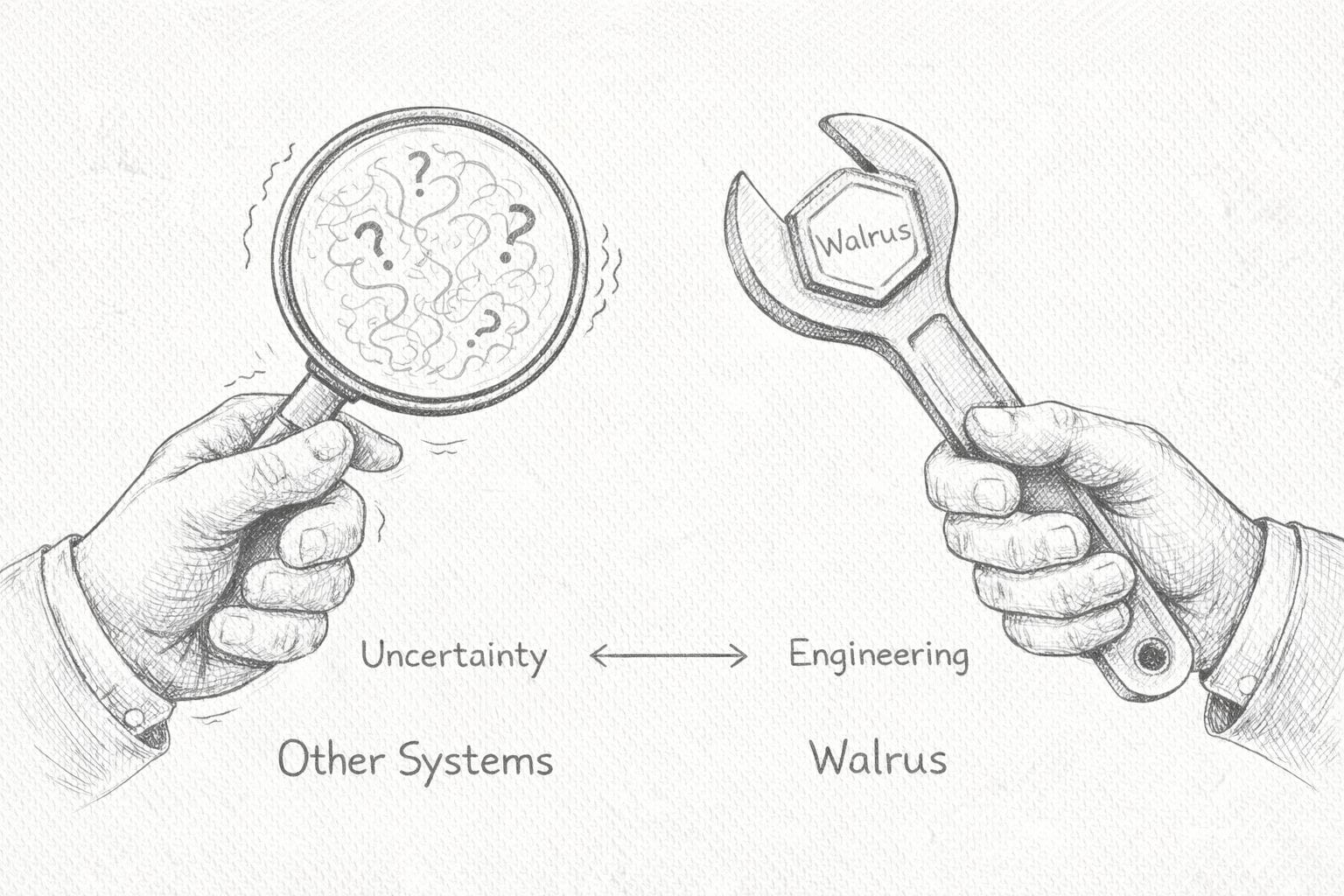
“When systems rely on reassurance, uncertainty fills the gaps.”
Walrus doesn’t play that game.
It doesn’t try to keep you engaged.
It doesn’t fill quiet moments with updates or confirmations.
It simply keeps its expectations the same, whether you’re watching closely or not.
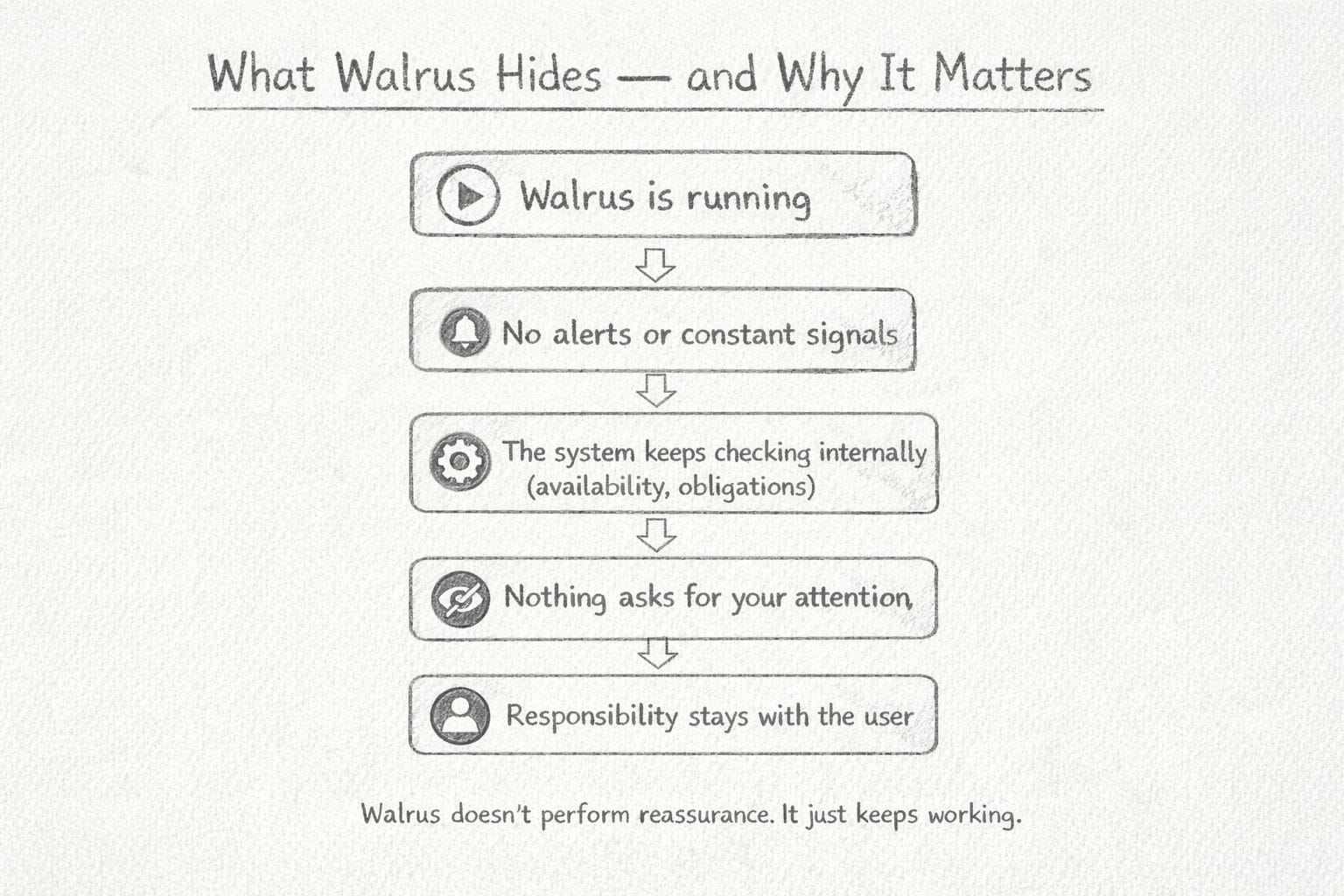
“Walrus keeps working, even when nothing is asking for attention.”
That changes how responsibility feels.
In many systems, responsibility is shared with the interface. Dashboards remember things for you. Alerts act as substitutes for attention. When something goes wrong, you can often point to a moment where the system should have warned you.
Walrus doesn’t offer that escape.
It doesn’t check whether you’re focused.
It checks whether things are still where they should be.
Availability is either there or it isn’t. The network’s concern isn’t whether you feel informed. It’s whether the system can still do what it promised.
That difference seems small, but it reshapes behavior.
When a system constantly signals its state, confidence comes easily. You’re part of a loop that reassures itself. When the system stays quiet, confidence has to come from somewhere else.
You don’t get prompted into it.
You either trust the system’s design, or you don’t.
This is where discomfort starts to show up.
I began noticing how often confidence in other systems comes from activity rather than stability. A moving chart feels reassuring, even if nothing meaningful is changing. A blinking indicator feels like control, even when it’s just cosmetic.
Walrus removes most of that.
It doesn’t replace it with explanations.
It doesn’t surface extra context to help you feel better.
It just continues operating.
Things either hold, or they don’t.
That quiet exposes habits.
Some people rely on constant signals to feel secure. They want confirmation that the system is still alive. Others are comfortable checking less often, trusting that the absence of noise doesn’t mean the absence of work.
Walrus quietly rewards the second behavior.
Not by praising it.
Not by advertising it.
Just by not responding to urgency.
The system doesn’t rush to match expectations of reassurance. It doesn’t perform confidence. If something is still available, it’s because the network maintained it not because it reminded you that it was doing so.
This matters more as systems age.
Early on, everything feels stable because everyone is watching. The real test comes later, when attention fades and only the design remains. Walrus feels built for that phase.
It doesn’t depend on constant interaction to stay healthy.
It doesn’t assume silence means neglect.
The same checks apply whether usage is high or low.
What Walrus hides isn’t information.
It hides unnecessary performance.
It doesn’t leak context to calm people down. It doesn’t translate every internal action into a user-facing signal. It leaves space where other systems fill gaps.
That space can feel unsettling at first.
But it forces a more honest relationship with infrastructure. You stop judging reliability by how active something looks. You start judging it by whether it holds when nothing is being announced.
Walrus doesn’t correct assumptions.
It doesn’t guide confidence.
It just keeps operating.
And once you notice that, it becomes difficult to confuse visibility with reliability again.