
They Quit Because They’re Tiring
Most people don’t leave crypto after one bad experience.
They open apps less often
They leave slowly.
They stop clicking around.
They wait longer before doing anything.
Then one day, they just don’t come back.
This isn’t really about speed or fees.
It’s about mental effort.
Vanar stands out because it quietly removes that effort.
The Part of Crypto Nobody Likes Talking About
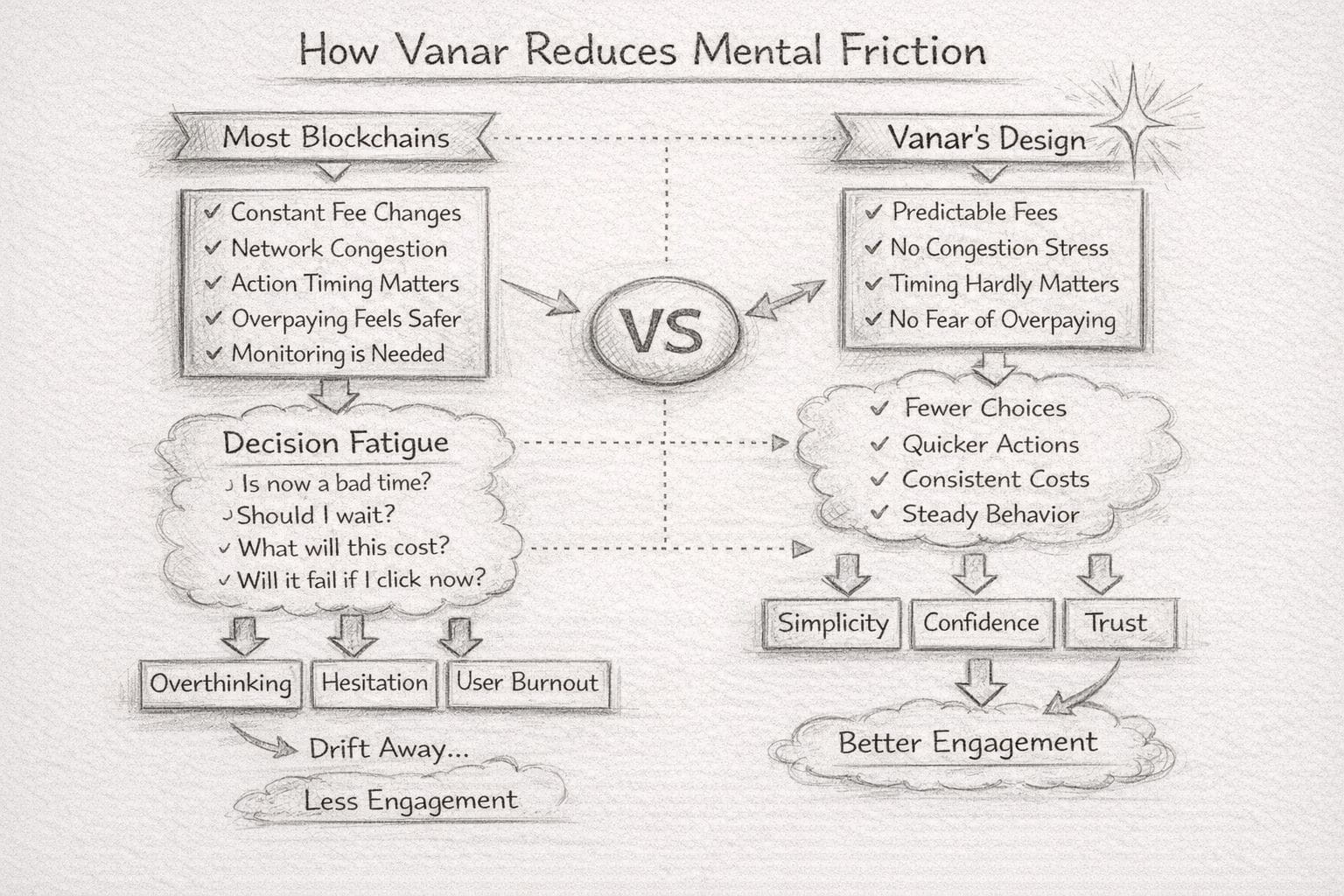
Using most blockchains means thinking all the time.
Is this a bad moment?
Should I wait?
What if fees jump?
What if this fails and I have to try again?
Each question feels small.
Together, they drain people.
This is decision fatigue.
And crypto creates a lot of it.
Vanar removes many of those decisions without making noise about it.
What Changes When the Network Stops Demanding Attention
On Vanar, costs don’t swing around.
The network doesn’t behave differently every few hours.
Because of that, people stop watching the chain.
They don’t hover over buttons.
They don’t wait for “later.”
They just act.
That sounds simple, but it changes everything.
The network fades into the background.
Usage starts to feel normal.
This is what that shift looks like in practice.
Why This Matters for Vanar’s Direction
Vanar isn’t built for one-time actions.
It’s built for things people do often.
Games.
Interactive apps.
AI-driven systems.
Digital environments where users come back again and again.
These systems fail when people hesitate.
A game breaks when players overthink clicks.
A social app fades when users wait too long.
An interactive tool loses value when every action feels risky.
Vanar’s steady behavior supports these use cases naturally.
Not by pushing users.
By getting out of their way.
Builders Feel This Shift First
Developers know when users are tired.
On many chains, apps are built defensively.
Warnings everywhere.
Actions bundled.
Extra steps added just in case.
On Vanar, that pressure eases.
When the network behaves the same way all day, builders can design clean flows.
Fewer interruptions.
Fewer “try again later” moments.
Apps feel calmer.
And calm apps keep users longer.
How Small Choices Turn Into Burnout
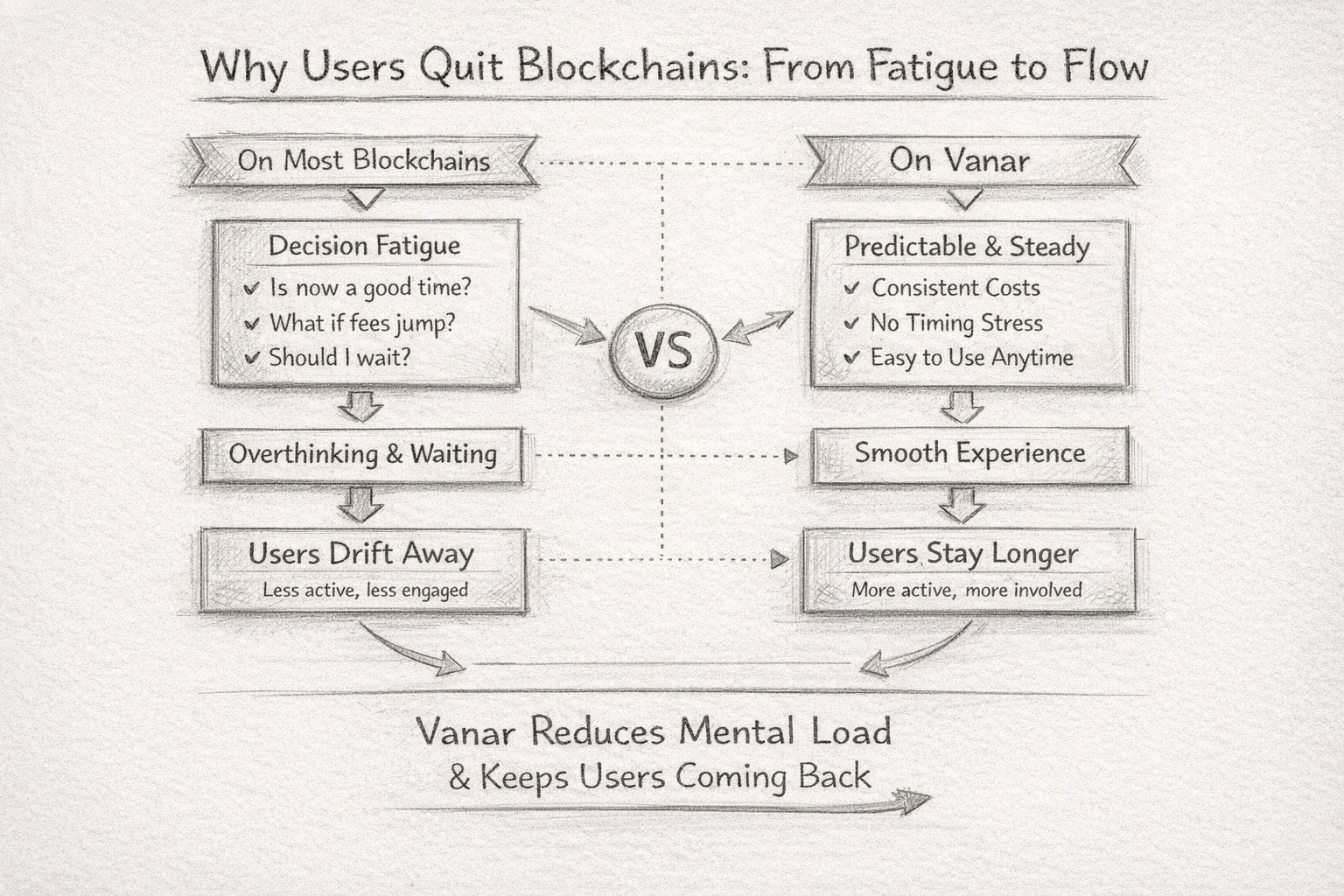
Decision fatigue doesn’t hit all at once.
It builds slowly.
Watching fees.
Timing actions.
Second-guessing clicks.
Over time, users hesitate more.
Then they disengage.
Then they drift away.
Vanar interrupts that pattern by removing many of those choices.
This is how small decisions turn into burnout or long-term trust.
The Trade-Off Vanar Accepts
This approach isn’t free.
When fees don’t rise under pressure, bad designs don’t fail immediately.
Some problems take longer to show.
Vanar accepts that risk.
It chooses smoother experience over loud correction.
It relies more on careful building and monitoring than sudden punishment.
That’s a design choice.
Not an accident.
Why Quiet Networks Last Longer
Loud networks get attention fast.
They feel exciting.
But excitement fades.
Quiet networks build trust slowly.
They don’t exhaust users.
They don’t demand constant focus.
Vanar is choosing that path.
Not the loud one.
The durable one.
Final Thought
People don’t leave crypto because it’s complex.
They leave because it’s exhausting.
Too much timing.
Too much watching.
Too much thinking.
Vanar doesn’t remove complexity.
It removes the need to constantly manage it.
And in a space where attention is fragile,
that might be the most important design decision of all.
