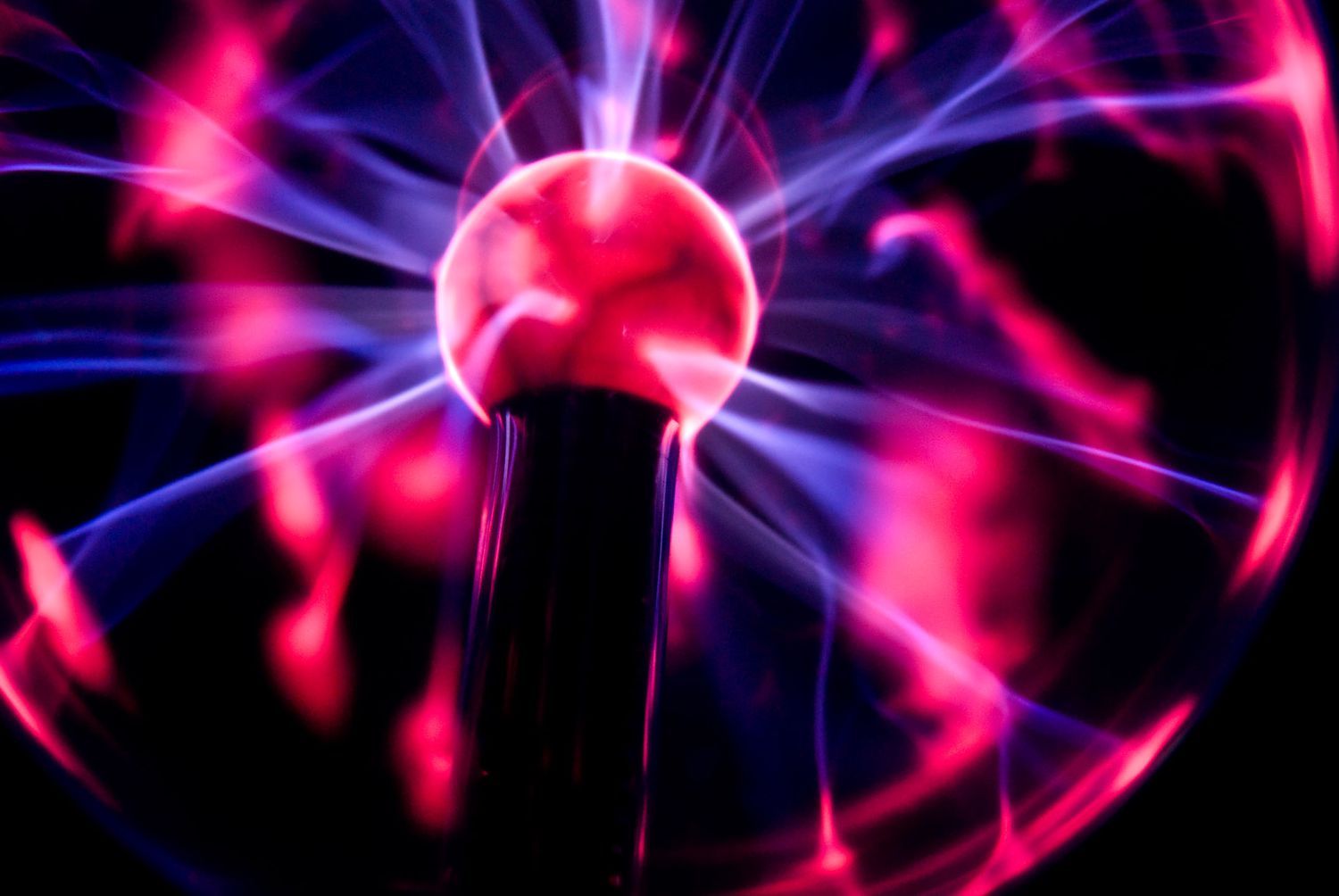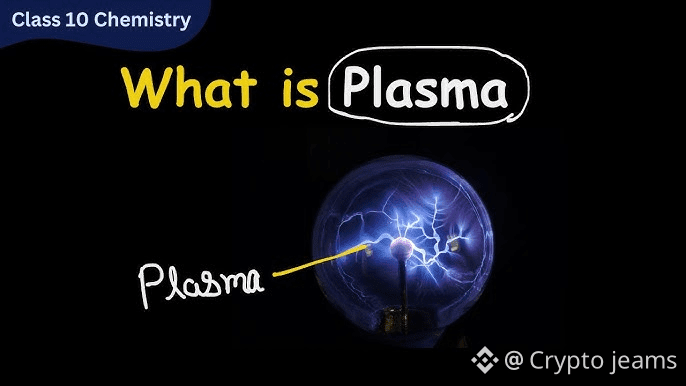
Most of us learn about three states of matter in school—solid, liquid, and gas. But there's a fourth player in this cosmic game, one that's both ancient and utterly modern: plasma. It's the state of matter that makes up 99% of the visible universe, yet remains a stranger to most of us here on Earth.
Think of plasma as matter that's been pushed past its breaking point. Heat a solid and it melts into liquid. Heat that liquid and it evaporates into gas. But keep going—push those gas molecules even hotter—and something extraordinary happens. The atoms themselves begin to fall apart. Electrons tear away from their nuclei, creating a churning sea of charged particles that dance to the rhythm of electromagnetic forces.
It sounds violent, and in a way it is. But there's also something almost beautiful about it.
The Sun's Secret
Every morning when sunlight streams through your window, you're experiencing the afterglow of plasma. The sun isn't a ball of fire—it's a massive sphere of plasma, where hydrogen nuclei crash together with such force they fuse into helium, releasing the energy that makes life on Earth possible. The light that touches your skin left the sun's plasma surface eight minutes ago, carrying with it the signature of this fourth state of matter.
Solar flares, those dramatic eruptions from the sun's surface, are plasma in motion—twisted ropes of magnetic fields carrying billions of tons of charged particles into space. When they reach Earth, they collide with our atmosphere and create the aurora borealis, painting the night sky with curtains of green, purple, and red light. It's plasma talking to plasma, a conversation written in photons.
Lightning in a Bottle
But plasma isn't just out there in the cosmos. It's here, closer than you think. Every time lightning cracks across a summer sky, you're witnessing plasma born from Earth's own atmosphere. The electrical charge is so intense it rips electrons from air molecules, creating a glowing channel of plasma that we call a lightning bolt. For a fraction of a second, that column of air becomes five times hotter than the surface of the sun.
The neon signs that still glow in certain city streets? Plasma. The fluorescent lights humming above office cubicles? Plasma again. Even the screen you might be reading this on, if it's an older plasma display, uses tiny cells filled with electrically charged gas to create images.
The Dream of Fusion
Here's where plasma gets personal, where it intersects with humanity's future. Scientists around the world are trying to harness plasma to solve one of our greatest challenges: clean, abundant energy.
Nuclear fusion—the same process that powers the sun—requires creating and controlling plasma at temperatures exceeding 100 million degrees Celsius. At these temperatures, hydrogen isotopes move fast enough to overcome their natural repulsion and fuse together, releasing tremendous amounts of energy without the radioactive waste of traditional nuclear fission.
The challenge is keeping this plasma stable and contained. You can't touch it with any material—it would instantly vaporize. Instead, scientists use powerful magnetic fields to hold the plasma in place, suspended like a drop of water floating in mid-air, except this "drop" is hot enough to vaporize anything that comes near it.
Projects like ITER in France and the National Ignition Facility in California are pushing the boundaries of what's possible. Recently, researchers achieved "fusion ignition"—getting more energy out of a fusion reaction than they put in. It's a milestone that seemed impossible just years ago.
Plasma's Gentle Side
Not all plasma needs to be hotter than the sun. "Cold plasma" operates at near room temperature and is finding surprising applications in medicine. Doctors are using plasma jets to sterilize wounds, kill cancer cells, and even help with blood clotting. The charged particles can destroy bacteria without harming human tissue—a kind of precision that antibiotics can't match.
In agriculture, plasma-treated water and seeds are showing promise for improving crop yields and resistance to disease. There's something almost poetic about using the same state of matter that fuels stars to help plants grow.
The Invisible Ocean
Perhaps what's most humbling about plasma is realizing we live at the bottom of a cosmic ocean of it. Beyond Earth's protective atmosphere, space isn't empty—it's filled with the solar wind, a stream of plasma flowing from the sun at a million miles per hour. Earth's magnetic field deflects most of it, but we're constantly swimming in its currents.
The interstellar medium—the space between stars—is mostly plasma. The spectacular nebulae photographed by space telescopes, those cosmic clouds where new stars are born, are vast regions of glowing plasma stretching across light-years.
We are solid creatures living on a solid planet, surrounded by liquid oceans and breathing gaseous air. But we're outliers. The universe's natural state is plasma—dynamic, energetic, and governed by forces we're still learning to understand.
Looking Ahead
As we push further into the 21st century, plasma will likely touch our lives in ways we can't yet imagine. From propulsion systems for spacecraft to revolutionary new materials, from quantum computers to advanced medical treatments, this fourth state of matter holds possibilities that are only beginning to unfold.
There's something oddly reassuring about plasma. It reminds us that matter itself is not fixed or final, that with enough energy, even atoms can be transformed into something completely different. In a universe that runs on change, plasma is change embodied—a state of perpetual motion, where nothing is locked in place and everything dances to the electromagnetic beat.
We may live in a world of solids, liquids, and gases, but we're children of plasma. It's where our atoms were forged, in the hearts of ancient stars. And perhaps it's where our future lies, in fusion reactors that might one day power our civilization with the same fire that lights the cosmos.
The next time you see the sun, a lightning strike, or even the glow of a neon sign, take a moment to appreciate plasma—the living fire that makes the universe shine.