
In the rapidly evolving landscape of blockchain technology, Dusk Network (DUSK) has emerged as a powerhouse, specifically designed to bridge the gap between traditional finance (TradFi) and decentralized finance (DeFi). As we move into 2026, the market growth of the DUSK token has caught the eye of institutional investors and retail traders alike.
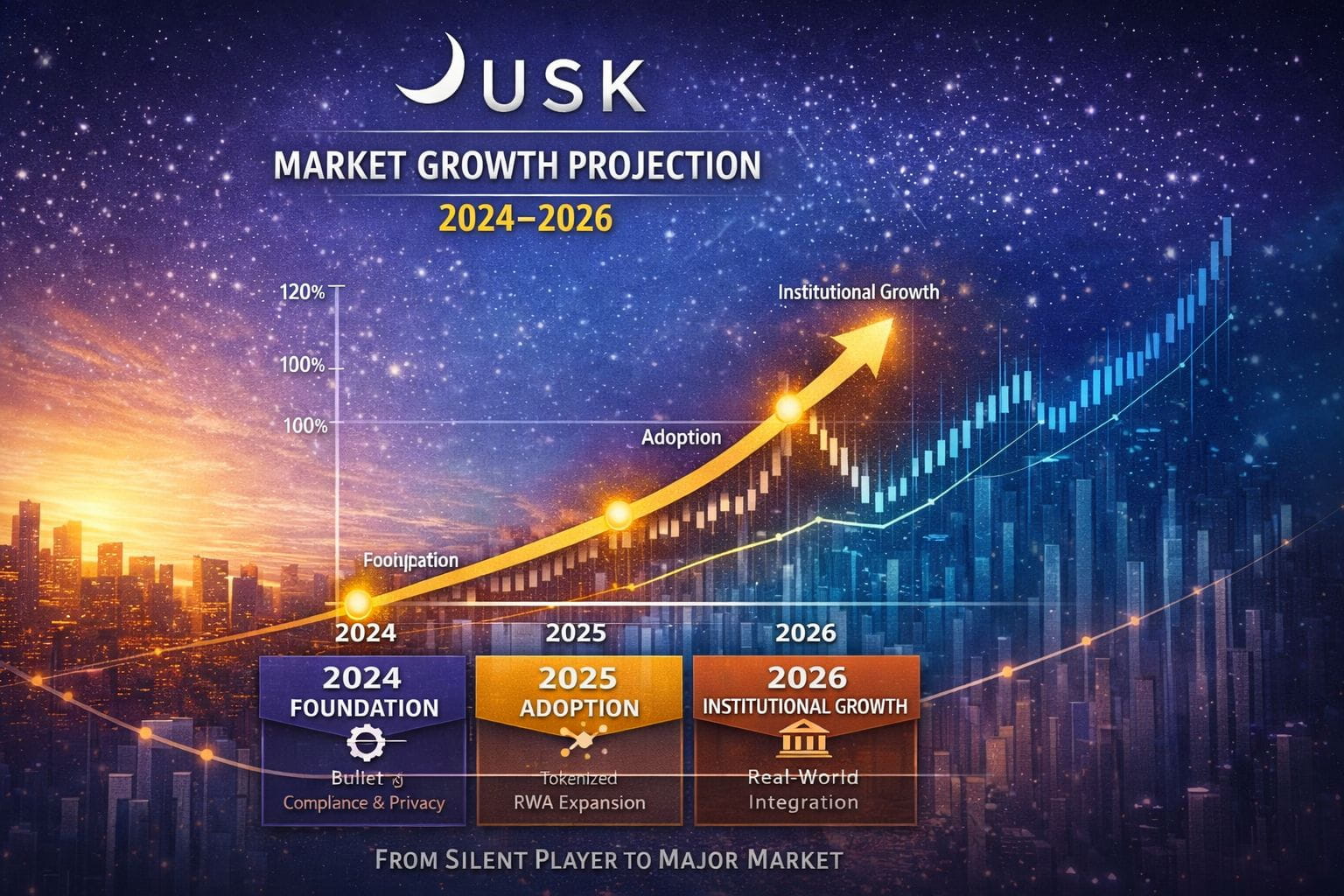
But what makes DUSK a standout performer in a crowded market? Let’s dive into the core drivers of its growth.
1. The Mainnet Milestone: A New Era of Utility
The most significant catalyst for Dusk’s recent growth was the official launch of its Mainnet in early January 2026. This transition from a test environment to a fully functional Layer-1 blockchain has transformed DUSK from a speculative asset into a high-utility token.
With the Mainnet live, DUSK is now used for: Staking and Consensus: Securing the network via the Segregated Byzantine Agreement (SBA).
Transaction Fees: Powering every transfer and smart contract execution.
Governance: Allowing holders to vote on the future direction of the protocol.
2. Dominating the RWA (Real-World Asset) Narrative
Dusk Network is often hailed as the "Privacy Blockchain for Financial Institutions." Its primary mission is the tokenization of Real-World Assets (RWA) like stocks, bonds, and commodities.
Unlike most public blockchains, Dusk offers built-in zero-knowledge proofs (ZKP), ensuring that sensitive financial data remains private while staying fully compliant with global regulations like Europe's MiCA. This "Privacy + Compliance" dual engine is a magnet for institutional players who want the efficiency of blockchain without exposing their trade secrets or violating AML (Anti-Money Laundering) laws.
3. Explosive Market Performance
The numbers speak for themselves. In early 2026, DUSK witnessed a staggering surge, at one point rallying over 500% in a 30-day window. This parabolic move was fueled by:
> Strategic Partnerships: Collaborations with regulated exchanges like the Dutch-based NPEX, which plans to onboard over €300 million in assets onto the Dusk chain.
> Institutional Adoption: The integration of Dusk into the 21X venue for DLT-based securities trading.
> Supply Dynamics: With a capped total supply of 1 billion tokens and a circulating supply of approximately 500 million, the scarcity factor is beginning to play a role as demand for staking increases.
4. Technical Edge: The Phoenix Protocol and DuskEVM
Dusk isn't just another Ethereum clone. It uses the Phoenix Protocol, a unique zero-knowledge structure that enables anonymous transactions that are still auditable by authorized regulators. Furthermore, the upcoming rollout of DuskEVM (an EVM-compatible layer) will allow developers to easily migrate dApps from Ethereum to Dusk, potentially sparking a massive ecosystem expansion.
The Road to $1 and Beyond: Future Outlook
As of late January 2026, DUSK has shown immense resilience. While the crypto market is known for its volatility, the technical structure of DUSK remains bullish. Analysts point to a "Golden Cross" on the long-term charts and a sustained defense of key support levels near $0.15 - $0.20.
If the current momentum of RWA tokenization continues and the NPEX integration scales as planned, the $1 milestone—once a distant dream—is now a realistic target for many market watchers.
Final Thought: Dusk Network is no longer just a "privacy coin." It is the foundational infrastructure for the next generation of regulated finance. For those looking for a project that combines cutting-edge ZK-technology with real-world institutional utility, DUSK is undoubtedly a coin to watch.
