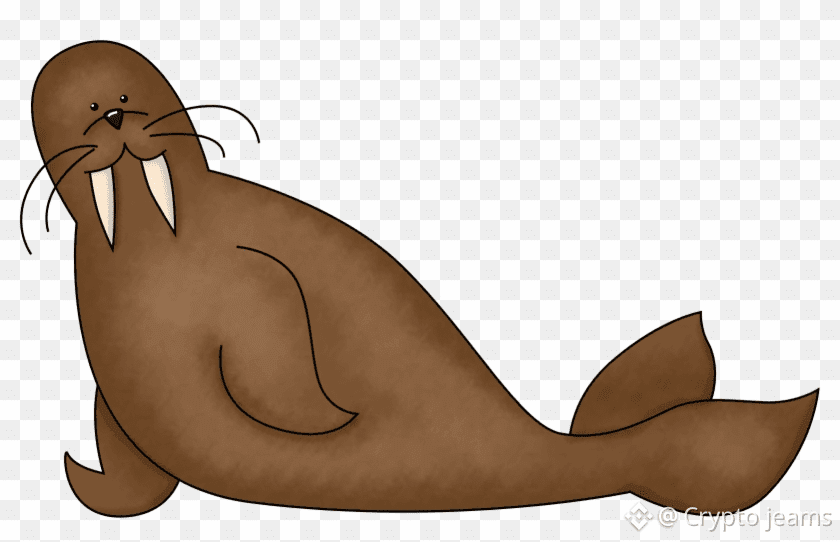
 There's something deeply unfair about being a walrus. You spend your entire life perfecting the art of dignified lounging on ice floes, cultivate a magnificent mustache that would make any Victorian aristocrat weep with envy, and what do humans remember you for? Being fat and having weird teeth.
Let me set the record straight.
First, those aren't "weird teeth"—they're tusks, and they're absolutely magnificent. Imagine having built-in ice picks, back-scratchers, and status symbols all rolled into two elegant ivory spears. A walrus uses these beauties for everything: hauling their considerable bulk onto ice (hence the name "walrus," from the Norse hrossvalr, meaning "horse-whale"), defending against polar bears, impressing potential mates, and establishing social hierarchy. They're like a Swiss Army knife, but cooler and attached to your face.
And speaking of that face—those whiskers aren't just for show. A walrus sports around 400 to 700 highly sensitive vibrissae (fancy word for whiskers) that can detect a clam buried in mud from impressive distances. In the murky, dark waters of the Arctic seafloor, where visibility is essentially zero, these whiskers are like having night-vision goggles and a metal detector combined. A walrus doesn't hunt with its eyes; it hunts with its magnificent mustache, vacuuming up clams, mussels, and other shellfish with remarkable efficiency.
Now, about that size. An adult male walrus can weigh up to 4,000 pounds. That's not laziness—that's engineering. All that blubber serves as insulation in waters that would kill an unprotected human in minutes, provides energy reserves during breeding season when males barely eat, and offers buoyancy. A walrus is basically a self-heated, self-propelled submarine designed for Arctic survival. They're not overweight; they're optimized.
But here's what really gets overlooked: walruses are profoundly social creatures. They haul out in groups of hundreds or even thousands, lying in massive, snoring, grunting piles that look chaotic but follow complex social rules. They recognize each other individually, maintain friendships across years, and communicate through a repertoire of bellows, barks, and clicks. Male walruses even sing—haunting, bell-like underwater songs during breeding season that can last for days. Imagine a two-ton opera singer performing in an underwater concert hall of ice.
They're also surprisingly tender parents. Mother walruses nurse their calves for up to two years, one of the longest nursing periods of any mammal. She'll defend her baby fiercely against any threat, using those impressive tusks with deadly precision if necessary. Calves stay close to their mothers, learning the locations of good feeding grounds, safe haul-out spots, and the intricate social rules of walrus society.
Perhaps the most humanizing thing about walruses is how vulnerable they've become in our changing world. As Arctic sea ice disappears, walruses lose their resting platforms and are forced onto beaches in enormous numbers, creating dangerously crowded conditions. They're sensitive souls in massive bodies—easily startled by aircraft or polar bears, sometimes stampeding in panic and crushing their own calves in the chaos.
So the next time you see a walrus—whether lounging magnificently on an ice floe with their tusks glinting in the Arctic sun, or perhaps looking slightly ridiculous as they clumsily flop across the ice—remember this: you're looking at a masterpiece of Arctic evolution, a devoted parent, a skilled underwater hunter, and possibly a singer of haunting songs in the deep.
They're not just big, whiskered blobs with dental problems. They're walruses, and they're doing their absolute best in an increasingly difficult world.
And honestly? That mustache alone deserves more respect.